War is not decided on battlefields. It is decided in supply chains, in the gap between doctrine and reality, and in the political structures that determine who absorbs the cost of losing.
This archive is arranged as an argument, not a catalogue. Begin with the true scale of modern conflict — not the optimistic post-Cold War narrative, but the data. Then follow the logic: why logistics decides outcomes more than tactics, how technology creates new equilibria until doctrine catches up, how command failure is systematic rather than exceptional, what the Mongol system reveals about war as a total organizational problem, how information warfare became the most durable product of the battlefield, and where the drone rewrote the fundamental economics of killing. Each section deepens the one before it.
Part I — Orientation: The True Scale of Modern War#
Before mechanisms or actors, a corrective. The dominant academic narrative of the 1990s held that interstate war was in terminal decline. The data disagrees. These pieces establish the actual factual ground: how many people die, at what rate, and why the frameworks built to measure peace were designed not to find war.
A four-part series tracing the arc from Cold War-era academic optimism about declining conflict, through 25 years of contradicting data, to two new metrics — the Human Cost Index and Casualty Rate — that expose the true human cost and velocity of asymmetric modern war.
A four-part series tracing the arc from Cold War-era academic optimism about declining conflict, through 25 years of contradicting data, to two new metrics — the Human Cost Index and Casualty Rate — that expose the true human cost and velocity of asymmetric modern war.
Part II — The Logistical Foundation: Why Armies Move or Die#
The most durable lesson of military history is also the most consistently ignored: logistics decides outcomes. Not tactics. Not morale. Not leadership. The army that runs out of food, fuel, or ammunition before its enemy does loses — regardless of the genius commanding it. These two series build that case from Alexander to the contested supply chains of the present.
Two complementary series. The Invisible Army is the comprehensive sweep: seventeen cases from 330 BC to 1991, tracing how every era's dominant logistics system both enabled and eventually constrained its military power. Fatal Flaw drills into the specific catastrophic failures — the moments when logistics collapsed completely and campaigns died.
Amateurs study tactics; professionals study logistics. This series traces the full arc: how Alexander's supply trains made his campaign possible, how Napoleon's failed, how the railroad transformed the scale of war, and how Desert Storm proved that modern logistics is as decisive as any weapon system. Seventeen cases, one argument.
Read in sequence. Each entry picks up where the last ends. The series builds a single cumulative argument: the logistical constraint is always the binding one, and every era's military innovators discovered this by breaking it.
Logistics is the art of moving supplies, and often determines victory more than tactics or generalship. This article explores the history and principles of military logistics, drawing on key insights and references.
Logistics is the art of moving supplies, and often determines victory more than tactics or generalship. This article explores the history and principles of military logistics, drawing on key insights and references.
If the Invisible Army is the theory, Fatal Flaw is the autopsy. Each entry examines a campaign that failed not on the battlefield but in the supply chain — the moment the fuel ran out, the rail gauge was wrong, or the planning assumption met reality and lost.
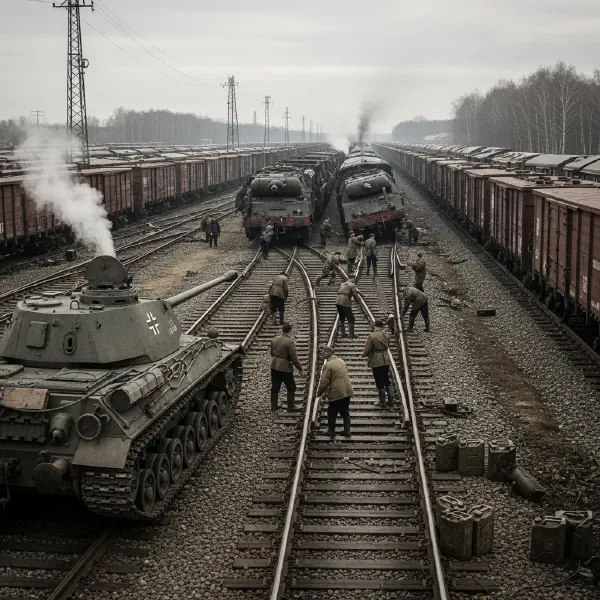
Why the wars that shape history are won and lost not on battlefields, but in supply depots, rail yards, and logistics chains. An examination of how supply chain breakdown, resource misallocation, and logistical incompetence are often the true causes of strategic military defeat.
Why the wars that shape history are won and lost not on battlefields, but in supply depots, rail yards, and logistics chains. An examination of how supply chain breakdown, resource misallocation, and logistical incompetence are often the true causes of strategic military defeat.
Part III — The Arms Race: Five Millennia of Offense vs. Defense#
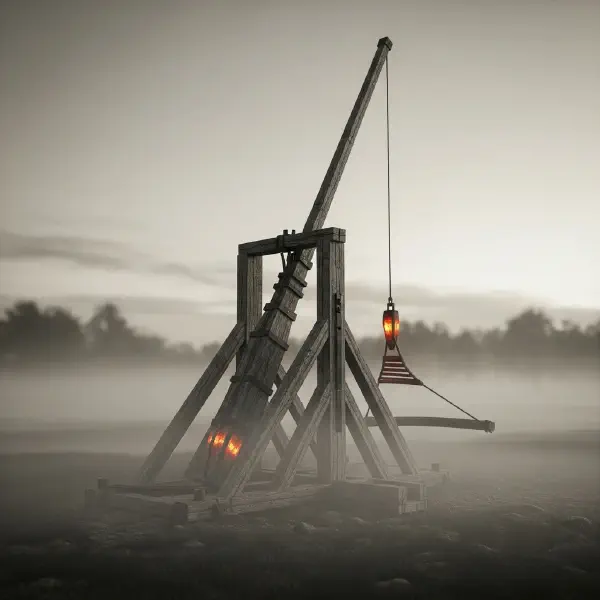
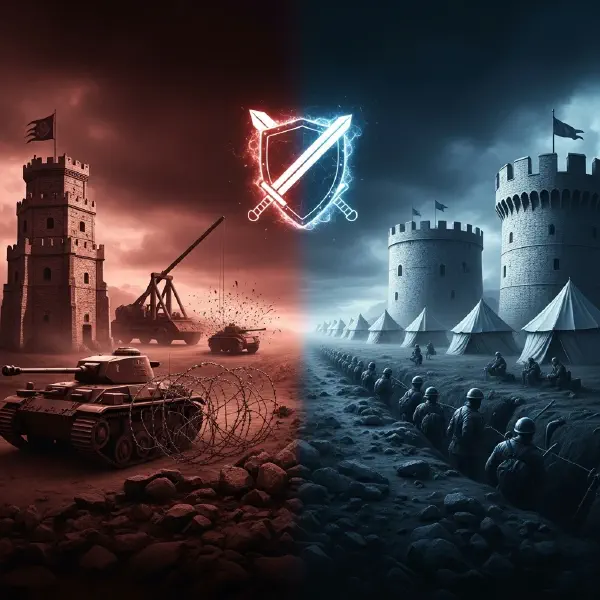
War is an engineering problem. The history of conflict is a history of equilibria: a new weapon creates advantage, doctrine and counter-engineering catch up, a new equilibrium is reached. The trench was defeated by the tank. The castle was defeated by the trebuchet. The battleship was defeated by the aircraft carrier. These series trace that dialectic from ancient siege warfare to industrial-age armored combat.
Five millennia of military innovation examined as a single systems problem: how does the application of engineering principles to killing change what is possible on the battlefield, and who decides the terms of the next cycle?
The First World War was history's most brutal classroom. Industrial firepower had outpaced doctrine by a generation. The result was four years of systematic slaughter while military establishments slowly, painfully learned that the war they had trained for no longer existed.
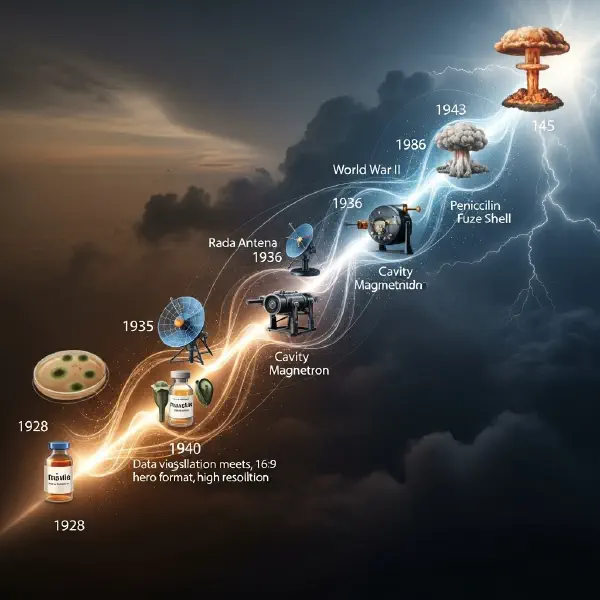
Wartime desperation is the most efficient accelerant for scientific progress in the historical record. Penicillin, radar, the cavity magnetron, the proximity fuze, the Bombe: none of these would have emerged on their civilian development timeline. WWII compressed a generation of science into six years.
The T-34 is the cleanest case study in industrial-age armored warfare: a design that was technically inferior in several respects to its German counterpart, yet won because it could be produced in the thousands while the enemy was producing in the hundreds. Industrial capacity as strategic weapon.
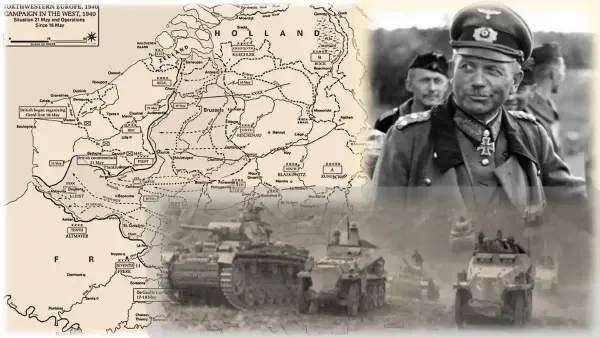
The father of modern armored warfare. Guderian's innovations in mechanized doctrine, combined with his political skill, made him the most influential military thinker of the 20th century. We examine his contributions to strategy, tactics, and tank design. It then applies those principles to the Russo-Ukrainian War, where FPV drones have posed the most serious challenge to tanks since the high-velocity anti-tank gun.
A comprehensive analysis of Heinz Guderian's memoirs, Panzer Leader, and its implications for modern warfare, particularly in the context of the Russo-Ukrainian War. This article explores Guderian's strategic and tactical insights
A comprehensive analysis of Heinz Guderian's memoirs, *Panzer Leader*, and its implications for modern warfare, particularly in the context of the Russo-Ukrainian War. This article explores Guderian's strategic and tactical insights
An analytical journey through military engineering history, exploring the perpetual arms race between offensive and defensive technologies—from Archimedes' war machines to the tank that broke the trenches.
An analytical journey through military engineering history, exploring the perpetual arms race between offensive and defensive technologies—from Archimedes' war machines to the tank that broke the trenches.
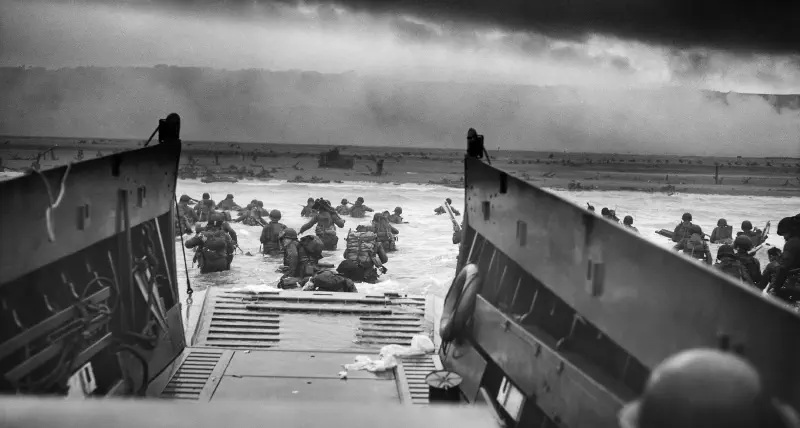
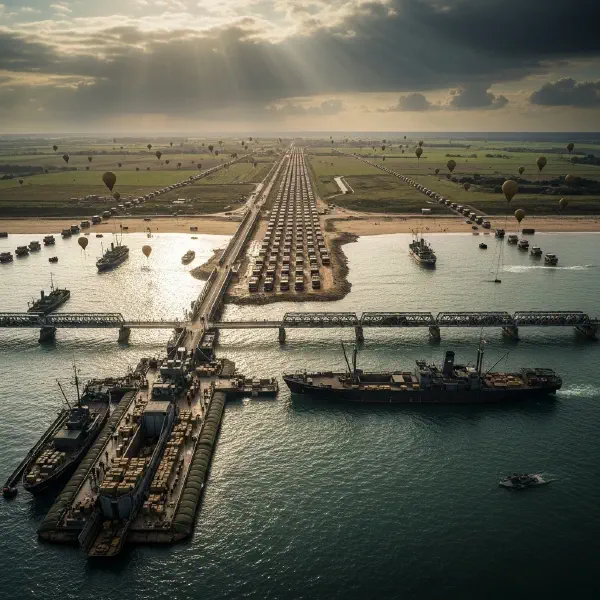
The Floating Lifeline: D-Day Logistics Engineering
Discover how wartime engineers built floating ports, prefabricated bridges, and organized the greatest truck convoy in history to supply millions of troops during the D-Day invasion. The untold story of the engineering marvels that won World War II.
Discover how wartime engineers built floating ports, prefabricated bridges, and organized the greatest truck convoy in history to supply millions of troops during the D-Day invasion. The untold story of the engineering marvels that won World War II.
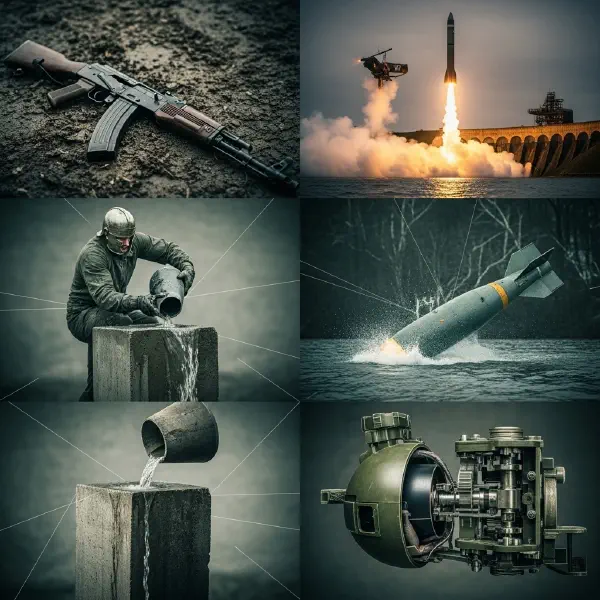
Discover six counter-intuitive engineering secrets that changed warfare forever: why 'good enough' beats perfection, how Roman concrete heals itself, and how a child's game inspired a dam-busting superweapon.
Discover six counter-intuitive engineering secrets that changed warfare forever: why 'good enough' beats perfection, how Roman concrete heals itself, and how a child's game inspired a dam-busting superweapon.
Part IV — Command and Decision: The Human Factor Under Extreme Pressure#
The intellectual core of this archive. War is a decision-making environment that systematically produces failure: cognitive overload, institutional rigidity, the political constraints on military logic, and the gap between what leaders know and what they are willing to act on. These series build a taxonomy of that failure — from the mathematical model of why nations go to war at all, to the individual character failures that turned tactical positions into catastrophes.
Read Calculus of Conflict first. It provides the structural framework — the political economy of war decisions — that makes the subsequent case studies analytically legible rather than just historically interesting.
A mathematical model for why nations repeatedly make catastrophic decisions to go to war. The answer is not irrationality: it is a structural flaw in who decides and who pays the cost.
A mathematical model explaining why nations repeatedly make catastrophic decisions to go to war, revealing the structural flaws in strategic decision-making.
A mathematical model explaining why nations repeatedly make catastrophic decisions to go to war, revealing the structural flaws in strategic decision-making.
Clausewitz called it friction: the accumulation of small, unpredictable obstacles that separates the plan from the execution. This series examines his framework as a live analytical tool, not a historical curiosity — and tests it against modern conflicts where friction proved decisive.
A comprehensive exploration of Clausewitz's theories on war, examining the interplay between violence, politics, and human factors in military strategy.
A comprehensive exploration of Clausewitz's theories on war, examining the interplay between violence, politics, and human factors in military strategy.
The fracture of individual character under pressure leaves permanent marks on the historical record. These pieces examine seven commanders whose decisions — made under extreme institutional, political, and physical pressure — determined the fate of campaigns and, in some cases, states.
What happens when tactical genius meets strategic impossibility? These pieces examine commanders whose battlefield brilliance was not merely insufficient but actively counterproductive — winning engagements while losing wars.
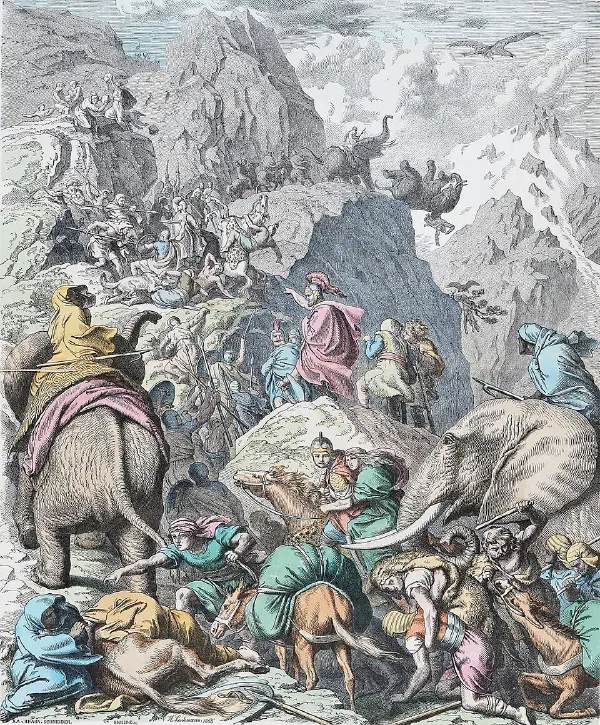
The cleanest historical case of the genius-without-endgame problem. Hannibal Barca won every major engagement of the Second Punic War and lost the war. These six pieces trace exactly how that happened — and why it keeps happening.
Read in sequence. The series builds a single argument: tactical excellence without a theory of political victory is self-defeating. Each entry tightens that argument.
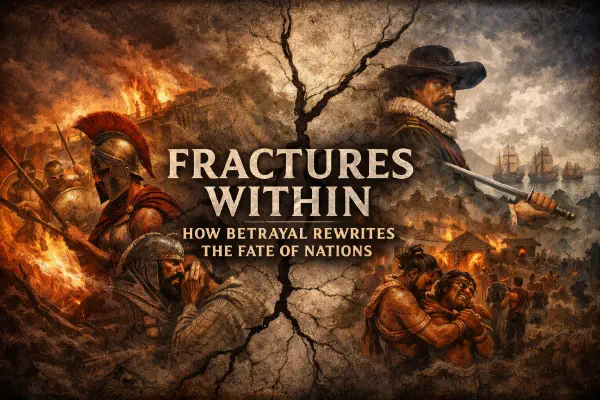
Fractures Within: How Betrayal Rewrites the Fate of Nations
*Internal betrayal — not external force — has repeatedly determined the outcome of conflicts. This series examines the mechanics of how cohesion breaks and what that means for military and political outcomes.*
Examines how internal betrayal—not external force—has repeatedly determined the outcome of conflicts and the fate of societies.
Examines how internal betrayal—not external force—has repeatedly determined the outcome of conflicts and the fate of societies.
The Anchors of Hubris: Engineering Disasters on the High Seas
*Three catastrophic naval engineering failures examined through the same decision-failure lens: the point where institutional confidence becomes incapacity to process contrary evidence.*
Exploring three catastrophic naval engineering failures that highlight the dangers of hubris in technology and the human cost of prioritizing ambition over safety.
Exploring three catastrophic naval engineering failures that highlight the dangers of hubris in technology and the human cost of prioritizing ambition over safety.
Abstract arguments about logistics, command, and doctrine become undeniable through specific historical cases. The Mongol Empire is the most instructive: a military system that simultaneously solved the logistics problem, the command problem, the intelligence problem, and the psychological warfare problem — and then failed to solve the succession problem. Twelve pieces on the most comprehensive military machine in premodern history, plus the nomad equation that made it possible.
The Mongol Empire series covers twelve dimensions of the system. Begin with the military machine itself, then the decimal army structure, then the terror strategy — these three establish the operational logic. The remaining entries examine specific innovations: siege warfare, the information network, the Silk Road explosion, the law code, and the contradictions that produced eventual fragmentation.
How a nomadic people from the Eurasian steppe built the largest contiguous empire in history — not through superior numbers, but through superior organizational design, intelligence gathering, and the deliberate use of terror as a logistical substitute.
How a nomadic people from the steppes built the largest contiguous empire in history – and the military, economic, and organizational innovations that made it possible.
How a nomadic people from the steppes built the largest contiguous empire in history – and the military, economic, and organizational innovations that made it possible.
The steppe military tradition that produced the Mongols was not an accident of geography — it was an engineered system. This series examines the specific innovations in mobility, logistics, and tactical doctrine that made nomadic warfare so difficult for settled states to counter.
Exploring how the Mongols engineered the world's first hyper-mobile army through innovations in composite bows, saddles, and logistics systems.
Exploring how the Mongols engineered the world's first hyper-mobile army through innovations in composite bows, saddles, and logistics systems.
Part VI — The Information Dimension: From Psyops to AI#
The most durable product of the battlefield is not a weapon — it is a technique of control. Military psychological operations, developed to shape enemy behavior under fire, migrate into civilian populations after every major war. The internet gave these techniques global reach. AI gave them industrial throughput. These pieces trace that arc from its military origins to its present applications.
A forensic investigation into how battlefield information operations — techniques developed to break enemy will and manipulate behavior under fire — were adapted, institutionalized, and deployed against civilian populations as instruments of domestic political control.
Two pieces examining how defense procurement and military-funded research shape the technological landscape far beyond the battlefield — from DARPA's biomimicry programs to the fighter jet as a lens on theories of state value.
How Cockroaches and Lobsters Are Designing the Future of War
*The military, not the environmental movement, built modern biomimicry. DARPA's biological research programs reveal how the Pentagon turns nature into a design lab — and what that means for the technologies that eventually enter civilian life.*
Beyond green technology: How the U.S. military turned nature into a high-performance design lab for the modern battlefield.
Beyond green technology: How the U.S. military turned nature into a high-performance design lab for the modern battlefield.
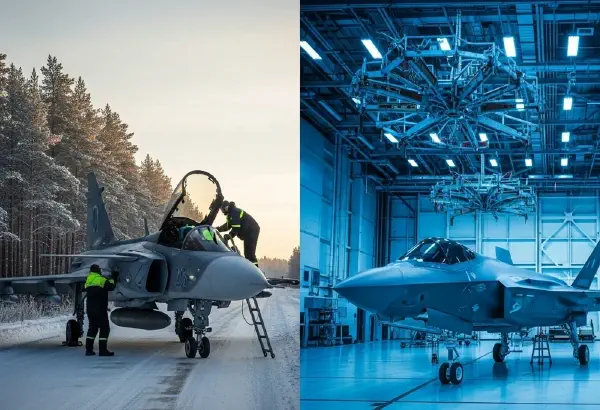
The Fighter Jet and the State: A Tale of Two Systems
*Defense procurement decisions are a direct expression of a state's theory of its own value. Two fighter jet programs, two theories of sovereignty, two different answers to the question of what a state owes its people.*
A critical analysis of how defense procurement decisions reveal deeper theories of state value, sovereignty, and economic welfare through the lens of two contrasting fighter jet programs.
A critical analysis of how defense procurement decisions reveal deeper theories of state value, sovereignty, and economic welfare through the lens of two contrasting fighter jet programs.
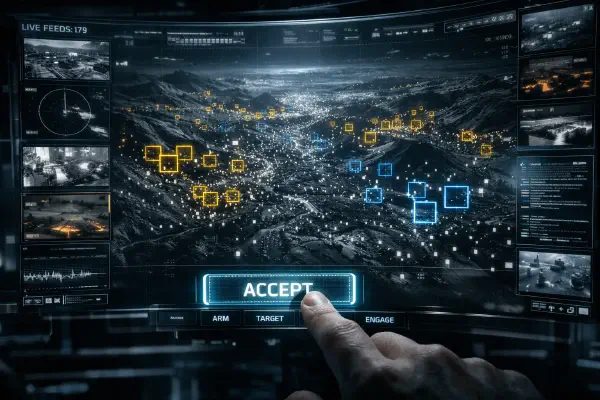
The most significant operational development in targeting since satellite reconnaissance. AI-assisted targeting has compressed the kill chain from days to under ten minutes, increased target throughput 50-fold, and distributed accountability across a software architecture that no single human authorizes. This piece is the contemporary anchor of the entire archive.
An analysis of the efficiency gains and externalized costs of AI-assisted targeting in modern warfare, with a focus on the U.S. Department of Defense's Project Maven.
An analysis of the efficiency gains and externalized costs of AI-assisted targeting in modern warfare, with a focus on the U.S. Department of Defense's Project Maven.
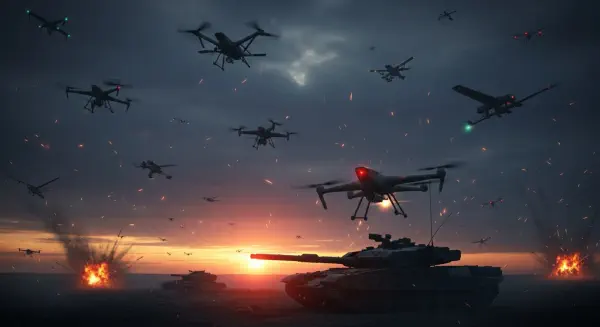
Warfare changes when the cost of delivering lethal force drops by three orders of magnitude overnight. That is what the drone did. A $500 FPV assembled in a Ukrainian basement strikes a $4-million vehicle. The defender must spend a thousand dollars for every dollar the attacker spends, or accept the hit. This is not a new weapon — it is a new economic structure for war, and it invalidates the procurement logic, the doctrine, and the escalation calculations of every major military on earth.
The Drone Wars is a six-part series. Read it in sequence: Post 1 establishes the cost-exchange framework; Post 2 examines the industrial production race; Posts 3–5 examine guidance, autonomy, and countermeasures; Post 6 addresses doctrine and strategic implications. The Expert Report synthesizes the full series into a single structured assessment. The Reference Guide and Timeline provide supporting data.
A six-part series dissecting the drone as a system disruptor — not through narrative alone, but through systematic analysis of cost-exchange ratios, adaptation cycles, economic attrition, and the fragile human element at the heart of modern combat.
A six-part series dissecting the drone as a system disruptor — not through narrative alone, but through systematic analysis of cost-exchange ratios, adaptation cycles, economic attrition, and the fragile human element at the heart of modern combat.
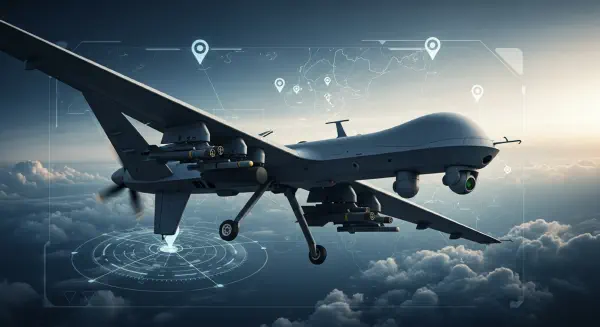
From the $500 FPV drone to the $32 million MQ-9, unmanned systems have rewritten the economics and ethics of warfare. This report synthesises operational data from Ukraine, the Middle East, and the wider arms market to explain why drones are not merely a new weapon: they are a new paradigm.
A comprehensive assessment of unmanned aerial systems in modern conflict: economics, technology, doctrine, and strategic implications.
Part VIII — The Gap: What the Battlefield Leaves Behind#
Wars end. The structures they create do not. The arms trade, defense procurement dependencies, military-industrial relationships, and the export of security doctrine from powerful states to client governments: these are the mechanisms through which the logic of war outlasts any particular conflict. This section is declared as a content gap — the equivalent of Colonialism's "Aftermath" section. It will be built as the archive grows.
Pieces to be added: the political economy of arms exports; how security assistance creates durable dependency; the defense procurement system as an instrument of alliance management; the privatization of force and what it means for accountability.
The Architecture of Post-War Power: The Military-Industrial Complex and Beyond#
In January 1961, Dwight Eisenhower warned of an "unwarranted influence" taking root in American governance. He named it the military-industrial complex. Sixty-four years later, that complex has not merely survived; it has evolved into a global architecture of dependencies that binds sovereign nations through encrypted software updates, bilateral legal agreements, and maintenance contracts stretching three decades into the future.
The military-industrial complex did not merely survive the Cold War. It metamorphosed into a global system of software dependencies, bilateral legal frameworks, and maintenance contracts that bind sovereign nations to exporters for decades after the last shot is fired.