A deep dive into how biological systems achieve remarkable resilience through decentralized design, offering lessons for human engineering and crisis response.
Most climate policy focuses on what we burn. The Density Dividend examines where we live — and demonstrates that the layout of cities generates carbon obligations that technology cannot easily fix. The Urban Carbon Leverage Factor reveals the structural carbon cost of urban form choices made decades before any car was manufactured or any power plant was built.
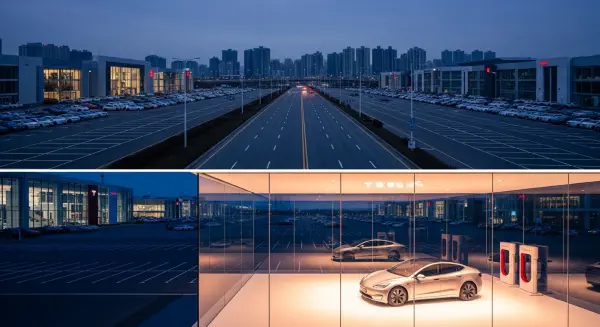
Analyses why EV deployment in car-dependent suburbs cannot resolve the Urban Carbon Leverage Factor, and what structural urban transformation would be required to approach the per-capita emissions performance of Vienna or Tokyo.
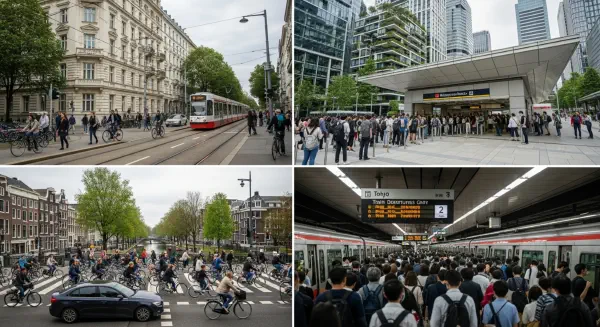
Compares Vienna, Singapore, Amsterdam, and Tokyo to demonstrate that cities with 40–70% lower per-capita transport emissions share a common structural explanation: urban density, transit investment, and mixed-use zoning.
Documents the 1945–1975 American suburbanisation project and the federal policy machinery — mortgage guarantees, highway funding, exclusionary zoning — that created the planet's largest per-capita transport carbon obligation.
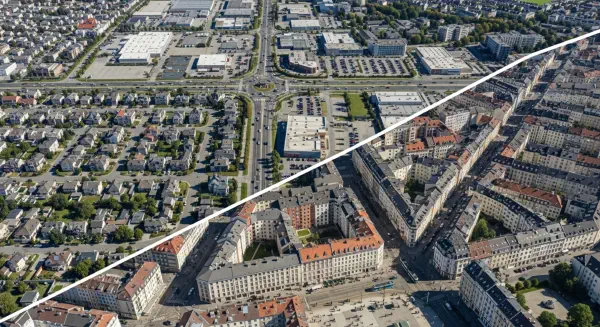
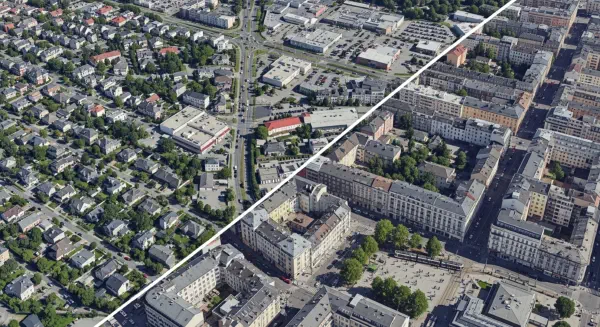
Applies Urban Carbon Leverage Factor analysis to low-density versus high-density residential environments, establishing that urban form generates carbon obligations that no vehicle technology can eliminate.
Who is responsible for the climate crisis? Discover the science of extreme event attribution, the role of fossil fuel companies in premeditated warming, and what action looks like in a superheated world.