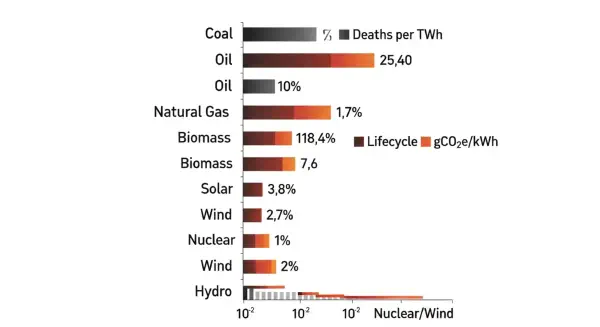
No energy source generates more fear per kilojoule produced or kills fewer people per terawatt-hour generated. The nuclear accounting problem is a problem of denominator confusion: the rare but vivid accidents receive the scrutiny that the continuous and ordinary deaths from air pollution do not. The Lifetime Risk-Adjusted Carbon Score compares every major electricity source on a common basis and the result inverts the conventional hierarchy of fear.
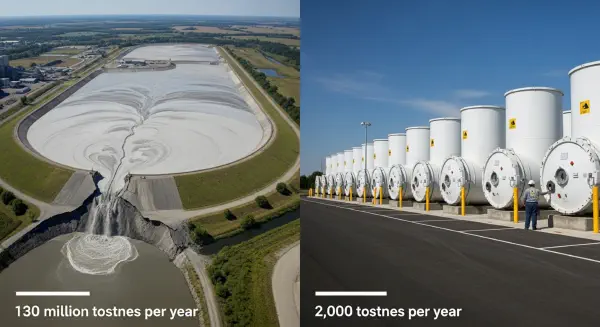
Compares the total US nuclear waste inventory against 130 million tonnes per year of coal combustion ash in hundreds of unlined surface ponds — a comparison of physical scale and toxicity that is arithmetically accurate and almost never presented.
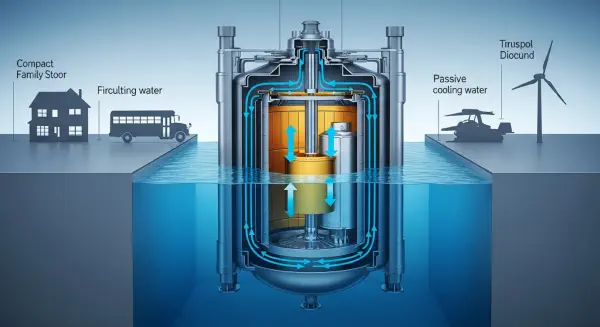
Applies Lifetime Risk-Adjusted Carbon Score analysis to small modular reactors and advanced designs, showing how the risk and cost profile of next-generation nuclear differs from the 1950s cold-war fleet that dominates most public mental models.
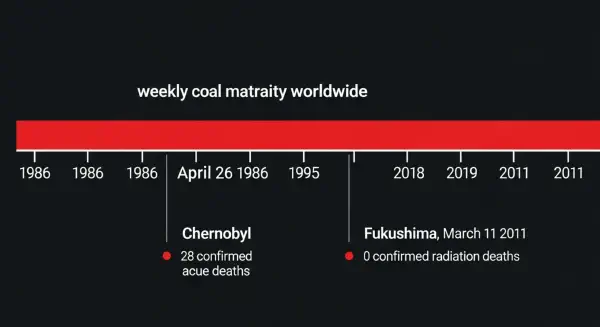
Places Three Mile Island, Chernobyl, and Fukushima mortality against equivalent coal-generation death rates on a per-TWh basis, producing the comparison that reveals the conventional hierarchy of fear is inverted from the hierarchy of harm.
Introduces the Lifetime Risk-Adjusted Carbon Score and applies the Hansen-Kharecha finding that nuclear power prevented 1.84 million deaths through displacement of coal generation — a calculation receiving a fraction of the media attention given to any nuclear accident.