Policy and Critique

The Water Ledger – Part 3: The Water in Your Hamburger

Applies water productivity data by food type and the Israel irrigation efficiency model to demonstrate that the Water Productivity Gap could be substantially closed through dietary and irrigation change without additional dam construction.


The Water Ledger – Part 2: The Disappearing Sea

Reconstructs the Aral Sea collapse as a Water Productivity Gap failure, and applies the same arithmetic to the Ogallala Aquifer depletion and Saudi Arabia's fossil groundwater draw-down — both proceeding toward the same terminal outcome.

The Water Ledger – Part 1: The Invisible River

Introduces Tony Allan's virtual water concept and applies Water Productivity Gap analysis to show that food trade is a hidden water transfer whose geopolitical implications are rarely captured in trade or food security frameworks.

Free Trade: Fact or Fiction?: Part 8 – Lazy Japanese and Thieving Germans

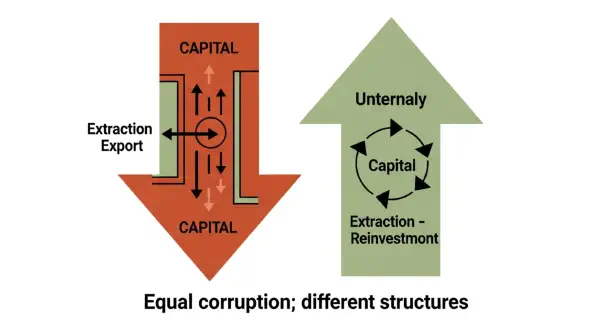
This post examines the two most common non-economic explanations for why poor countries stay poor: corruption and culture. It evaluates the empirical relationship between corruption and growth, asks why culturally identical countries at different levels of development exhibit different behavioral patterns, and traces the historical use of cultural argument as post-hoc justification for development outcomes.

Free Trade: Fact or Fiction?: Part 7 – Mission Impossible?

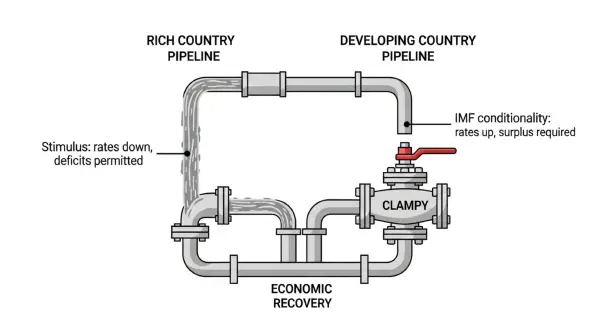
This post examines the macroeconomic policy prescriptions applied to developing countries through IMF conditionality, evaluating the empirical relationship between inflation, interest rates, fiscal policy, and economic growth across the historical record. It draws on the cases of Brazil, South Korea, South Africa, and Argentina to assess whether the standard orthodoxy of very low inflation and balanced budgets produces the outcomes its proponents claim.

Free Trade: Fact or Fiction?: Part 6 – Windows 98 in 1997

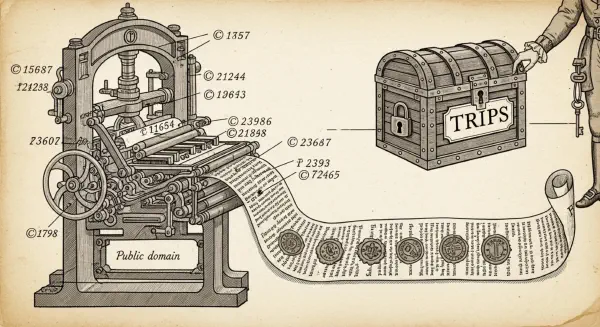
This post examines the history and current architecture of the international intellectual property rights system, tracing its evolution from the first patent law in 15th-century Venice through the 1994 TRIPS agreement. It asks whether the current system reflects a principle of rewarding innovation or a mechanism for managing competition between nations at different stages of technological development.

Free Trade: Fact or Fiction?: Part 5 – Man Exploits Man

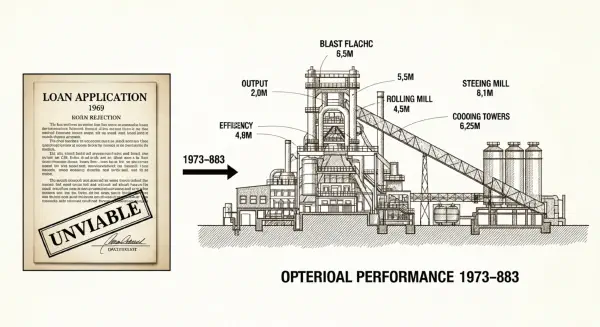
This post examines the institutional economics of state-owned enterprises, interrogating both the theoretical case against public ownership and the empirical record of actual SOE performance across Asia, Latin America, and Europe. It asks whether the dominant policy prescription — privatize — reflects the evidence or the ideology.