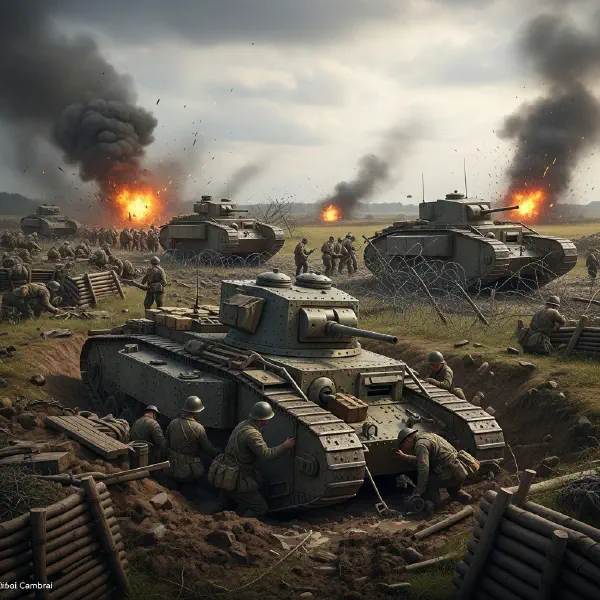
The tank was supposed to end the stalemate of trench warfare. Instead, it broke down constantly, got stuck in mud, and was nearly abandoned. How the most revolutionary weapon of WWI almost became history's most expensive failure.
Everyone knows WWI was a pointless stalemate that ended in exhausted armistice. Everyone is wrong. The Hundred Days Offensive was a stunning military achievement that broke the German Army—and nobody remembers it.
Douglas Haig led the largest army in British history through history's most technologically intense war. His background was horses. The results—spectacular failure followed by eventual success—offer lessons for any leader facing technology they don't understand.
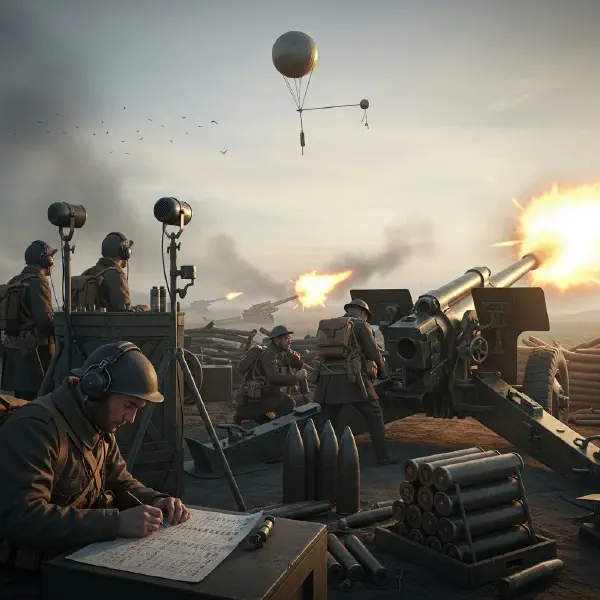
Tanks and aircraft captured the imagination, but artillery killed more soldiers than every other weapon combined. The revolution in gunnery—predicted fire, sound ranging, counter-battery work—was how the trenches were actually overcome.
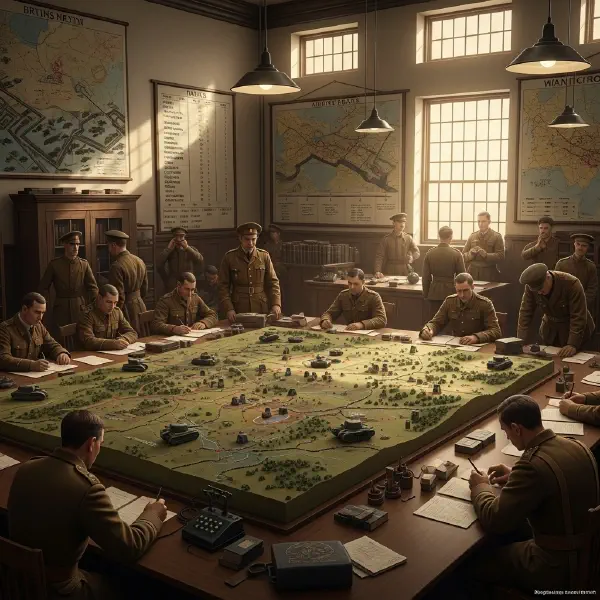
Between 1916 and 1918, the British Army underwent one of history's most remarkable institutional transformations. How did a hidebound Victorian organization become a dynamic learning machine while fighting the deadliest war in history?
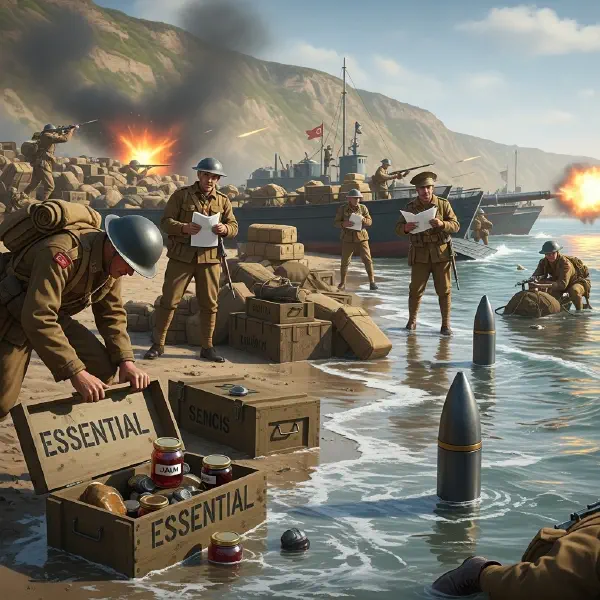
The Gallipoli campaign of 1915-16 is remembered as a strategic failure. But before a single soldier landed, the campaign was doomed by logistics chaos—supplies loaded in wrong order, crates mislabeled, critical equipment arriving months after the troops who needed it.