A three-part series examining civilization through the lens of physics, tracing how energy transitions power societal leaps and how accumulated waste precipitates systemic collapse.
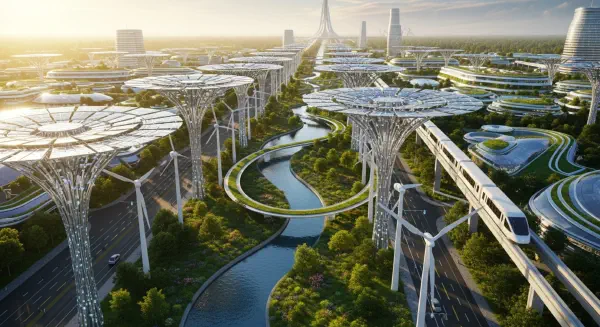
Investigates the principles for a next-stage civilization capable of maintaining complexity through renewable gradients and closed-loop materials management.
Analyzes the Industrial Revolution as a thermodynamic discontinuity, examining the unprecedented energy flux it unleashed and the corresponding waste crisis it generated.
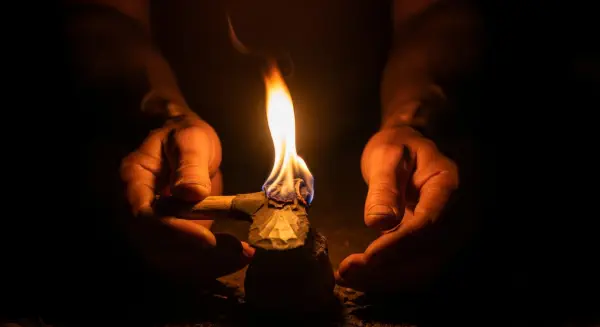
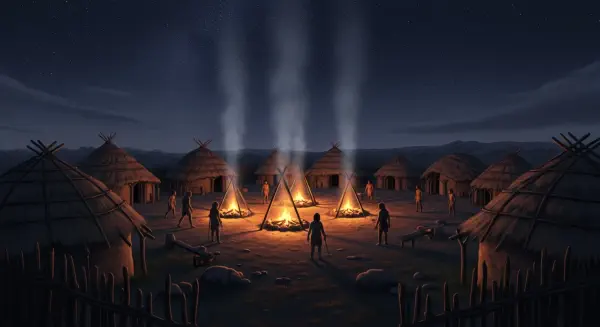
Explores humanity's first energy revolution—controlled fire—and how this thermodynamic breakthrough enabled cooking, tool-making, and the very foundation of social complexity.
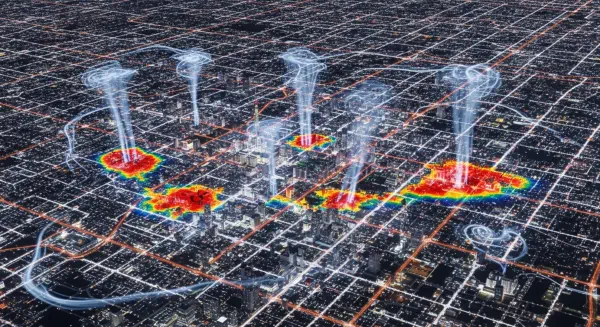
Explore how the Second Law of Thermodynamics imposes an inescapable efficiency ceiling on all energy conversion processes, forcing engineers to battle against irreversible heat waste in power generation.
The Role of Science in the Energy Debate # If we were guided by science, there would be a lot less hot air and more informed debate around energy.
Nothing in society is possible without the availability of sufficient energy. Nothing. Energy is a fundamental prerequisite of life and represents a particularly important factor of everyday life.