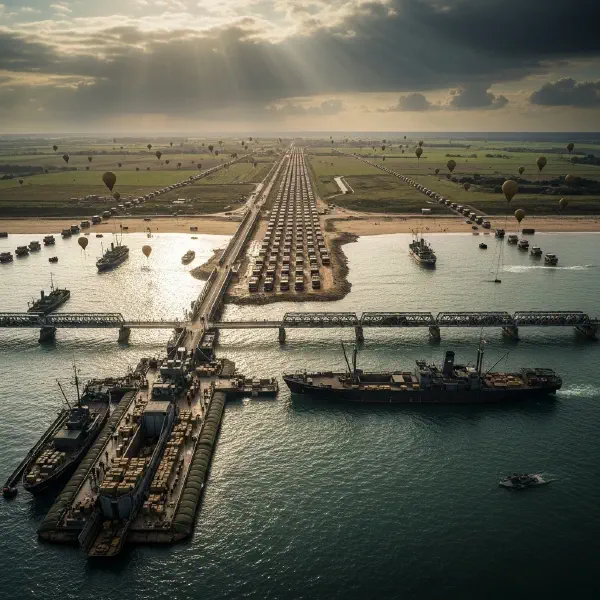
Discover how wartime engineers built floating ports, prefabricated bridges, and organized the greatest truck convoy in history to supply millions of troops during the D-Day invasion. The untold story of the engineering marvels that won World War II.
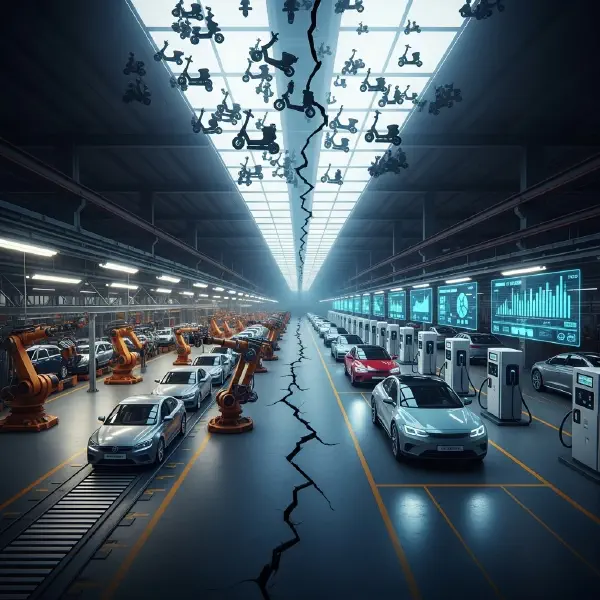
The automotive industry built its empire on a single technology. Now, faced with electric disruption, stagnant markets, and 200 million Chinese e-bikes, that century-old business model is unraveling.
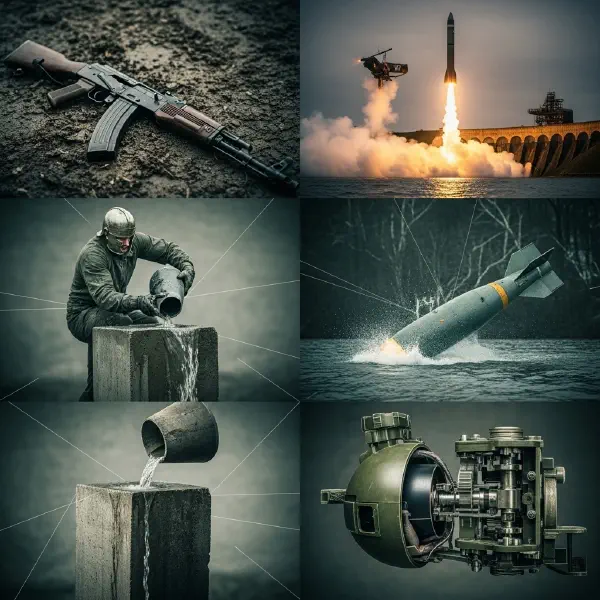
Discover six counter-intuitive engineering secrets that changed warfare forever: why 'good enough' beats perfection, how Roman concrete heals itself, and how a child's game inspired a dam-busting superweapon.
Discover five counter-intuitive secrets of ancient military engineering: Byzantine state secrets protected by angels, artillery built with cubic equations, and organic materials that outperform modern steel.
A comprehensive exploration of how technological innovation is shaped by path dependency, structural lock-in, and biomimicry as a pathway to more resilient design systems.
Examining how technological innovation is constrained by path dependency and structural lock-in, using QWERTY keyboards and other examples to illustrate why superior technologies often fail to displace incumbents.
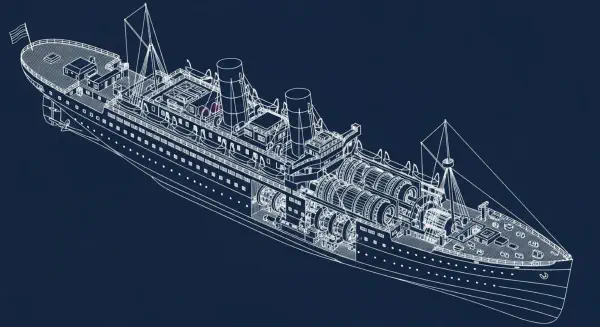
The early 20th-century steamship was a transitional industrial organism that achieved transoceanic scale by integrating high-density manual labor with a sophisticated 'closed-loop' thermodynamic system. Quantitative analysis reveals a critical dependence on thermal recycling, where steam volume expanded sixteen-hundredfold to drive quadruple-expansion engines before being condensed to prevent the catastrophic loss of fresh water. The structural mechanism of this integration was a steam-based nervous system that synchronized propulsion, navigation, and life support across a five-hundred-foot riveted steel hull. This analysis requires one post to synthesize the ship's mechanical and logistical unity.