The antidote to neurological conquest requires engineering sovereignty into systems: distributed architectures, redundant pathways, domestic capital markets, and strategic multi-polarity.
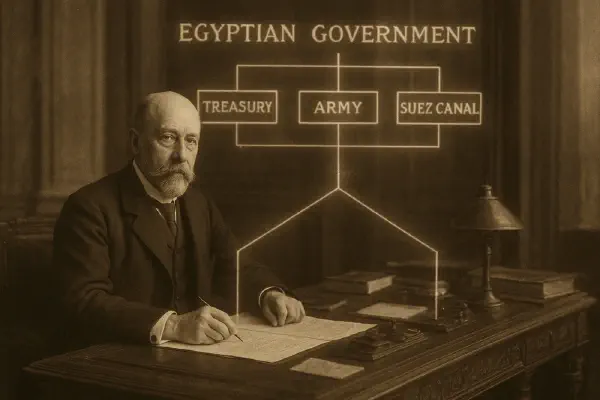
The British Empire's management of Egypt (1876-1914) perfectly executed the wasp's algorithm, using sovereign debt and a 'Veiled Protectorate' to achieve executive control while leaving the host state functionally intact.
Investigating how the East India Company pioneered the corporate-state hybrid, enabling private profit-driven governance and extraction on an imperial scale.
Examining how advanced weapons systems like the F-35 create embedded dependencies that trade strategic flexibility for perceived security, while sovereign alternatives preserve autonomy.
A critical analysis of how defense procurement decisions reveal deeper theories of state value, sovereignty, and economic welfare through the lens of two contrasting fighter jet programs.