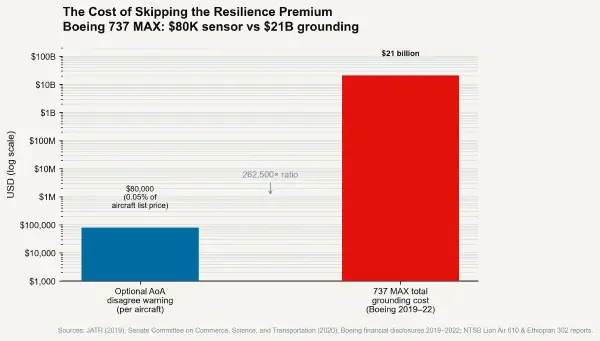
Dissects Boeing MCAS as a SRR < 1 case: a redundancy measure whose second sensor was eliminated to reduce complexity, guaranteeing that a single sensor failure would be catastrophic.
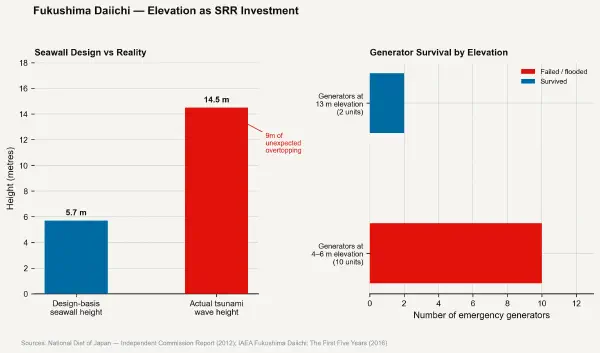
Analyses the Fukushima Daiichi disaster as a SRR ≈ 0 case: multiple redundant backup systems that all failed simultaneously because none were truly independent of the same failure mode.
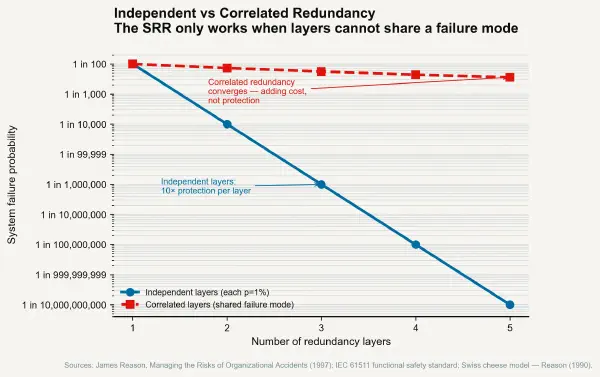
Introduces the Safety Return on Redundancy metric using James Reason's Swiss Cheese model, revealing when redundancy genuinely protects and when it simply redistributes false assurance.
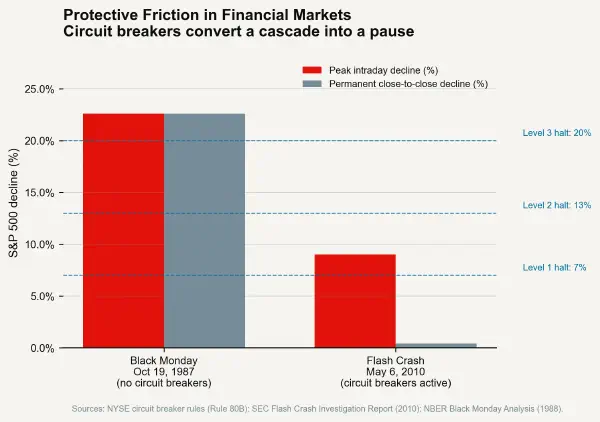
Examines nuclear launch protocols, financial circuit breakers, and deliberate two-step hazard confirmation as demonstrations that protective friction is a structural safety feature, not a design failure.
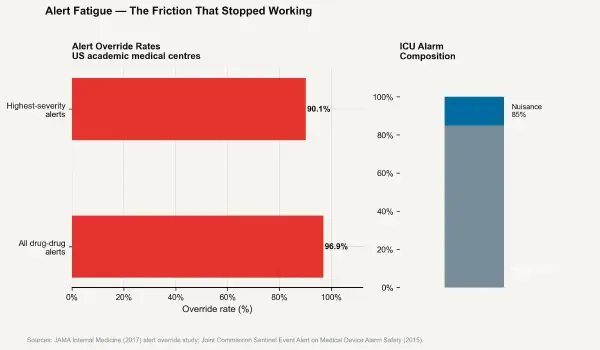
Traces EHR interface design failures to measurable medication error rates, establishing that the medical interface crisis is a CRIP-equivalent phenomenon in clinical software design.
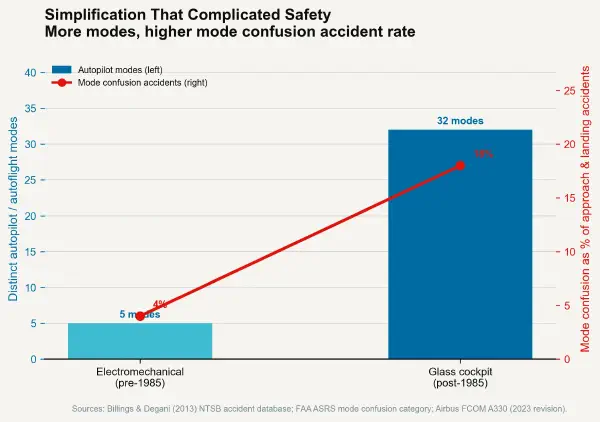
Documents aviation's glass cockpit transition and how digital interfaces increased IEAF in the mode-confusion regime, with accident data quantifying the cost of reducing electromechanical friction.
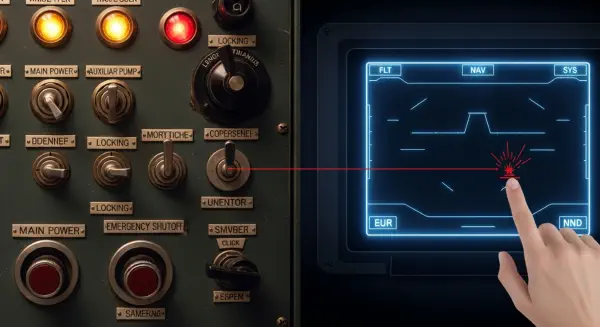
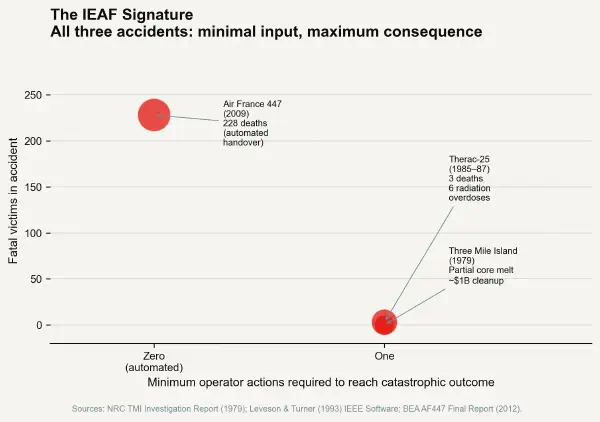
Uses TMI, Therac-25, and AF447 to establish that minimal input leading to maximal consequence is the signature failure mode of modern interface design, introducing the Interface Error Amplification Factor.