Political Economy

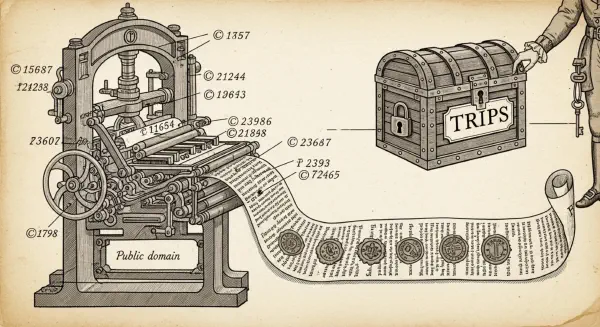
Free Trade: Fact or Fiction?: Part 6 – Windows 98 in 1997

This post examines the history and current architecture of the international intellectual property rights system, tracing its evolution from the first patent law in 15th-century Venice through the 1994 TRIPS agreement. It asks whether the current system reflects a principle of rewarding innovation or a mechanism for managing competition between nations at different stages of technological development.
Free Trade: Fact or Fiction?: Part 5 – Man Exploits Man

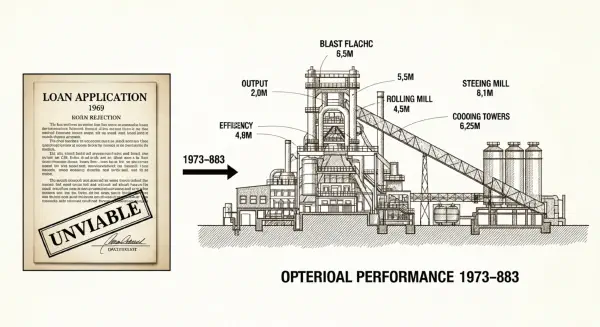
This post examines the institutional economics of state-owned enterprises, interrogating both the theoretical case against public ownership and the empirical record of actual SOE performance across Asia, Latin America, and Europe. It asks whether the dominant policy prescription — privatize — reflects the evidence or the ideology.

Free Trade: Fact or Fiction?: Part 4 – The Finn and the Elephant

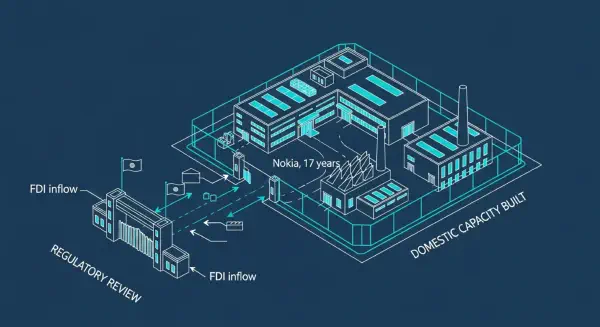
This post examines the relationship between foreign direct investment and economic development, asking whether the unconditional welcome recommended to developing countries by international institutions reflects the historical practices of today's wealthiest nations. It draws on the cases of Finland, Japan, Korea, the United States, Singapore, and Ireland to evaluate what conditions determine whether FDI accelerates or constrains long-run development.

Free Trade: Fact or Fiction?: Part 3 – My Six-Year-Old Son Should Get a Job

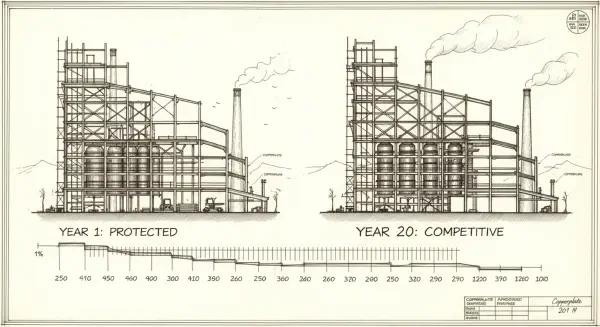
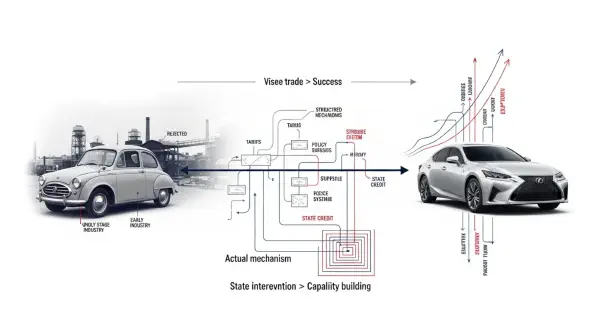
This post examines the theoretical and empirical foundations of free trade as a development strategy, focusing on the gap between the theory's assumptions and the observable conditions of developing country economies. It draws on case studies from Mexico, Ivory Coast, Zimbabwe, and Korea to assess whether rapid trade liberalization produces the outcomes its advocates predict. The argument about capability versus incentive is the analytical core.

Free Trade: Fact or Fiction?: Part 2 – Do As We Say, Not As We Did

This post examines the development strategies of today's wealthiest nations during the centuries in which they became wealthy, drawing on archival evidence from Britain, the United States, Germany, Japan, and other industrial powers. It places those strategies alongside the policy prescriptions those same countries currently deliver to the developing world. The gap between what rich countries did and what they now recommend is the central subject of the inquiry.

Free Trade: Fact or Fiction?: Part 1 – The Origin Story They Don't Teach

This post examines the dominant narrative about globalization — its origins, its internal logic, and its relationship to the actual historical record. Drawing on comparative development data from the post-war period through the present, it asks whether the policies prescribed to poor countries today bear any resemblance to the policies that made rich countries rich. The stakes are not academic: how a country understands the history of capitalism determines whether it believes it has options.

Occupation Without Armies: The Architecture of Permanent Dependency

A structural analysis of how colonial extraction survived decolonisation by trading armies for financial institutions — and why a country's engineering capacity, not its legal status, determines whether it is truly free.