Exploring biomimicry as a strategy for innovation, using examples like Velcro from burrs to demonstrate how borrowing evolved biological mechanisms can bypass human path dependency.
A comprehensive exploration of how technological innovation is shaped by path dependency, structural lock-in, and biomimicry as a pathway to more resilient design systems.
Examining how technological innovation is constrained by path dependency and structural lock-in, using QWERTY keyboards and other examples to illustrate why superior technologies often fail to displace incumbents.
The Mongols were steppe nomads who had never besieged a city. Within decades, they were systematically destroying the greatest fortifications in the world. How did they adapt so quickly – and what does it teach us about organizational learning?
The Mongol army was history's most effective military force relative to its size. These five innovations explain how 100,000 warriors conquered half the known world – and why their organizational principles still matter today.
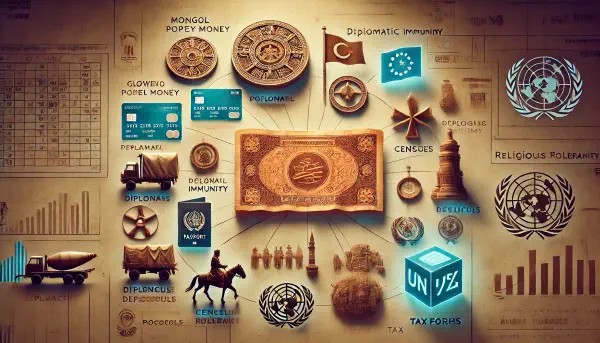
Paper money. Passports. Postal systems. Diplomatic immunity. These modern innovations trace back to the Mongol Empire. How did a nomadic people create administrative systems that still shape our world?
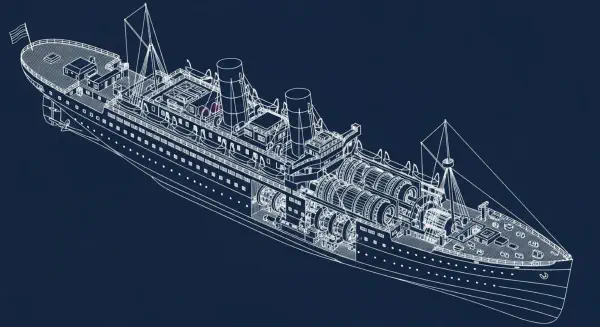
The early 20th-century steamship was a transitional industrial organism that achieved transoceanic scale by integrating high-density manual labor with a sophisticated 'closed-loop' thermodynamic system. Quantitative analysis reveals a critical dependence on thermal recycling, where steam volume expanded sixteen-hundredfold to drive quadruple-expansion engines before being condensed to prevent the catastrophic loss of fresh water. The structural mechanism of this integration was a steam-based nervous system that synchronized propulsion, navigation, and life support across a five-hundred-foot riveted steel hull. This analysis requires one post to synthesize the ship's mechanical and logistical unity.