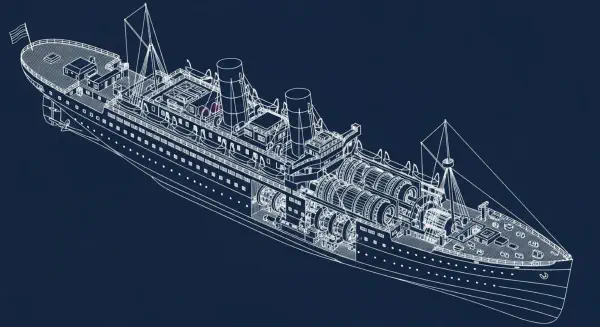
The early 20th-century steamship was a transitional industrial organism that achieved transoceanic scale by integrating high-density manual labor with a sophisticated 'closed-loop' thermodynamic system. Quantitative analysis reveals a critical dependence on thermal recycling, where steam volume expanded sixteen-hundredfold to drive quadruple-expansion engines before being condensed to prevent the catastrophic loss of fresh water. The structural mechanism of this integration was a steam-based nervous system that synchronized propulsion, navigation, and life support across a five-hundred-foot riveted steel hull. This analysis requires one post to synthesize the ship's mechanical and logistical unity.
The construction of the St. Lawrence Seaway promised economic prosperity but unleashed ecological disaster through invasive species like sea lampreys and alewives.
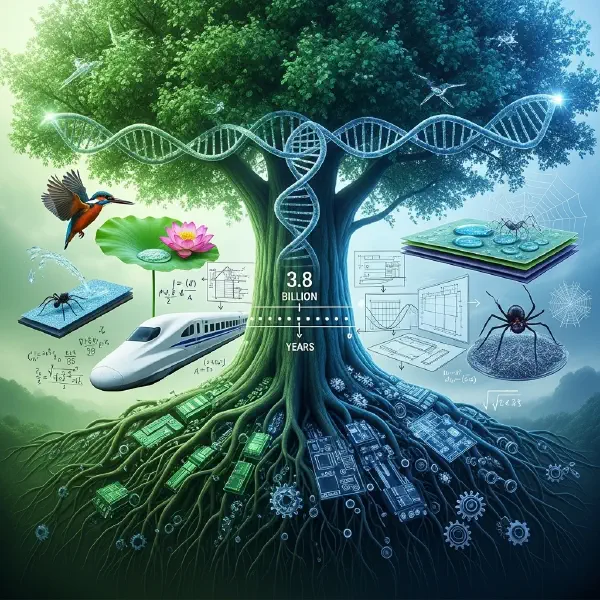
How 3.8 billion years of evolution created solutions that modern engineers are just beginning to copy. From bullet trains inspired by kingfishers to wind turbines modeled on whale fins, discover the extraordinary science of biomimicry.
For millennia, humans built things the hard way. Now we're discovering that nature solved most of our engineering problems billions of years ago. Welcome to the quiet revolution called biomimicry.