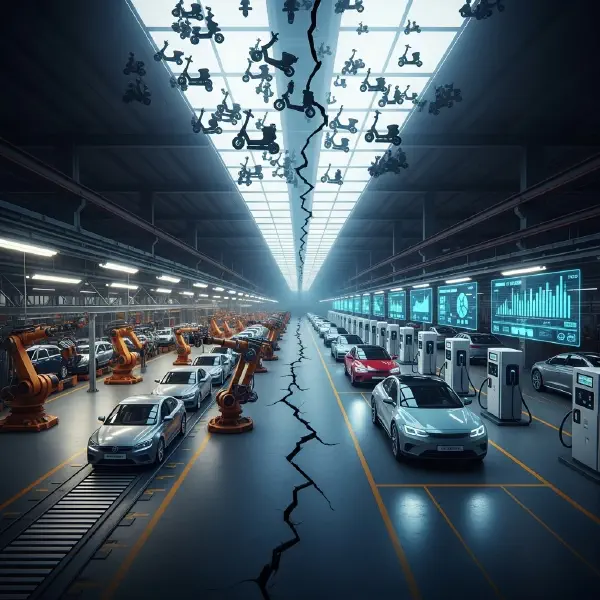
The automotive industry built its empire on a single technology. Now, faced with electric disruption, stagnant markets, and 200 million Chinese e-bikes, that century-old business model is unraveling.
A four-part forensic series applying the Non-Exhaust Particulate Fraction (NEPF) metric to expose the tire, brake, and road abrasion emissions that dominate automotive PM₂.₅ output in both combustion and electric vehicles — entirely outside the regulatory frameworks that defined the transition to clean vehicles.
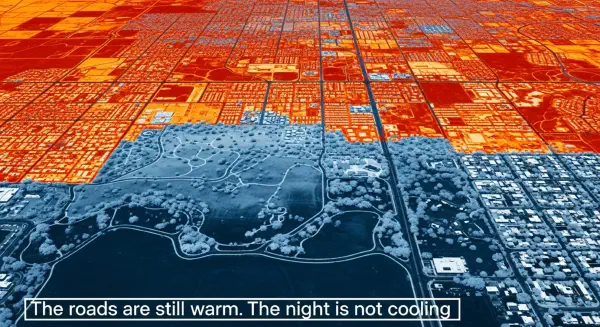
Examines how road surface thermal absorption and vehicle waste heat systematically elevate urban temperatures — an infrastructure externality shared equally by combustion and electric vehicles.
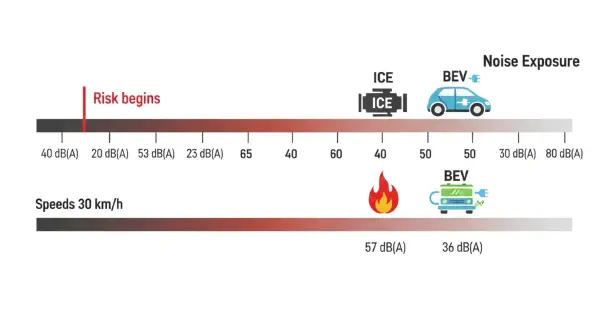
Quantifies road traffic noise as a chronic unmonitored public health externality, applying WHO European dose-response data to the burden that no automotive certification framework captures.
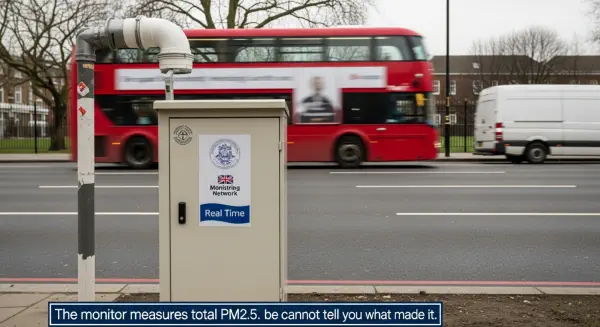
Applies NEPF to urban air quality monitoring data, mapping the systematic gap between what air quality networks measure and the non-exhaust fraction that now dominates roadway PM₂.₅ in post-Euro 6 cities.
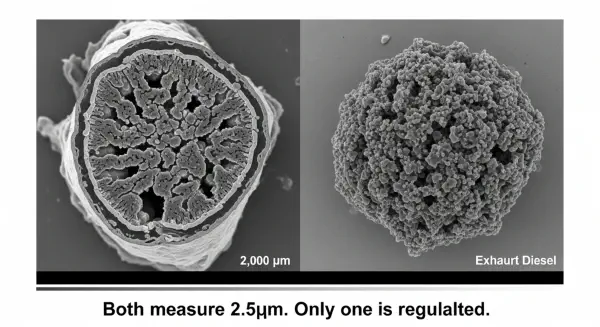
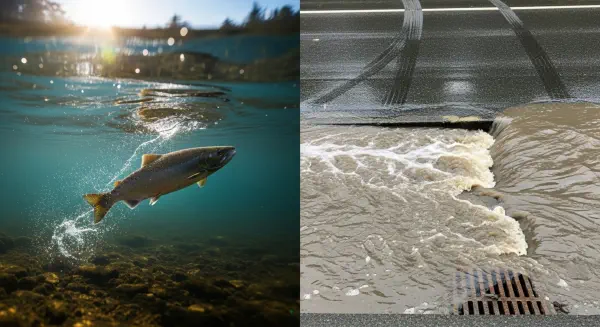
Introduces the Non-Exhaust Particulate Fraction (NEPF) and reveals why tire wear particles — including the salmon-lethal 6PPD-quinone compound — represent the dominant and unregulated PM₂.₅ output of all modern vehicles including battery-electric.
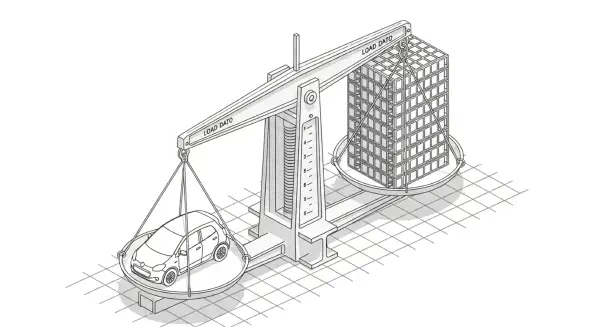
Why mass compounds against itself in every transport system — and what the Mass Amplification Factor reveals about the engineering limits of the electric vehicle.