Zaatari camp in Jordan opened in July 2012. By 2026, it has operated for 14 years, making it Jordan's fourth largest city by population. UNHCR has spent approximately $1.8 billion managing it. Every year of that spending was described, in the documents that authorized it, as an emergency response.
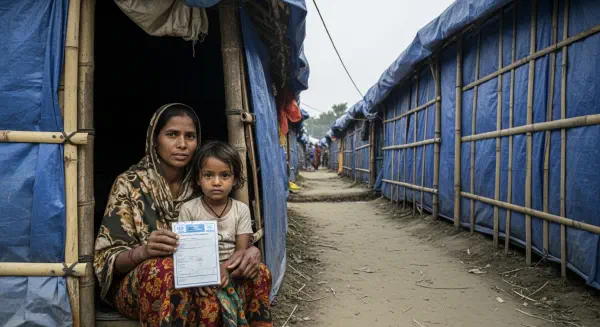
A child born in Cox's Bazar to Rohingya parents in 2018 is eight years old in 2026. She has never been a citizen of any country. She will not become one unless a political decision is made by a government that has already decided she does not exist. This is not an edge case. It is a category with at least ten million members.
In 2024, Germany received more political credit for hosting Ukrainian refugees than any country in the world. Lebanon, which hosts a refugee population comprising more than 25% of its total population and has done so for over a decade, received a fraction of that attention. A single index reveals why the arithmetic of generosity is almost entirely wrong.
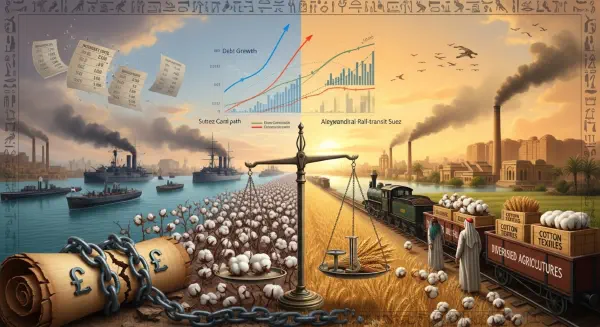
A four-part forensic examination of how the Suez Canal concession of 1854 set in motion a chain of financial, agricultural, and sovereign losses that culminated in British occupation. Anchored in primary sources and economic data.
From the forced sale of canal shares in 1875 to the British occupation of 1882 to the cotton monoculture that turned a food-exporting nation into a food importer — the endpoint of a chain that began with a handshake in 1854.