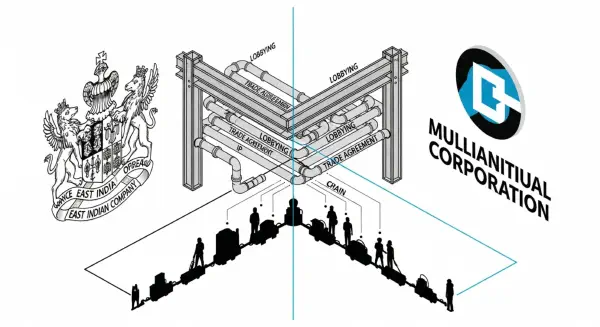
A six‑part Orwellian dissection of the English East India Company, from royal charter to corporate ghost, tracing the mechanics of monopoly, conquest, and linguistic deceit that built the modern world.
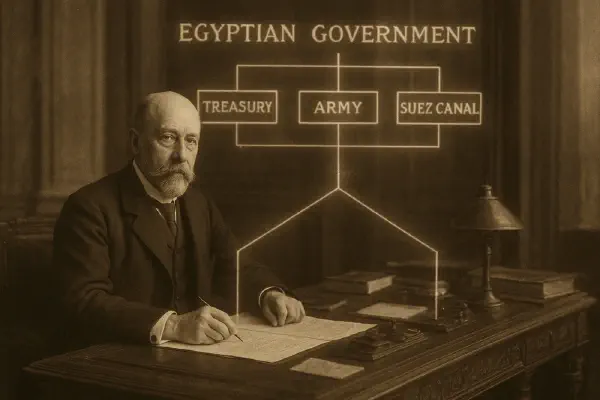
The British Empire's management of Egypt (1876-1914) perfectly executed the wasp's algorithm, using sovereign debt and a 'Veiled Protectorate' to achieve executive control while leaving the host state functionally intact.
Four posts. One accounting problem. The British Empire, examined through its own fiscal records, parliamentary debates, and the most rigorous academic cost-benefit study ever conducted of it, resolves into a recognizable structure: a system whose costs were socialized across a broad population and whose gains concentrated in a narrow connected class. This is not a moral verdict. It is a structural description. And it explains more about how colonial economies worked — and how their successors work — than any amount of rhetoric about civilizational mission.