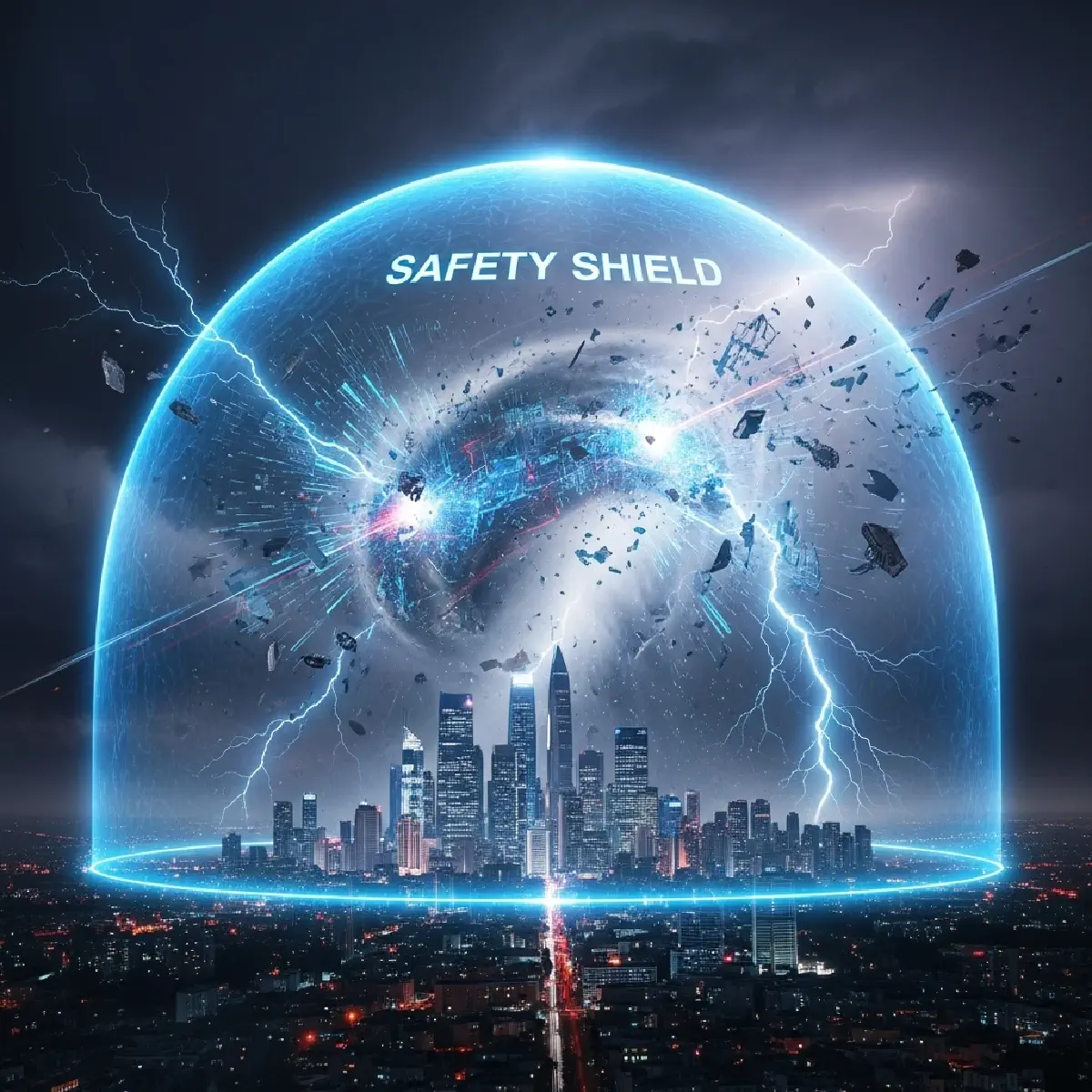
Zero-failure systems aim to create environments where errors are anticipated and mitigated before they lead to harm, emphasizing prevention over reaction.
The “safety shield” concept involves multiple layers of defense, including engineering controls, administrative procedures, and human factors, to create robust systems.
High-reliability organizations (HROs) operate under the principles of mindfulness, preoccupation with failure, reluctance to simplify interpretations, sensitivity to operations, commitment to resilience, and deference to expertise.
Leadership plays a critical role in fostering a culture of safety, encouraging open communication, continuous learning, and empowering employees to report potential hazards without fear of reprisal.
The integration of technology, human factors, and organizational culture is essential for the effective functioning of zero-failure systems, ensuring that safety is maintained even in complex and dynamic environments.
Hisham Ibrahim. (2025). Hisham Insights: Uncovering the Invisible Logic. hishaminsights.github.io.
Hisham Ibrahim. (2025). The Driver’s Mind: Psychology, Technology, and the Future of Human-Vehicle Interaction. Academic Press.
Perrow, C. (1984). Normal Accidents: Living with High-Risk Technologies. Basic Books.
Reason, J. (1990). Human Error. Cambridge University Press.
Rochlin, G. I., La Porte, T. R., & Roberts, K. H. (1987). The Self-Designing High-Reliability Organization: Aircraft Carrier Flight Deck Operations. Naval War College Review.
Taleb, N. N. (2012). Antifragile: Things That Gain from Disorder. Random House.
Weick, K. E., & Sutcliffe, K. M. (2007). Managing the Unexpected: Resilient Performance in an Age of Uncertainty. Jossey-Bass.