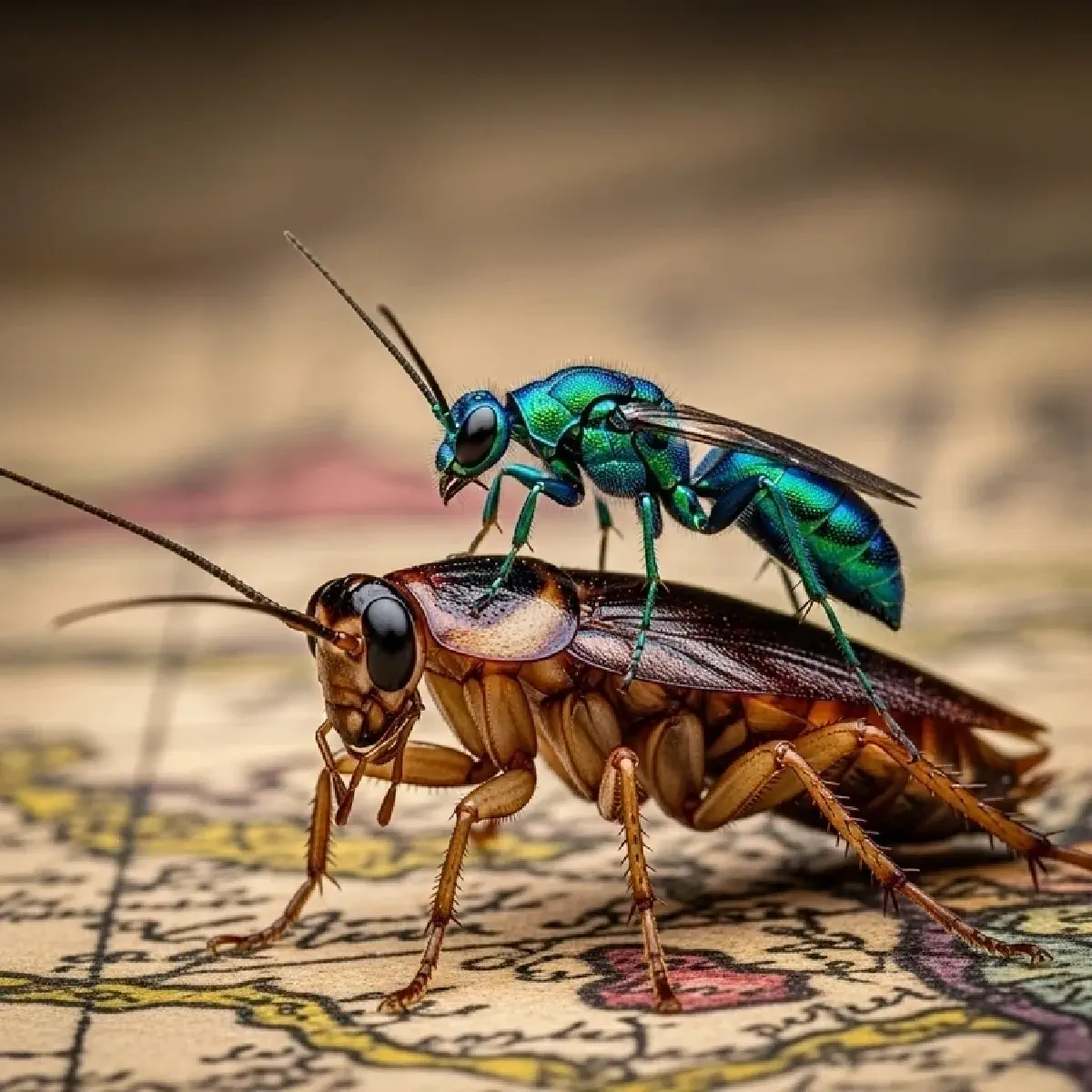
This series is a component of the larger intellectual project, "Parasitic Mechanisms as Systems for Geopolitics: The Biology of Power." This mega-series employs biological models of parasitism as precise analytical frameworks to dissect historical and modern strategies of asymmetric control. Each core series examines a distinct parasitic "playbook," from neurological hijack to behavioral manipulation. You are currently reading Series #1: The Wasp Doctrine. The complete taxonomy includes:
Biological Blueprint: The emerald wasp's two-sting strategy provides a universal model for efficient conquest through paralysis, hijack, and preservation.
Historical Perfection: The British Empire's management of Egypt (1876-1914) executed the wasp algorithm using sovereign debt and veiled protectorate.
Modern Evolution: The doctrine persists through financialized debt traps, platform monopolies, and strategic supply-chain dependencies.
The antidote to neurological conquest requires engineering sovereignty into systems: distributed architectures, redundant pathways, domestic capital markets, and strategic multi-polarity.
The core algorithm persists; its delivery has evolved into financialized debt traps, platform monopolies, and strategic supply-chain dependencies, enabling neurological conquest without formal empire.
The British Empire's management of Egypt (1876-1914) perfectly executed the wasp's algorithm, using sovereign debt and a 'Veiled Protectorate' to achieve executive control while leaving the host state functionally intact.
The emerald wasp's two-sting strategy of neurological hijack provides a universal, amoral blueprint for efficient conquest based on paralysis, hijack, and preservation.