
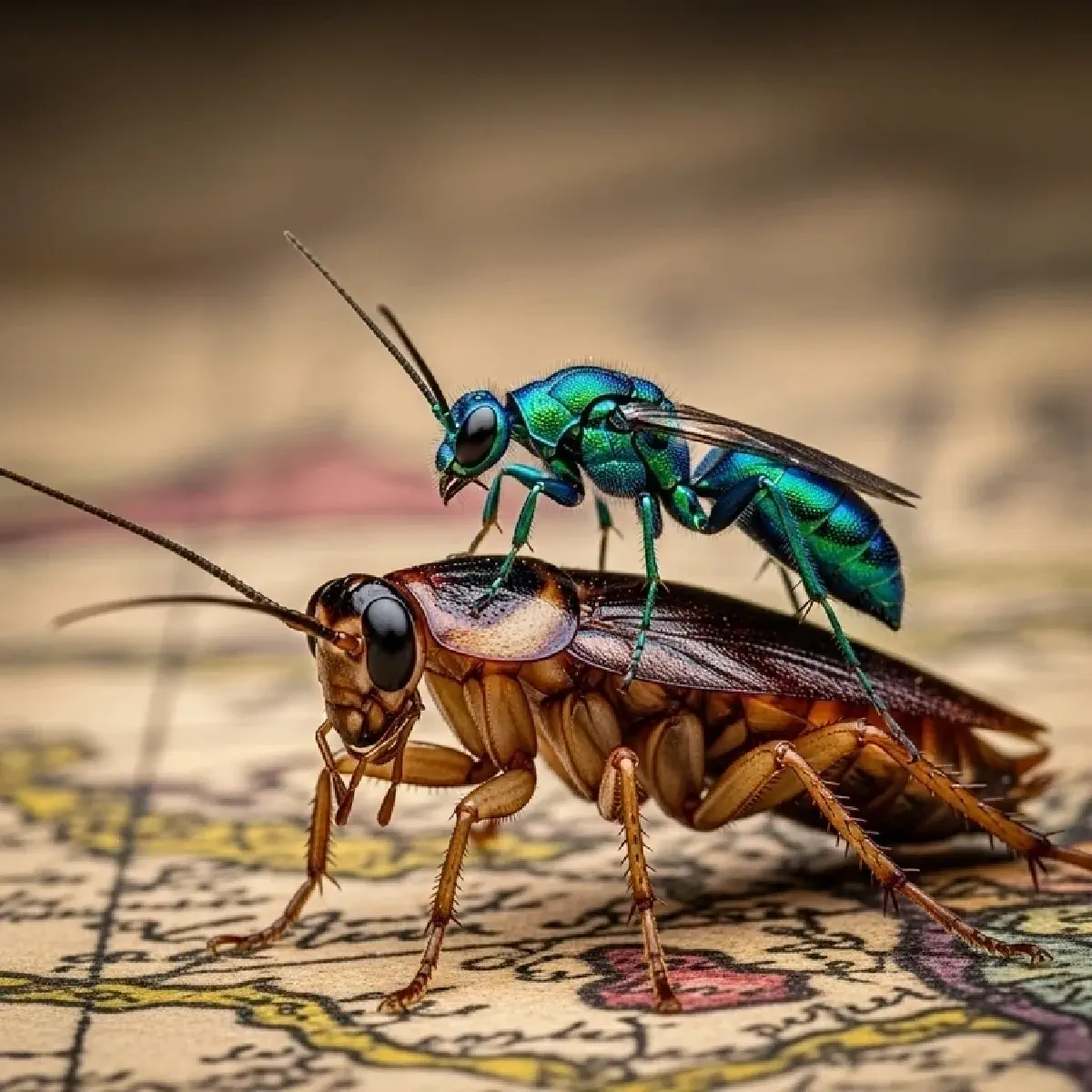
The Wasp Doctrine: The Neurological Model of Modern Conquest
Series Overview#
This series is a component of the larger intellectual project, “Parasitic Mechanisms as Systems for Geopolitics: The Biology of Power.” This mega-series employs biological models of parasitism as precise analytical frameworks to dissect historical and modern strategies of asymmetric control. Each core series examines a distinct parasitic “playbook,” from neurological hijack to behavioral manipulation. You are currently reading Series #1: The Wasp Doctrine. The complete taxonomy includes:
- The Wasp Doctrine: Neurological Hijack and Executive Control.
- The Cordyceps Directive: Total Ideological Reprogramming.
- The Sacculina Strategy: Castration and Resource Diversion.
- The Glyptapanteles Gambit: Proxy Armies and Client States.
- The Horsehair Worm Protocol: Engineering Strategic Despair.
- The Dicrocoelium Design: Multi-Host Supply Chain Control.
- The Epomis Protocol: Deceptive Entrapment and Aggression Baiting.
- The Swarm Imperative: Decentralized Networks and Anti-Fragile Systems.
- Capstone: Predator Taxonomy: The Behavioral Ecology of Empires. Explore the full project to understand how these biological systems provide a unified theory of geopolitical power.
Key Insights#
- Biological Blueprint: The emerald wasp’s two-sting strategy provides a universal model for efficient conquest through paralysis, hijack, and preservation.
- Historical Perfection: The British Empire’s management of Egypt (1876-1914) executed the wasp algorithm using sovereign debt and veiled protectorate.
- Modern Evolution: The doctrine persists through financialized debt traps, platform monopolies, and strategic supply-chain dependencies.
- Architectural Resilience: Defense requires technological sovereignty, strategic redundancy, and multi-polar deterrence.
References#
- Crosby, A. W. (1986). Ecological Imperialism: The Biological Expansion of Europe, 900–1900 (2nd ed.). Cambridge University Press.
- Moore, J. W. (Ed.). (2016). Anthropocene or Capitalocene? Nature, History, and the Crisis of Capitalism. PM Press.
- Galtung, J. (1971). A Structural Theory of Imperialism. Journal of Peace Research, 8(2), 81–117.
- Nye, J. S. (1990). Soft Power. Foreign Policy, 80, 153–171.
- Quijano, A. (2000). Coloniality of Power, Eurocentrism, and Latin America. Nepantla: Views from South, 1(3), 533–580.