The sound of a 1985 Mercedes-Benz 300D door closing is a benchmark. It’s a dense, low-frequency thunk, the sound of mass, precision, and intentional sealing. It feels like a bank vault. Now, open and close the door of any modern mid-size sedan. You’ll hear a crisp, light clack. Efficient, competent, and entirely forgettable. This is not a minor difference in sound insulation. It is the audible signature of a revolution in engineering philosophy—a complete rewriting of the fundamental objective function.
These W123 and W124 Mercedes, produced from 1975 to 1995, are legendary for their durability. They are often dismissed as “over-engineered.” This term is an insult. They were, in fact, perfectly engineered for a specific, now-alien goal: to be a permanent, reliable tool. The optimization problem was solved for maximum functional longevity and owner agency. The core constraints were material science and a premium price point. The primary variable was time in service.
Every design choice flowed from this. The body was double-galvanized steel, dipped in wax cavities. The five-cylinder diesel engine was designed for a 250,000-mile overhaul interval. The suspension used complex, costly double-wishbone geometry for consistent handling as components aged. These were not features. They were the outputs of a calculation where durability was the paramount variable to maximize. The optimization horizon was the lifespan of the owner, not the financing term.
This was engineering as a social contract. A company built a tool meant to outlast payments. A buyer invested in its stewardship. Profit was a necessary condition for the company’s survival, not the singular purpose of its existence. The objective function was multi-stakeholder: Maximize (Durability + Safety + Repairability) for the user, subject to (Material Cost + Manufacturing Feasibility + A Justifiable Premium Price). Today, these cars stand as rust-free, high-mileage anomalies. Their quiet persistence on roads is a standing rebuke to our current reality. They ask, without words: What changed in the very soul of how we make things?
The Calculus of Permanence#
To understand this era is to understand a different kind of math. Engineers did not start with a cost target and then see what performance they could afford. They started with non-negotiable performance envelopes defined by extreme, long-term use: corrosion resistance after 15 Swiss winters, structural integrity in a high-speed crash, engine performance at 120 mph on the autobahn for hours. These were the hard constraints, the walls of the design space.
Within those walls, they optimized for robustness and graceful degradation. Materials were chosen for endurance, not minimal weight. Components were over-specified, with generous safety margins—often a factor of two or more beyond expected peak loads. Repairability was not an afterthought; it was a first principle. A single, integrated module that cannot be opened is efficient to assemble but a catastrophe for longevity. The W124’s design allowed a skilled mechanic with standard tools to access and replace the vast majority of parts. This was optimization for the second derivative—not just initial quality, but the rate of decline of that quality over decades. It accepted higher upfront cost (mass, material, assembly time) to achieve near-zero long-term cost of ownership.
The Financial Paradigm Shift#
Two tectonic forces converged in the 1990s to dismantle this philosophy. First, the doctrine of shareholder primacy hardened from a theory into corporate law and MBA dogma. A company’s sole purpose was redefined as maximizing shareholder value, typically measured quarterly. Durability, once the crown jewel, became a strategic threat. A product that never needs replacing annihilates future sales. A part that never breaks kills the lucrative aftermarket parts and service revenue stream. The objective function was violently simplified: Maximize (Return on Invested Capital) over a 90-day horizon.
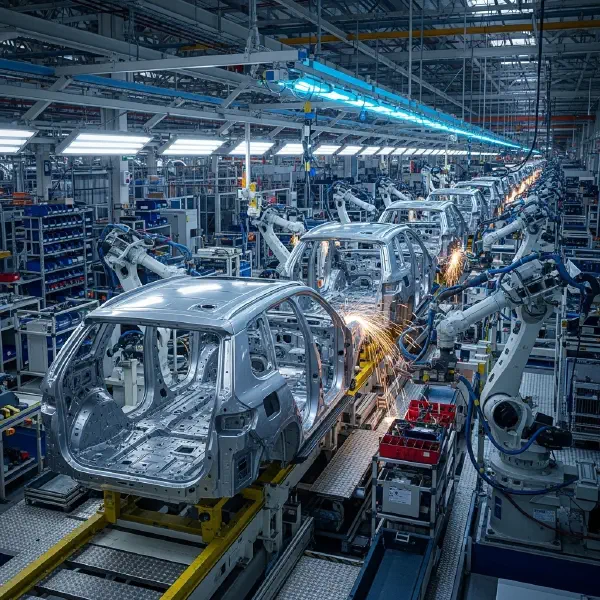
Second, globalized supply chains and hyper-precise cost accounting turned every screw, bracket, and gram of material into a line item to be minimized. The same computer-aided engineering tools that could ensure robustness—finite element analysis, fatigue modeling—were now used to eliminate it with surgical precision. This is “value engineering” or “weight optimization”: finding the absolute minimum material that can survive the warranty period. The goal shifted from “meet the performance standard with a safety margin” to “meet the minimum legal and warranty standard at the absolute lowest cost.” The 10-year/250,000-mile horizon collapsed into the 3-year/36,000-mile warranty period. The cost of disposal, the waste, the consumer’s frustration—these were “externalities,” pushed neatly off the corporate balance sheet and onto society.
The Cultural Metastasis#
The consequences of this shift bled far beyond engineering specifications. It fundamentally altered humanity’s relationship with the material world. The durable object fosters pride of ownership, skill in maintenance, and intergenerational continuity. It is an ally. The optimized, disposable product fosters transience, learned helplessness, and a perpetual state of upgrade anticipation. It is a temporary servant.
Consumer psychology was systematically retrained. “Planned obsolescence,” a scandalous conspiracy when exposed in the Phoebus cartel for lightbulbs in the 1920s, became the unspoken engine of modern manufacturing. Data from the U.S. Bureau of Transportation Statistics is telling: the median age of passenger vehicles in America peaked at 8.6 years in 2000, just as the last W124s were aging out of production. It then stagnated for nearly a decade, despite quantum leaps in metallurgy, lubricants, and corrosion protection that should have made cars last far longer. The tools for durability existed. The corporate will to use them did not.
We traded the profound, reassuring thunk of a solid door for a marginal reduction in sticker price and fuel consumption. We optimized for the flow of capital and the illusion of novelty, sacrificing the quiet dignity of things that endure. The cathedral of permanence had its cornerstone pulled. What rose in its place was a marketplace of beautifully engineered ephemera.