
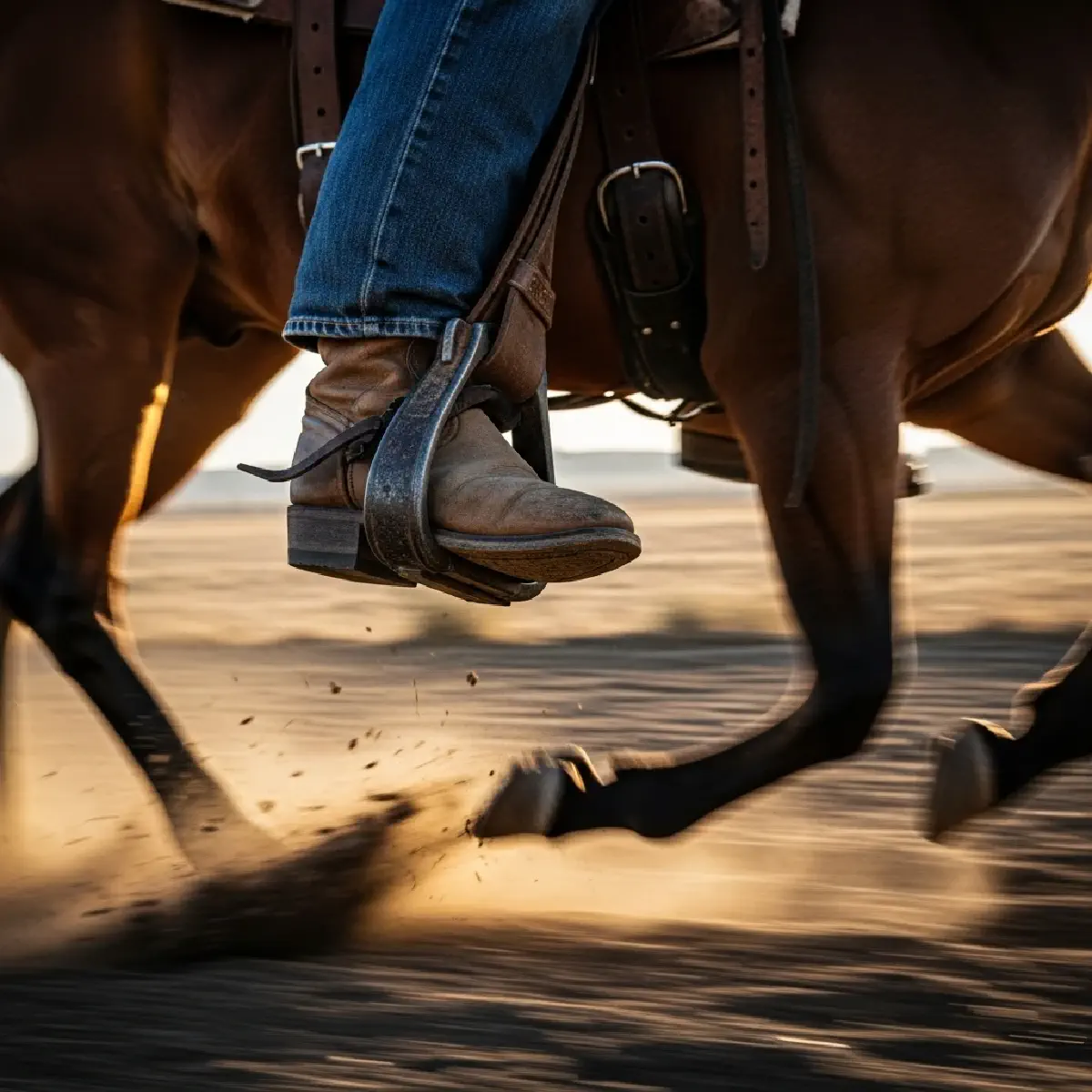
The Saddle That Conquered the World#
In 1241, at the Battle of Mohi, Mongol horsemen executed a complex night crossing of the Sajó River, formed up on the opposite bank, and delivered a devastating volley that broke the Hungarian army—all without losing cohesion. This feat of controlled chaos was impossible without the paired stirrup. Eight centuries earlier, Attila’s Huns had wooden saddles but rode without stirrups, their legendary mobility constrained by a fundamental instability. The stirrup, a simple curved piece of metal, was the keystone innovation that transformed a rider from a passenger clinging to an animal into a stable, integrated artillery platform.
The Thesis of Biomechanical Integration#
The stirrup did not just make riding easier; it redefined the biomechanical relationship between human and horse, creating a stable base of power for the composite bow. This integration turned Mongol cavalry from a skirmishing force into a precise, sustained-fire weapon system. The platform’s stability was the multiplier that unleashed the full kinetic potential of the laminated bow.
The Mechanism of the Static Platform#
A rider without stirrups is dynamically coupled to the horse; every gait and jolt transfers directly to the torso. To draw a heavy bow, the archer must counteract this motion with core muscles, wasting energy and compromising aim. The paired stirrup creates a static, three-point platform: two feet anchored in stirrups and the seat in the saddle. This allows the rider to decouple from the horse’s movement. By standing slightly in the stirrups, the archer can use the powerful muscles of the legs and back to draw the bow, transferring force along a stabilized skeletal column. This biomechanical advantage is quantifiable: it can increase effective draw strength by 30-50% for the same muscular effort.
The Crucible of Control and Endurance#
The stirrup’s secondary function was revolutionizing control. With feet anchored, riders could guide their mounts with knee pressure alone, freeing both hands for the bow. This enabled continuous “hands-free” riding during complex maneuvers and sustained engagements. Furthermore, the stable platform reduced fatigue. A Hunnic archer, constantly gripping with his thighs and balancing the draw, would exhaust himself rapidly. A Mongol archer, secured by the stirrup, could maintain a high rate of accurate fire over hours, turning cavalry combat from a series of brief charges into a methodical, exhausting bombardment. The high-cantle saddle used by the Mongols further enhanced this, cradling the rider and allowing for even greater stability during the draw.
The Cascade of Tactical Evolution#
This integrated platform enabled the evolution of Mongol tactics from harassment to systemic annihilation. The “Mongol volley”—where entire units fired in disciplined, rotating sequences—required each archer to maintain a precise aiming point amidst chaos, a feat impossible without a stable base. It also made the horse archer a dual-role system. With a stable platform, the same rider could seamlessly switch from bow to lance for shock combat, as the stirrup allowed him to brace for the impact of a charge without being unhorsed. This flexibility meant Mongol units could adapt instantly to battlefield conditions, skirmishing at range, then closing decisively without changing formation.
Synthesis: The Human-Weapon Interface#
The stirrup and saddle solved the second variable: control. They created a seamless human-weapon interface, maximizing the output of the composite bow system. Yet, a single optimized horse-archer, no matter how lethal, does not conquer continents. The final, decisive engineering triumph of the Mongols was not in perfecting the individual component, but in solving the system-level problem of scale. They had to fuel, maintain, and coordinate tens of thousands of these precision systems across thousands of miles of steppe, desert, and forest.