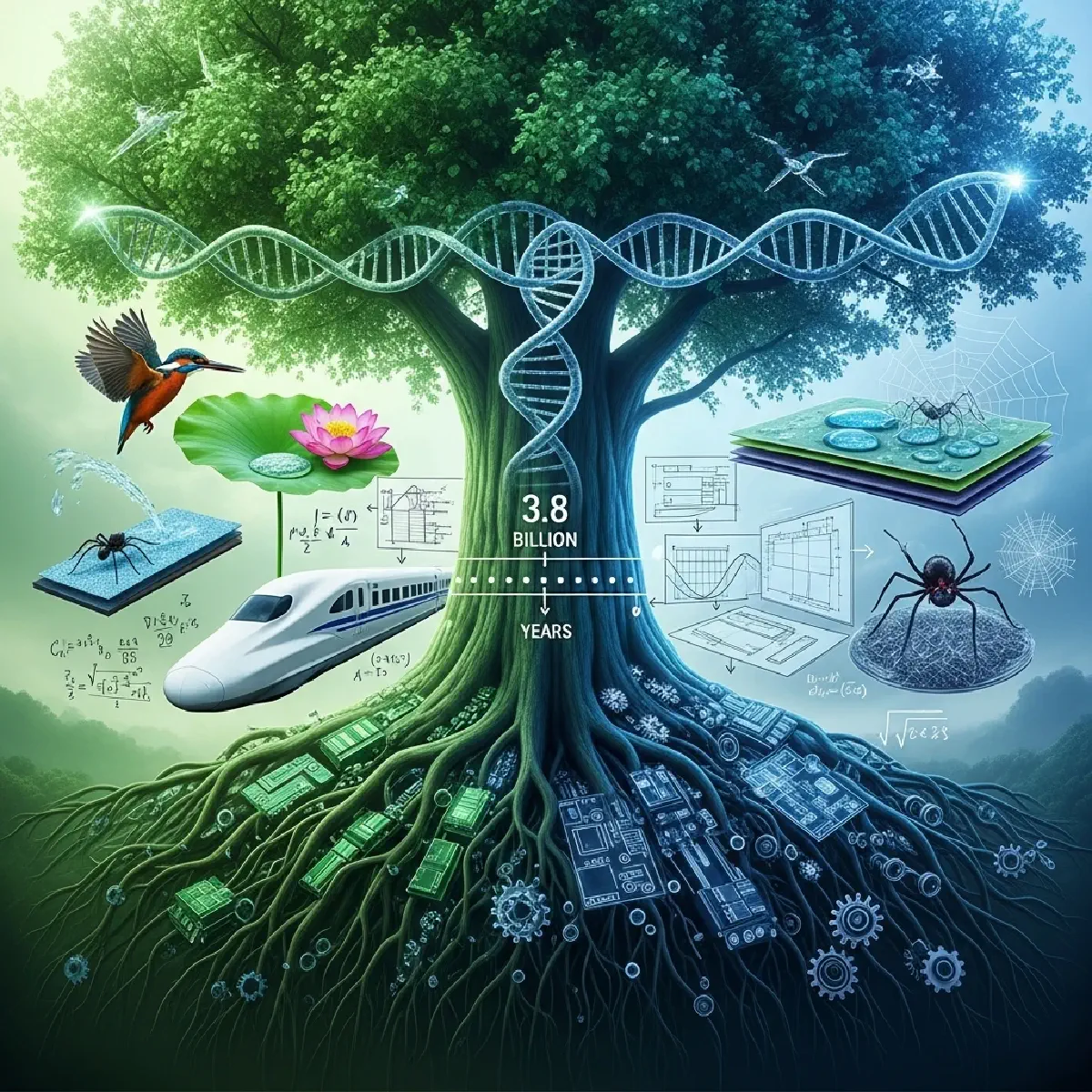
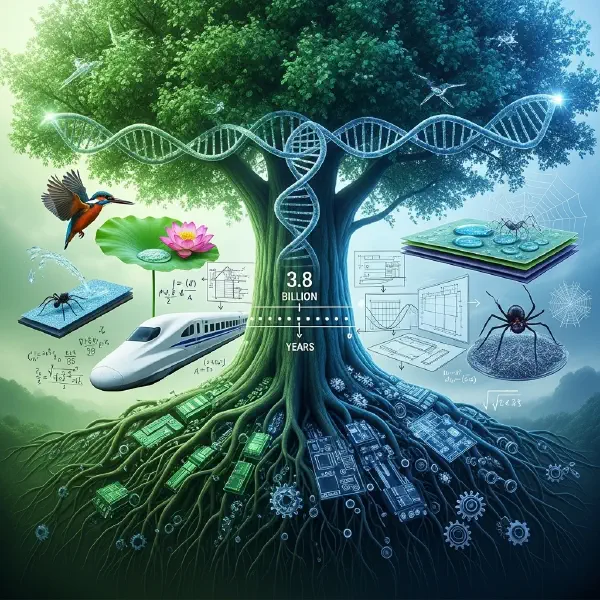
Nature has evolved a vast array of efficient and sustainable solutions over billions of years, which can inspire innovative engineering designs.
Biomimicry involves studying and emulating nature's strategies to solve human challenges in fields such as architecture, transportation, and materials science.
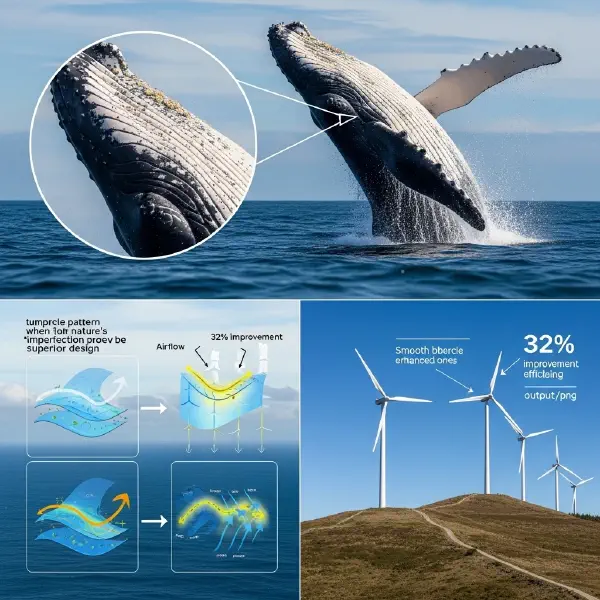
Examples of biomimicry include the design of bullet trains inspired by kingfishers, wind turbines modeled after whale fins, and self-cleaning surfaces based on lotus leaves.
By learning from nature, engineers can create more sustainable and efficient technologies that reduce environmental impact and enhance human well-being.
Benyus, J. M. (2002). Biomimicry: Innovation inspired by nature. Harper Perennial.
Vincent, J. F. V., Bogatyreva, O. A., Bogatyrev, N. R., Bowyer, A., & Pahl, A.-K. (2006). Biomimetics: Its practice and theory. Journal of the Royal Society Interface, 3(9), 471–482.
Bar-Cohen, Y. (Ed.). (2006). Biomimetics: Biologically inspired technologies. CRC Press.
Bhushan, B. (Ed.). (2013). Biomimetics: Biological materials, structures, and processes. Springer.
Kennedy, E. V., Fecheyr-Lippens, D., Tong, R., Turnbull, M. S., & Bhushan, B. (2015). Biomimicry: A review of recent developments in biomimetic materials, structures and processes. Bioinspiration & Biomimetics, 10(1), 011001.
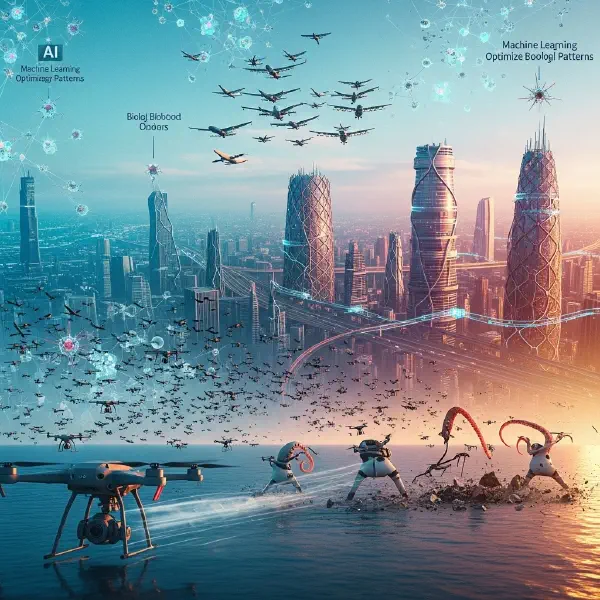
The next frontier of biomimicry isn't about copying nature's products—it's about copying nature's processes. Swarm intelligence, soft robots, self-assembly, and adaptive materials are creating machines that act alive.
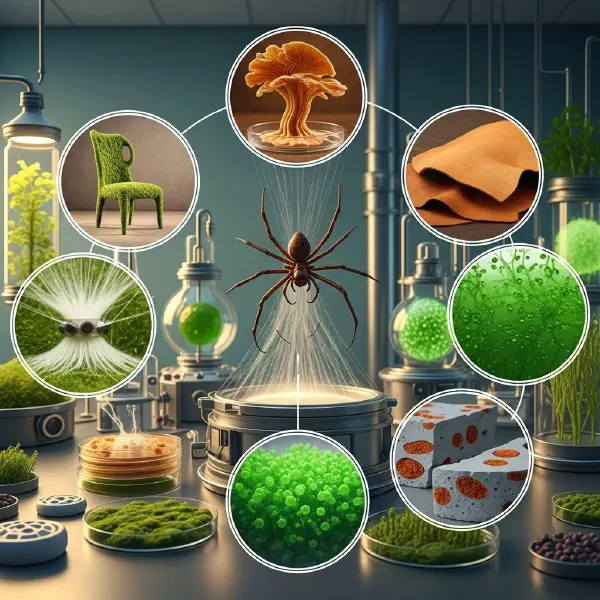
What if we could grow products instead of manufacturing them? Nature already does—producing materials stronger than steel at room temperature using water and sunlight. The biofabrication revolution is beginning.
Engineers spent decades trying to make wind turbine blades smoother. Then a marine biologist noticed that humpback whales had bumpy fins—and outperformed anything smooth. The discovery is reshaping renewable energy.
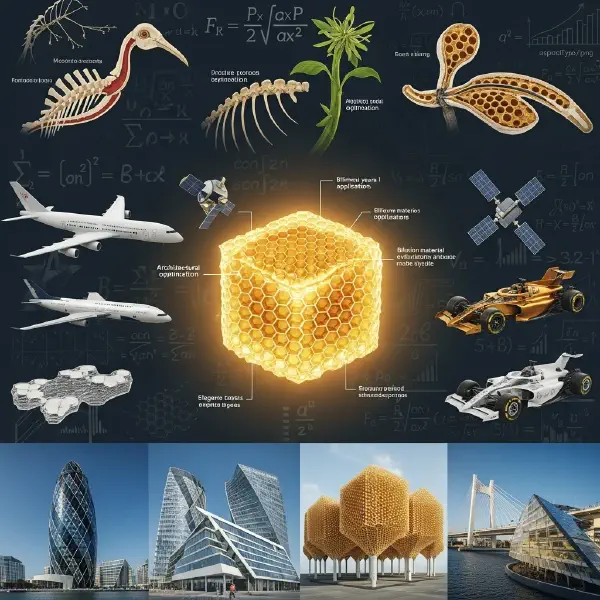
A bee's honeycomb uses the minimum possible wax to store the maximum possible honey. This principle—maximum strength from minimum material—is revolutionizing everything from aircraft to furniture.
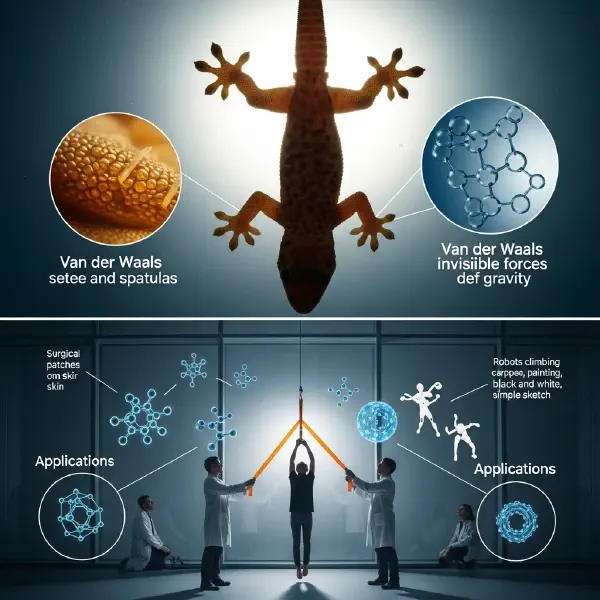
Geckos can support their entire body weight with a single toe. They stick to glass, Teflon, and wet surfaces. And they do it without any glue. Here's how—and why engineers are racing to copy them.
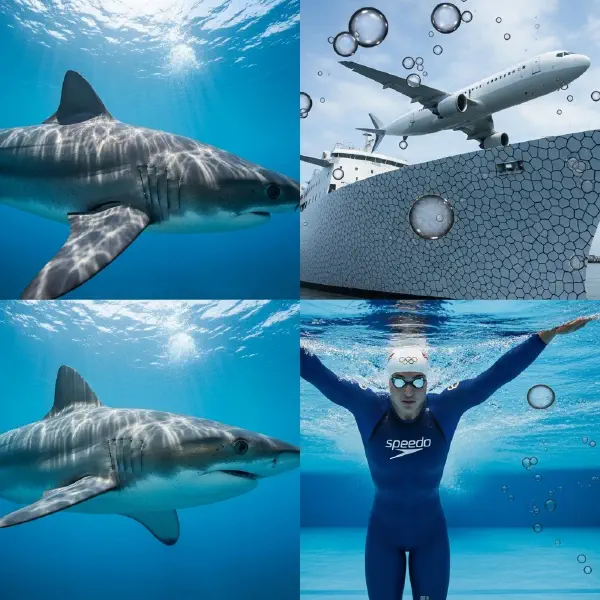
Nature's most ingenious innovations do nothing at all. From shark skin that reduces drag to lotus leaves that clean themselves, these passive surfaces are revolutionizing everything from hospitals to aircraft.
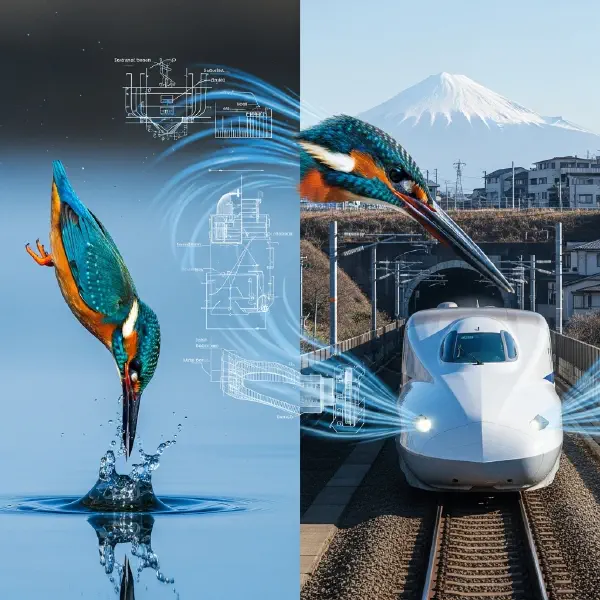
Japan's bullet train had a sonic boom problem. The solution came from an unlikely source: a birdwatcher who noticed how kingfishers dive into water without a splash.
For millennia, humans built things the hard way. Now we're discovering that nature solved most of our engineering problems billions of years ago. Welcome to the quiet revolution called biomimicry.