

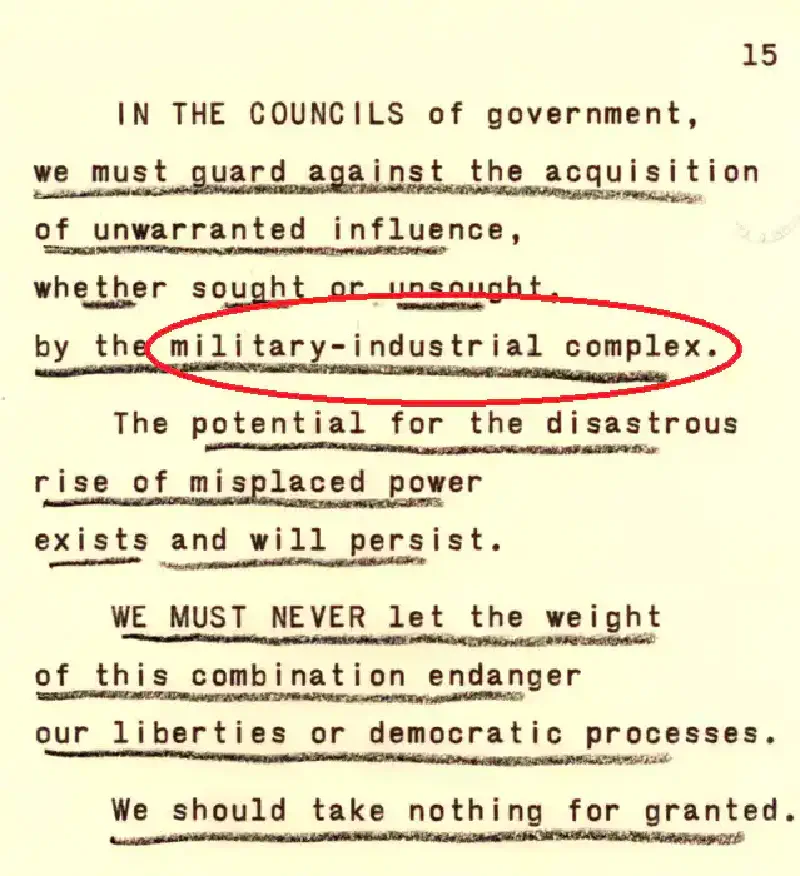
When the Guns Fall Silent, the Contracts Begin#
The conventional story of post-war power focuses on troops, territory, and treaties. It is a story about what happens during conflict. The more durable story is what happens after.
When the smoke cleared over Korea, when the helicopters lifted from Saigon, when the last coalition boots left Kabul, the physical presence ended. The financial and industrial presence did not. Defense procurement relationships, arms transfer dependencies, and maintenance contracts remained, binding the security apparatus of the former theatre to its foreign suppliers for years, sometimes generations.
The mechanism is not secret. It is structural. Military-industrial complexes (MICs) are networks of military professionals, defense industry executives, government officials, and legislators whose shared interest is perpetuating defense spending and technological development. Political scientist Thomas Palley (2025) describes this arrangement as a "variety of capitalism": a system where the defense market differs fundamentally from civilian markets because security is a public good, yet its procurement is governed by state-industry relationships that favor monopoly and oligopoly. Once established, the system generates its own momentum.
The Iron Triangle, Reforged#
The concept of the military-industrial complex has traveled a long way from Eisenhower's farewell address. At its theoretical core, the MIC describes an "iron triangle": the armed forces, civilian defense bureaucracies, the legislature, and the arms industry, each reinforcing the other's interests, each dependent on the others for resources, legitimacy, and influence (Gay, 2018; Mintz, 2013).
This triangle generates pressure through a specific mechanism: threat inflation. By systematically overstating external dangers, the coalition provides political justification for sustained resource allocation toward defense. The public-good nature of security makes independent verification nearly impossible for citizens; most people cannot assess whether a given threat requires a $400 billion weapons program or a diplomatic negotiation.
The Defense Industrial Base Is Not the Military-Industrial Complex#
A critical distinction separates the Defense Industrial Base (DIB) from the MIC. The DIB refers to the tangible national resources required for research, development, and production: factories, laboratories, skilled workers, and supply chains. The MIC is the political economy surrounding those resources: the coalition that shapes how they are used, funded, and expanded.
A nation can possess a robust DIB while having its strategic choices constrained by the MIC's vested interests. That constraint takes the form of long-term contracts, sunk costs, and lobbying networks that prioritize the maintenance of existing programs over broader strategic or social interests. When the Pentagon approved a merger wave among defense contractors after 1993, the "Last Supper" consolidation that produced Lockheed Martin, Boeing, and Raytheon in their current forms, it solved a cost problem by creating a political one. A handful of firms now carry such economic weight, in terms of employment across congressional districts and supply chains spanning the nation, that canceling major programs becomes politically toxic regardless of strategic merit.
Post-Cold War Consolidation and the Globalization of Arms Capital#
The end of the Cold War appeared to signal the decline of the MIC. Military expenditures fell sharply after 1991. Arms exports collapsed. Yet the period of contraction produced a strategic consolidation that ultimately increased both the monopoly power and the political influence of surviving contractors.
The remaining major firms became deeply integrated into state bureaucracies, dependent on the home market, and increasingly extending their reach through global supply chains and partner networks. Stavrianakis (2025) describes this as "unevenly internationalizing arms capital": the industry remains anchored in specific centers of power, primarily the United States and Western Europe, while projecting influence through global subsidiaries, licensed production agreements, and joint ventures. U.S. companies have established entities in dozens of foreign markets to secure government contracts and local partnerships, creating transnational networks that blur the line between a domestic defense contractor and a global arms broker.
State-Industry Models: Centralized vs. Market-Driven
From Bipolarity to Multipolarity in the Arms Trade
The interactive visualization below maps these economic and structural dimensions across four analytical lenses: the global scale of military spending, shifts in arms trade patterns, workforce and spillover dynamics, and comparative strategic policy models.
The Software Leash: When Code Becomes a Weapon#
The most consequential transformation of the military-industrial complex in the twenty-first century is one that rarely appears in traditional arms control debates: the transition from hardware-centric platforms to software-defined defense.
The F-35 Lightning II is the paradigm case. On paper, it is an aircraft. In operational reality, it is a software platform that happens to have wings. Its combat effectiveness depends not on the airframe, which is delivered once, but on Mission Data Files (MDFs) generated by specialized U.S. Air Force units and updated on a continuous cycle. Without these files, the aircraft cannot recognize threats, cannot effectively use its sensor suite, and progressively loses operational relevance.
The platform's sustainment system, originally the Autonomic Logistics Information System (ALIS) and now the Operational Data Integrated Network (ODIN), connects maintenance data to cloud-based systems controlled by the manufacturer and the U.S. government. Withholding software updates does not require a remote "kill switch." It requires only inaction, and the fleet degrades on its own timeline.
The Economics of Dependency: Maintenance, Repair, and Overhaul#
While the initial arms sale captures political attention, the durable lever of influence lives in the Maintenance, Repair, and Overhaul (MRO) aftermarket. MRO typically represents 5% to 10% of a manufacturer's cost of goods sold, yet it generates the vast majority of procurement transactions over a platform's operational life and represents a highly stable, recurring revenue stream.
The mechanism of leverage is straightforward. Through intellectual property protections and proprietary certifications such as Parts Manufacturer Approvals and Supplemental Type Certificates, original equipment manufacturers maintain pricing power over spare parts for decades. For the recipient nation, "owning" an advanced platform often means committing to a thirty-to-fifty-year relationship with the exporter's service infrastructure. Switching suppliers mid-cycle means not just purchasing different hardware but rebuilding logistics ecosystems, retraining maintenance personnel, and accepting a degradation in immediate operational readiness.
The revolving door compounds this dynamic. In the United States, defense industry political influence operates through what analysts describe as a "complex web of murky pathways" involving former military and government officials who move into defense company leadership or lobbying roles, leveraging privileged access to perpetuate contract relationships. Offset contracts, the side deals requiring exporters to invest back into recipient economies, are ostensibly designed to sweeten arms deals for the buying country. In practice, they are poorly documented, often opaque, and have repeatedly served as conduits for political influence. Leaked data from 2017 revealed that defense firms indirectly funded U.S. advocacy campaigns through Emirati development funds, demonstrating how the financialization of the arms trade creates global networks of influence that operate well below the line of democratic visibility.
Bilateral Defense Cooperation Agreements and Structural Inertia#
Beyond software and maintenance, post-war power is institutionalized through Bilateral Defense Cooperation Agreements (DCAs). These have proliferated dramatically since the Cold War's end, becoming the primary vehicle for long-term defense relationships. Unlike formal alliances, DCAs establish broad legal frameworks for routine bilateral defense relations: research and development collaboration, procurement coordination, joint exercises, and the exchange of classified information.
DCAs provide what legal scholars call structural inertia. They typically carry initial ten-year terms and require long notice periods for termination. They grant access to military facilities, standardize logistics, and align operational procedures around the lead nation's industrial and doctrinal stack. For the recipient, even a change of government committed to "strategic autonomy" faces a decade-long legal and logistical process of disengagement before any meaningful realignment is possible.
The European case is particularly instructive. EU member states have pursued strategic autonomy through frameworks such as PESCO and the European Defense Fund, seeking to reduce dependence on U.S. platforms and develop common European systems. Yet a militarily stronger EU is only viewed as benign by Washington if it remains interoperable with NATO standards (Brøgger, 2025). Any divergence risks being interpreted as a threat to the transatlantic relationship and a practical barrier to European forces operating alongside American units in a crisis.
The DCA Mechanism: Four Strategic Functions
Agentic AI and the Emerging Tech-Industrial Complex
From Baghdad to Kyiv: The Reconstruction Trap#
Post-conflict reconstruction provides the clearest demonstration of how military-industrial dependencies perpetuate themselves across the transition from war to peace. In Iraq after 2003, in Afghanistan through two decades of occupation, and in the ongoing reconstruction of Ukraine's security apparatus, the pattern repeats: foreign support builds local security capacity in ways that ensure continued foreign involvement.
Afghanistan and Iraq: The Lessons Not Learned#
The failures of Afghanistan and Iraq illuminate the fragility of externally constructed security. In both cases, massive external funding built local military and police forces whose logistics, equipment, maintenance, and often command structures were tied to foreign systems and foreign suppliers. When coalition support withdrew, the sustainability of those forces collapsed, not primarily because of failures of will or training, but because the supporting architecture was never genuinely transferred to local control.
The fiscal and logistical reliance embedded in those reconstruction programs was not accidental. Post-conflict donors are, as the research consistently demonstrates, motivated at least partly by the economic gains from reconstruction contracts. The "quick buildup of local forces" approach, premised on speed over institutional sustainability, repeatedly produced forces dependent on coalition foreign military sales that were structurally unsustainable once external funding ended.
Ukraine and the Danish Model#
The war in Ukraine has generated an important innovation in post-conflict reconstruction logic: the "Danish model" of direct, allied-funded defense procurement. Rather than transferring equipment from national inventories or selling arms on standard commercial terms, partner nations channel financial resources directly into Ukraine's own defense industrial base.
The results have been remarkable in scale. Ukraine's domestic defense production expanded from approximately $1 billion in 2022 to over $35 billion by 2025. This growth was enabled by foreign financing directed at Ukrainian manufacturers, with rigorous vetting performed by agencies such as the Danish Defense Acquisition and Logistics Organization (DALO).
Yet the model also embeds a new form of dependency. The vetting and transparency requirements imposed by foreign financiers ensure that Ukraine's military-industrial development is technically and institutionally tethered to Western standards and oversight mechanisms. The local industrial base is professionalizing, but it is professionalizing in alignment with the requirements of foreign partners. Whether this constitutes genuine capacity-building or sophisticated dependency-deepening remains an open question.
The Invisible Dividend: Defense Spending and Economic Spillovers#
The MIC is not purely extractive. Saal (2001) documented that procurement-driven technological change increased U.S. manufacturing productivity growth. Pallante et al. (2023) found that public military R&D expenditure crowds in, rather than crowds out, private R&D investment at the state level in the United States. The post-war economic growth of countries such as South Korea, Sweden, and Israel was partly enabled by defense industrial investments that generated significant civilian spillovers in telecommunications, materials science, and software.
Sweden represents the most rigorously analyzed case. Gunnar Eliasson's work on the Swedish defense model demonstrated that the true cost of major procurement programs, set against the economic value of human capital, knowledge diffusion, and technological capability generated across firms such as Saab, Volvo, and Ericsson, produced what he termed a "technical residual": a systematic underestimation of the economic returns to defense investment. The visible cost of building a Gripen fighter substantially understated the invisible benefit of building the industrial and human capital that commercialized into competitive civilian sectors.
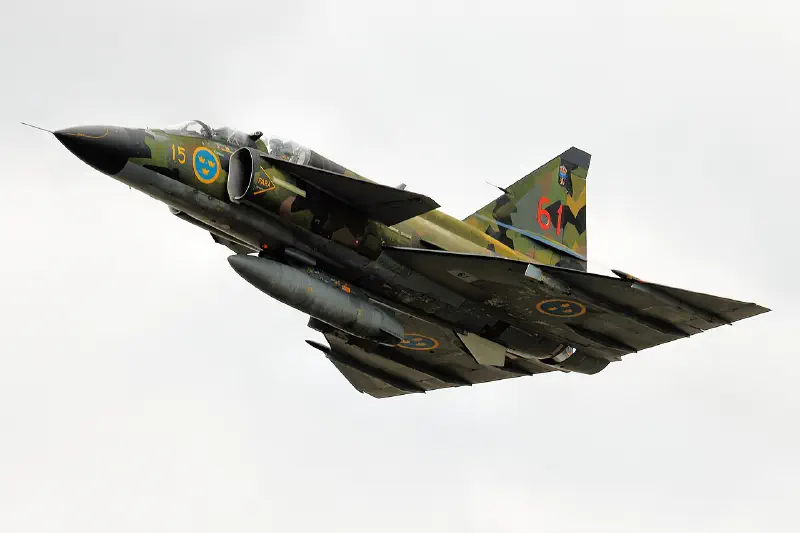
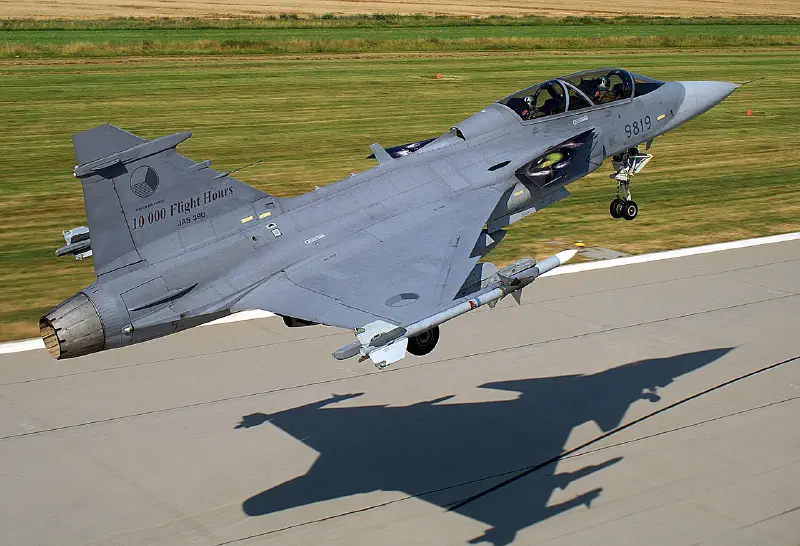
The critical limitation of the spillover argument is that it applies unevenly. Countries with large defense sectors and mature innovation systems, the United States, the United Kingdom, Israel, and Sweden, capture civilian benefits from defense R&D at significantly higher rates than smaller states with less developed institutional frameworks for technology transfer (Li et al., 2025). For developing economies, the promise of defense-led industrialization frequently collides with the reality of procurement dependencies that transfer financial value outward faster than they generate technological capability domestically.
This uneven distribution is most pronounced in the defense R&D governance challenge facing latecomers. Lee and Park (2019) proposed a "defense R&D governance matrix" to help latecomer states navigate the tension between catching-up imperatives and the institutional prerequisites for effective technology absorption. Without those prerequisites, technology transfer agreements become formalities: the hardware arrives, the knowledge does not follow.
The Interoperability Trap#
The synthesis of all these mechanisms, software dependency, maintenance leverage, bilateral agreements, and reconstruction dynamics, converges in what analysts increasingly call the "interoperability trap."
Modern military capability is inseparable from interoperability with allied systems. NATO's operational effectiveness rests on standardized communications, shared logistics protocols, and compatible weapons platforms. These requirements are legitimate and consequential: forces that cannot communicate or share ammunition in a crisis are genuinely less capable. But interoperability requirements systematically favor the standards of the dominant alliance partner. Adopting those standards means adopting the industrial base, the procurement pathways, and ultimately the dependencies that come with them.
For European nations, the practical result is what the research describes as a "transatlantic software-defined defense gap": the United States is substantially more advanced in doctrinal and technological maturity around software-defined systems. European nations function as "fast followers," developing capabilities in alignment with U.S.-led visions of future warfare. This is not a conspiracy; it is an emergent property of network effects. The more nations adopt U.S. standards, the more valuable those standards become, and the more costly any deviation appears.
Droff and Malizard (2023) formalize this as the "European defense trilemma": member states must choose among strategic autonomy, cost-effectiveness, and interoperability, but achieving all three simultaneously is structurally impossible. The choice is not binary, but the trade-offs are real and the constraints are institutional rather than merely financial.
The Architecture That Outlasts Every War#
Eisenhower's warning was about political influence. The military-industrial complex he described in 1961 was primarily a domestic American phenomenon: an iron triangle of procurement contracts, congressional representation, and military planning. The contemporary successor to that structure is qualitatively different. It is transnational, digitized, and institutionalized through legal frameworks that transcend individual administrations.
The "digital leash" of software-defined defense ensures that a recipient nation's combat readiness is contingent on receiving encrypted updates from the exporter. The MRO aftermarket creates decades of procurement transactions long after the initial sale. Bilateral Defense Cooperation Agreements embed access rights and logistical standards that outlast any particular government's preferences. Post-conflict reconstruction models, from the failed state-building of Afghanistan to the Ukrainian Danish model, consistently embed forms of institutional alignment that perpetuate foreign influence over the rebuilt security apparatus.
None of this is simply a story about American hegemony, though the United States remains the dominant force in this system. China's expanding role as an arms exporter, the emergence of Israeli drone technology as a global market force, and Turkey's growing defense industrial base are reshaping the multipolar structure of the arms trade even as they replicate its dependency dynamics. The mechanisms of post-war power persistence are not unique to any single state; they are properties of the military-industrial system itself.
The research points toward a narrow set of policy responses. Hybrid governance models combining centralized enforcement of technology transfer requirements with market-driven innovation may offer the best path for emerging defense industries seeking genuine capability without sacrificing competitive dynamism. Multi-level network analysis bridging macro-geopolitical and micro-industrial dynamics is methodologically underdeveloped, and closing that gap would produce more actionable insights for policymakers in small and medium states.
Above all, the distinction between the defense industrial base and the military-industrial complex, between national capability and the political economy that shapes how that capability is built, used, and sustained, must be kept analytically clear. The DIB is a resource. The MIC is the set of interests that decides what that resource is for. Confusing the two is precisely what the system's beneficiaries prefer.
The machine does not stop when the fighting does. It simply changes what it produces.
References#
Achmadi, B., & Sutawijaya, A. H. (2025). The role and dynamics of actor relations in implementing defense industry-based policies: A comparative study of Indonesia and Brazil. Journal of Ecohumanism, 4(1). https://doi.org/10.62754/joe.v4i1.4216
Akerman, A., & Seim, A. L. (2014). The global arms trade network 1950–2007. Journal of Comparative Economics, 42(3), 535–551. https://doi.org/10.1016/j.jce.2014.03.001
Anderson, G., & Luiz, J. M. (2025). The development of emerging market defence enterprises: Late industrialisation, catching-up, and the challenge of moving beyond linking and leveraging. Research Policy, 54(3). https://doi.org/10.1016/j.respol.2025.105283
Blanton, S. L. (1999). Instruments of security or tools of repression? Arms imports and human rights conditions in developing countries. Journal of Peace Research, 36(2), 233–244. https://doi.org/10.1177/0022343399036002006
Brady, R. R., & Greenfield, V. A. (2010). Competing explanations of U.S. defense industry consolidation in the 1990s and their policy implications. Contemporary Economic Policy, 28(1), 68–83. https://doi.org/10.1111/j.1465-7287.2009.00181.x
Brøgger, T. E. (2025). A 'Europe of defence'? The establishment of binding commitments and supranational governance in European security and defence. Journal of European Integration, 47(1). https://doi.org/10.1080/07036337.2024.2379421
Caliari, T., & Ferreira, M. J. B. (2023). The historical evolution of the Brazilian aeronautical sector: A combined approach based on mission-oriented innovation policy and sectoral innovation system. Economics of Innovation and New Technology, 32(3). https://doi.org/10.1080/10438599.2021.2011258
DeVore, M. R. (2013). Arms production in the global village: Options for adapting to defense-industrial globalization. Security Studies, 22(3), 532–572. https://doi.org/10.1080/09636412.2013.816118
DeVore, M. R. (2016). Reinventing the arsenal: Defense-industrial adaptation in small states. Korean Journal of Defense Analysis, 28(1). https://www.scopus.com/pages/publications/84959494958
Droff, J., & Malizard, J. (2023). 50 shades of procurement: The European defense trilemma in defense procurement strategies. Economics of Peace and Security Journal, 18(1). https://doi.org/10.15355/epsj.18.1.18
Dunne, J. P., Sköns, E., & Tian, N. (2022). Arms production, economics of. In Encyclopedia of violence, peace, & conflict. Elsevier. https://doi.org/10.1016/B978-0-12-820195-4.00070-4
Farewell address by President Dwight D. Eisenhower, January 17, 1961; Final TV Talk 1/17/61 (1), Box 38, Speech Series, Papers of Dwight D. Eisenhower as President, 1953-61, Eisenhower Library; National Archives and Records Administration. https://www.archives.gov/milestone-documents/president-dwight-d-eisenhowers-farewell-address
Gay, W. (2018). The military-industrial complex. In The Routledge handbook of pacifism and nonviolence. Routledge. https://doi.org/10.4324/9781315638751
Guo, W., & Du, D. (2023). The evolution and influencing factors of the global arms trade cyberspace pattern. Dili Xuebao/Acta Geographica Sinica. https://doi.org/10.11821/dlxb202302009
Ikenberry, G. J. (2009). After victory: Institutions, strategic restraint, and the rebuilding of order after major wars. Princeton University Press. https://www.scopus.com/pages/publications/84890575442
Jeong, D. G., & Kang, S. J. (2026). Structural shifts in the global arms trade by weapon type: Shifting core transfer states and network multipolarity. Defence and Peace Economics. https://doi.org/10.1080/10242694.2026.2650767
Johnson, J. (2019). Artificial intelligence and future warfare: Implications for international security. Defense and Security Analysis, 35(2), 147–169. https://doi.org/10.1080/14751798.2019.1600800
Krpec, O., & Kříž, Z. (2025). Structural challenges in adapting to modern warfare: Lessons from the Ukrainian war and the Czech defence industry. Defense and Security Analysis. https://doi.org/10.1080/14751798.2025.2449771
Lee, J. G., & Park, M. J. (2019). Rethinking the national defense R&D innovation system for latecomer: Defense R&D governance matrix. Technological Forecasting and Social Change, 145, 391–404. https://doi.org/10.1016/j.techfore.2019.05.012
Li, J., Hania, A., Yahya, F., & Waqas, M. (2025). Fostering sustainable futures through global peace and eco-innovation: A cross-country evidence. Technology in Society, 81. https://doi.org/10.1016/j.techsoc.2025.103008
Markowski, S., Bourke, R., & Wylie, R. (2021). Defence policy making: A case study of defence industry engagement in Australia. In Handbook of business and public policy. https://www.scopus.com/pages/publications/85129873025
McNamara, K. R. (2026). A market for war? The reinforcing logics of Europe's security turn. Journal of European Integration. https://doi.org/10.1080/07036337.2026.2614539
Mintz, A. (2013). The military-industrial complex: The Israeli case. In Israeli society and its defense establishment. Routledge. https://doi.org/10.4324/9781315035017
Mowery, D. C. (2012). Defense-related R&D as a model for "grand challenges" technology policies. Research Policy, 41(10), 1703–1715. https://doi.org/10.1016/j.respol.2012.03.027
Newlove-Eriksson, L., & Eriksson, J. (2023). Conceptualizing the European military-civilian-industrial complex: The need for a helicopter perspective. Defence Studies, 23(4). https://doi.org/10.1080/14702436.2023.2277434
Pallante, G., Russo, E., & Roventini, A. (2023). Does public R&D funding crowd-in private R&D investment? Evidence from military R&D expenditures for US states. Research Policy, 52(7). https://doi.org/10.1016/j.respol.2023.104807
Palley, T. (2025). The military-industrial complex as a variety of capitalism and threat to democracy: Rethinking the political economy of guns versus butter. In The political economy of war, peace, and the military-industrial complex: New perspectives. Edward Elgar. https://doi.org/10.4337/9781035357178.00008
Saal, D. S. (2001). The impact of procurement-driven technological change on U.S. manufacturing productivity growth. Defence and Peace Economics, 12(6), 537–568. https://doi.org/10.1080/10430710108405002
Stavrianakis, A. (2025). The arms trade and the transformation of global order: A revitalized research agenda. Global Studies Quarterly. https://doi.org/10.1093/isagsq/ksaf033
Wang, X.-Y., Chen, B., & Song, Y. (2025). Dynamic change of international arms trade network structure and its influence mechanism. International Journal of Emerging Markets. https://doi.org/10.1108/IJOEM-07-2022-1058