The Tunnel Boom Crisis#
Japan’s Shinkansen trains reached 200 km/h by the 1970s. Entering tunnels created loud pressure waves. Noise violated regulations. Complaints surged.
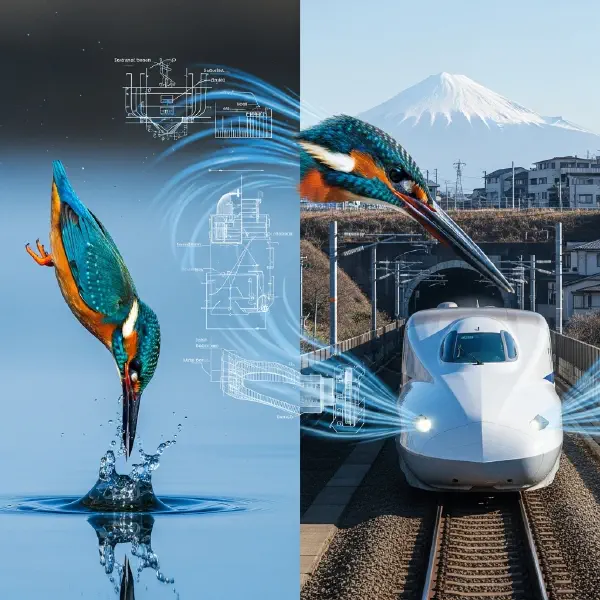
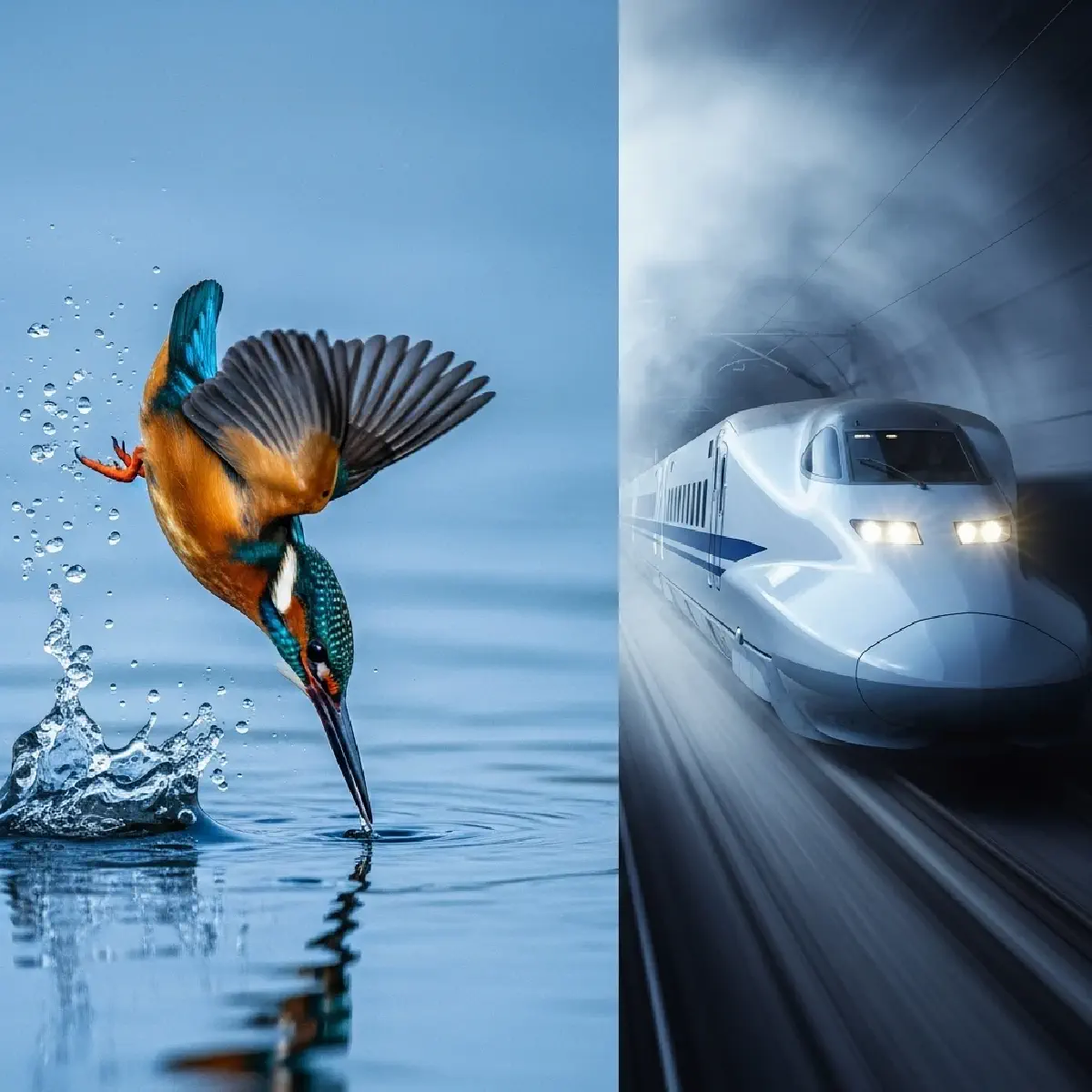
Engineers tested shapes. A birdwatcher’s observation changed everything. Kingfisher beaks enter water silently.
Redesigning the pantograph after the beak cut noise by 30%. Speed increased 10%. Energy use dropped 15%.
Integration Through Constraint#
Biomimicry succeeds when human structures face limits nature has solved. Aerodynamics constrained trains. Evolution optimized diving birds.
The mechanism transfers form via modeling. CAD simulations validated the beak shape.
Core Transfer Processes#
Designers abstract principles. Kingfisher beak distributes pressure gradually. Train nose replicates this geometry.
Material constraints matter. Aluminum allowed precise forming.
Interdisciplinary teams drove success: ornithologists, engineers, acousticians.
Regulatory and Economic Pressures#
Japanese noise laws created selection pressure. Without compliance, expansion halted.
Cost-benefit justified redesign. Savings offset investment within years.
Competing nations adopted similar shapes. Diffusion followed demonstrated gains.
Wider Systemic Impacts#
Outcomes reshaped rail standards. High-speed networks in Europe and China incorporate comparable aerodynamics.
Environmental gains compound. Reduced energy cuts emissions proportionally.
Cases like whale-fin wind turbines show pattern: 20-40% efficiency gains common.
Reshaping Trajectories#
Structural alignment enables biomimetic disruption. Constraints open paths to nature’s solutions.
Outcomes reveal ecosystem dependence. Adoption requires institutional support.
This integration offers route around human lock-in.