
The Five-Second Divergence#
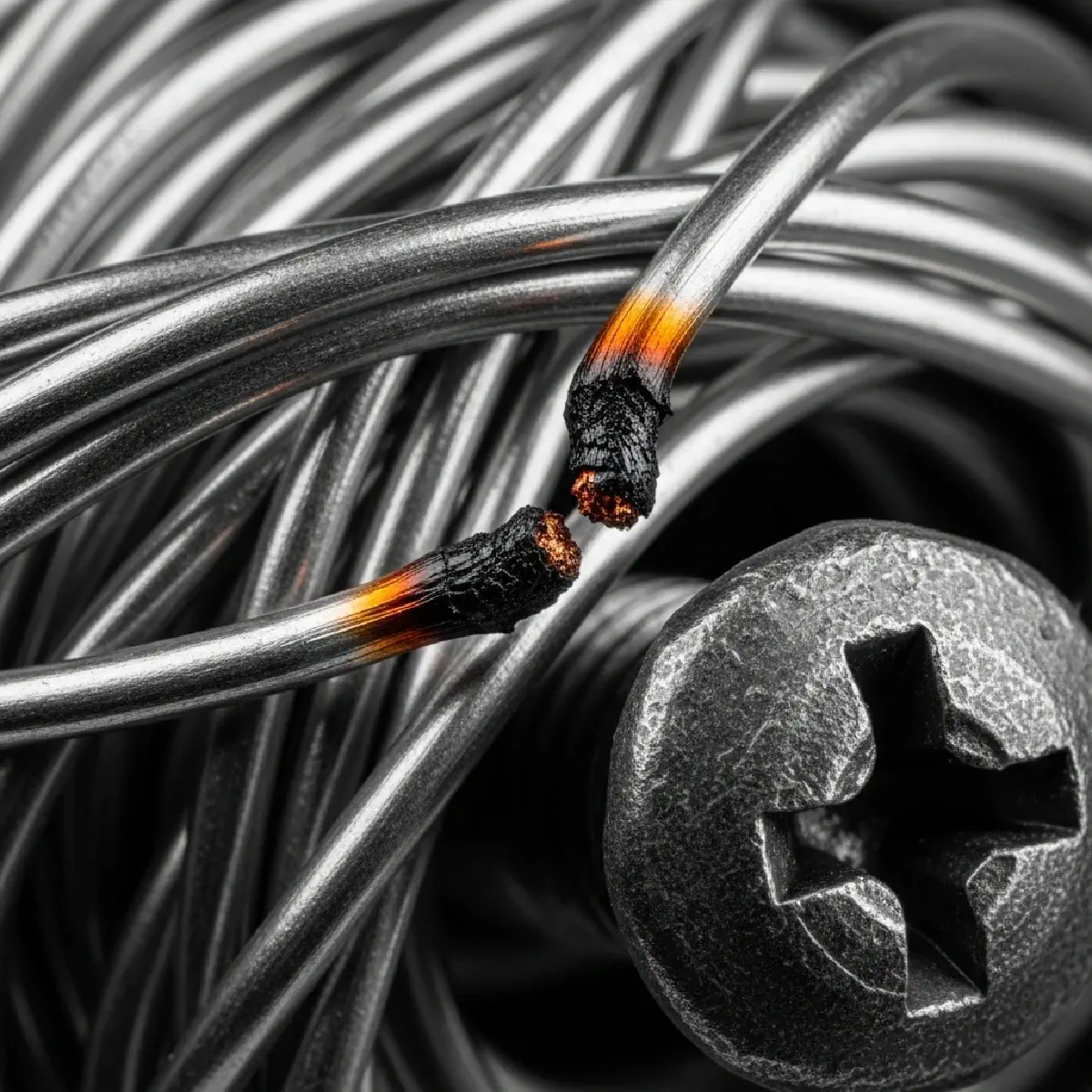
Space Shuttle mission STS-93 launched on July 23, 1999, carrying the Chandra X-ray Observatory. Five seconds after lift-off, NASA flight controllers observed a significant drop in voltage across one of the primary electrical buses. This event resulted in the deactivation of the primary digital control unit for the center engine and the backup unit for the right engine. The mission proceeded to orbit due to the redundancy built into the Space Shuttle Main Engine (SSME) controllers, which prevented a contingency abort. Post-flight inspections identified the cause as a short circuit in a power wire located in the midbody aft port-side lower wire tray. A single 14 American wire gauge (AWG) wire had arced against the head of an adjacent screw, indicating a systemic vulnerability in the fleet’s high-density wiring.
The Degradation of Polyimide Insulation#
The failure on STS-93 brought national attention to the condition of electrical systems in aging aerospace vehicles. The investigation focused on the physical characteristics of the polyimide insulation and the mechanical environment of the wire trays.
The Anatomy of a High-Voltage Arc#
The failed conductor was a 14 AWG polyimide-insulated twisted three-wire conductor with nickel-plated copper. The insulation, commercially known as Kapton®, was topcoated with an aromatic polyimide resin. SEM analysis of the shorted wire revealed that the insulation was missing in the arced area, exposing the conductors. Topographical features included a mechanically damaged zone, a melted zone, and a region of microvoid coalescence (MVC). The MVC on the fused area indicated that the final contact and melting resulted from a single event, such as launch-induced vibration. Chemical testing confirmed the transfer of copper and nickel to the iron-based screw head at the point of contact.
The Temporal Evidence of Oxidation#
Forensic analysts used electron spectroscopy for chemical analysis (ESCA) to determine the timeline of the damage. ESCA revealed a thick oxide layer on the exposed copper conductor. When compared to laboratory exemplars, the depth of this oxide layer on the STS-93 wire was four times thicker than samples exposed for one year. This thickness indicated that the mechanical damage to the insulation had existed for approximately 4 to 5 years prior to the arcing event. Maintenance records supported this conclusion, showing that the specific wiring trays had last been exposed during a heavy maintenance period 4 years earlier. The insulation had been breached by a mechanical strike, likely from a tool or being stepped on, during that interval.
The Fleet-Wide Audit of Connectivity#
The discovery of the STS-93 short circuit initiated an unprecedented inspection of the entire orbiter fleet. Each shuttle contained over 200 miles (321.8 km) of wiring, weighing more than 2.5 tons (2268 kg). Inspectors utilized 10x magnification and flashlights to examine accessible and hard-to-access locations in Atlantis, Columbia, Discovery, and Endeavour. The audit identified approximately 3,000 suspect indications across the four vehicles. Nearly 500 of these discrepancies involved exposed conductors, and 150 showed signs of direct mechanical damage. This inspection proved that the mechanical environment of the shuttles was actively degrading the integrity of the critical power and data lines.
The Integration of Physical Barriers#
The lessons learned from STS-93 resulted in significant changes to aerospace wiring maintenance and design. NASA recommended the systematic replacement of burred screws and the repainting of exposed metal surfaces near wire bundles. The use of convolex convoluted tubing was expanded to provide physical protection and additional insulation in high-traffic areas. Strict adherence to procedures for temporary workstands and protective covers became mandatory to minimize human-induced damage during maintenance. These modifications were designed to prevent the recurrence of the “invisible” mechanical breaches that compromised polyimide insulation. The integrity of the electrical system is now treated with the same structural rigor as the airframe, ensuring the safety of long-duration space flight.