Bio-Inspiration: Learning from the Grasshopper and the Shark
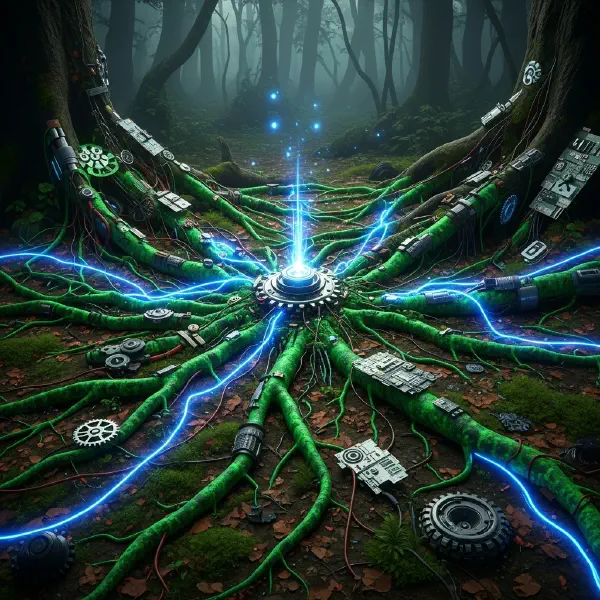
Biological systems, evolved over thousands of years, offer sophisticated solutions to complex engineering challenges. Designers seeking to create a robotic jumping mechanism might look to the grasshopper, aiming for a vertical jump height of 5 cm [1.97 in] in a device weighing less than 8 g [0.28 oz]. Similarly, the geometry of shark teeth can inspire the design of more efficient cutting shears for kitchen or garden use. These analogies allow engineers to adapt solutions from the natural world to solve human-scale problems, a field known as biomimicry.
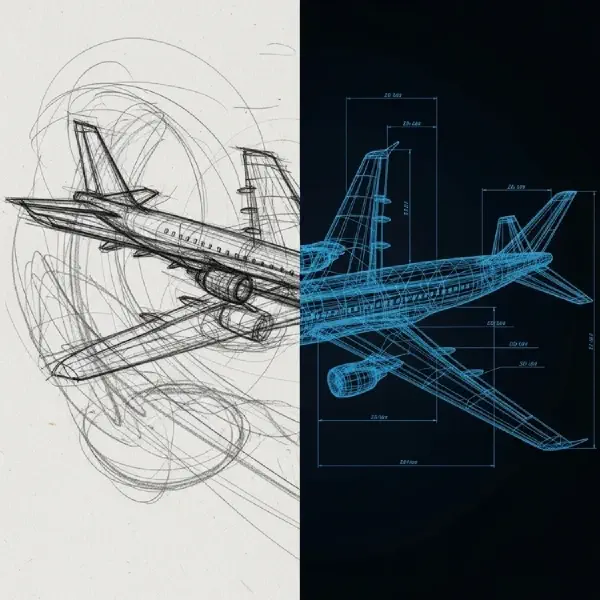
Concept generation is the stage where many ideas are conceived using both divergent thinking to create choices and convergent thinking to make decisions. The goal is to explore the complete design space and find a candidate concept that is customer-focused and competitively designed. It requires a balance of wild imagination and technical feasibility to move from a design need to a final candidate concept.
Filtering Radical Creativity through the Lens of Viability#
The central claim of the conceptual design phase is that innovation is maximized when diverse ideation techniques are subjected to rigorous, objective evaluation against established engineering requirements. Engineers must generate as many concepts as possible—sometimes as many as 15—before eliminating most to focus on the strongest candidates. This process ensures that the final design is not just the first idea conceived, but the best fit among many possible choices. Robust evaluation methods are required to ensure the final concept reduces time to production and has buy-in from all stakeholders.
Mechanisms of Creative Ideation: SCAMPER and Mind Mapping#
Concept generation utilizes several structured techniques to unlock creative potential, such as brainstorming and mind mapping. Brainstorming encourages team members to share all possible ideas, including “wild” or “crazy” ones, which are then refined. The SCAMPER technique—Substitute, Combine, Adapt, Modify, Put to other uses, Eliminate, and Reverse—helps improve existing solutions. For example, a student backpack can be improved by substituting more durable materials or rearranging zipping configurations. Mind mapping provides a graphical way to consolidate information and think through complex problems, such as the primary necessities of a storm shelter: food, water, and protection from wind.
The Crucible of Selection: Feasibility and Decision Matrices#
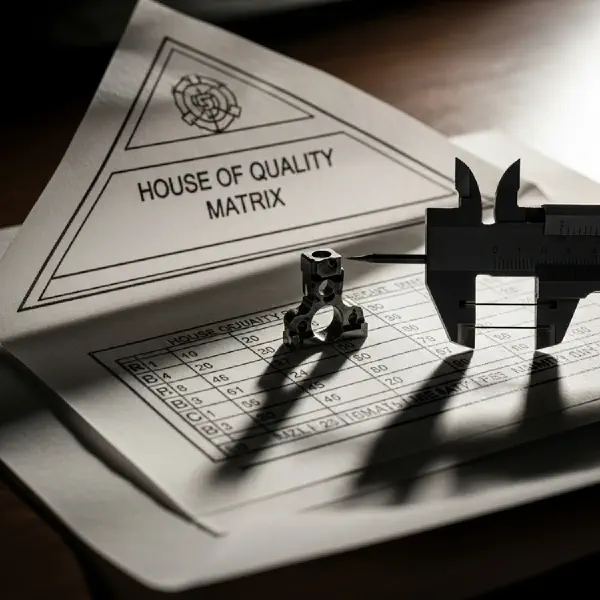
Once concepts are generated, they undergo evaluation through techniques like Go/No-Go screening and the decision matrix. The decision matrix, or Pugh’s method, provides a quantitative score to compare alternate concepts against specified criteria. A datum or benchmark concept is selected, and others are scored with a plus (+1), same (0), or minus (-1) based on how well they meet customer requirements. This method was used by students at IUPUI to evaluate an automatic music page turner, comparing mechanized arms to linear track mechanisms based on adjustability and noise output. This iterative process continues until the best concept is clearly identified.
Cascading Effects of Robust and Sustainable Design Principles#
Integrating sustainability and robustness into early conceptual stages has wide-reaching consequences for the product life cycle. Robust design, or the Taguchi method, estimates design parameters so that performance is insensitive to “noise” or variations in materials and the environment. Simultaneously, sustainable design aims to produce products using renewable resources, meeting present needs without compromising future generations. For example, recycling aluminum cans into sandwich panels for low-cost housing reduces environmental impact while providing social utility. These considerations ensure the product remains viable and reliable even under varied usage conditions.
Synthesizing Multi-Disciplinary Excellence#
Engineering design is most successful when it integrates the aspirations of science, art, and nature. Design innovation is the synergy of these three fields, connecting with customer emotions while ensuring technical functionality. For example, an automatic music book page turner must not block the page view for more than 3 s and must operate at no more than 15 dB.
By the end of the conceptual design phase, the design team holds a final candidate concept that has been vetted through rigorous evaluation and stakeholder review. This concept is now ready for detail design, where dimensions, materials, and manufacturing processes will be finalized. The transition from abstract ideas to concrete plans marks the midpoint of the design journey, where creativity begins to take a tangible, realizable form.