The Paradox of the Titanic: Static Assumptions in a Dynamic World
On April 15, 1912, the RMS Titanic sank after colliding with an iceberg, resulting in one of history’s most analyzed engineering failures. The tragedy serves as a stark reminder that engineering success depends on more than just the weight of passengers or static wind forces. Engineers at the time focused on static analysis, assuming the ship was stationary and ignoring the dynamic choppiness of the sea and collision forces. This failure highlights the necessity of the design engineering journey, a process that combines engineering, physics, and mathematics with materials science.
Modern engineering design is defined by the Accreditation Board for Engineering and Technology (ABET) as the process of devising systems, components, or processes to meet desired needs. It is a scientific decision-making process that converts resources optimally through the application of basic sciences and mathematics. While analysis involves finding unique solutions using specialized knowledge, design is open-ended with many feasible solutions. Finding the most efficient solution requires a multidisciplinary approach involving teams with diverse expertise.
The Convergence of Science and Aesthetics in Product Development#
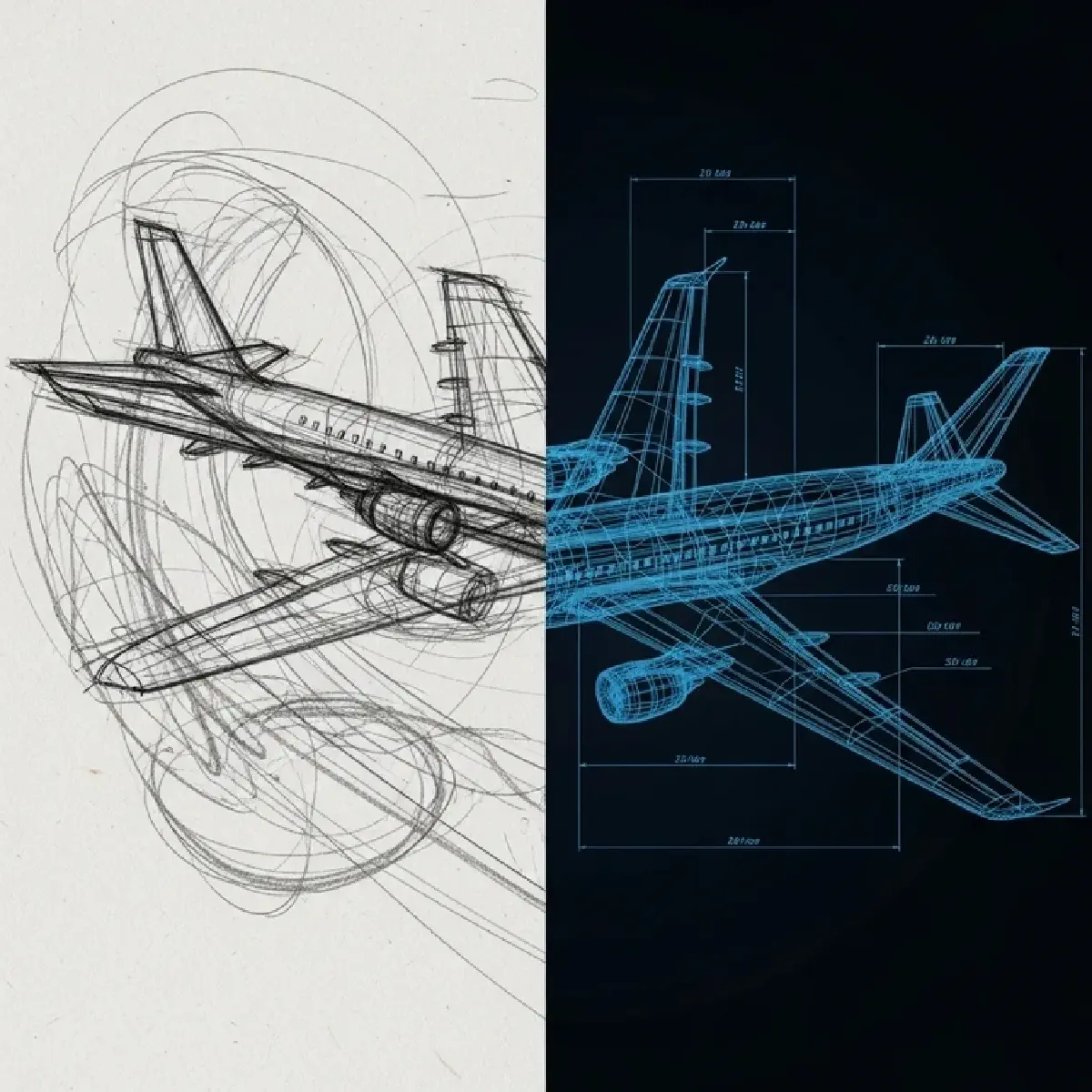
The central claim of the design engineering journey is that effective creation requires a systematic integration of technical analysis and artistic synthesis. Engineering design is both a science and an art, combining systematic methodology with creative imagination to develop efficient solutions for societal needs. It determines the effectiveness of new product development, directly impacting a company’s ability to compete in a global marketplace. Graduates must now address economic, social, environmental, aesthetic, and ethical considerations to meet the needs of diverse clients.
The Structural Mechanism of the Design Journey#
The design journey follows a sequence of five distinct phases: establishing a need, gathering requirements, conceptual design, detail design, and release to production. Phase one identifies stakeholders and market-driven demands, which may arise from government policies, military regulations, or new technologies. Phase two involves translating customer needs into engineering requirements and targets, identifying constraints like budget, time, and manufacturability. Phase three focuses on generating and evaluating candidate concepts through techniques such as brainstorming. Phases four and five refine these concepts into detailed analyses for stress, safety, and cost before final manufacturing and quality control.
The Crucible of Human-Centered Design Thinking#
Design thinking complicates traditional engineering by introducing a human-centered innovation process focused on empathy for the customer. This approach focuses on three lenses: desirability (what the customer wants), feasibility (what is technically possible), and viability (what is financially sustainable). Unlike conventional design, which often starts with technical specifications, design thinking begins with observing and experiencing problems in the field. It promotes radical innovation by encouraging designers to fail fast and learn quickly through crude prototyping. This methodology ensures that products are not only functional but also usable and desirable for the end-user.
Cascading Effects of Design Paradigms on Market Success#
The choice of design paradigm significantly impacts the efficiency and quality of the final product. The traditional “over-the-wall” approach separates marketing, engineering, and manufacturing groups, often leading to misunderstandings and inefficient production. Conversely, concurrent engineering brings these teams together to integrate product and process design simultaneously. Surveys of industry giants like Boeing, Toyota, and Ford indicate that concurrent engineering can reduce time to market by 60% and improve product quality by 350%. This collaborative approach ensures that key information is provided to the right people at the right time throughout the product life cycle.
Synthesizing Innovation for a Competitive Future#
The design journey is not a linear progression but an iterative process of refinement. Quality is integrated into the product by checking technical documentation, material properties, and surface quality at every step. In a customer-oriented society, products must function well while remaining sustainable, affordable, and aesthetically appealing. A simple paper clip, first patented in 1899, illustrates this; it must be inexpensive, rust-proof, and capable of returning to its original shape.
Understanding why designs fail—due to human factors, materials failure, or extreme conditions—is as critical as understanding why they succeed. Engineering design is at its best when it integrates the aspirations of art, science, and culture. For example, the Pyramids of Egypt and the Taj Mahal endure because they balance artistic appeal with sound engineering. As we move forward, the role of design will remain the primary factor differentiating competing products in the global economy. Engineers must continue to be designers, scientists, inventors, and artists to meet the challenges of the twenty-first century.