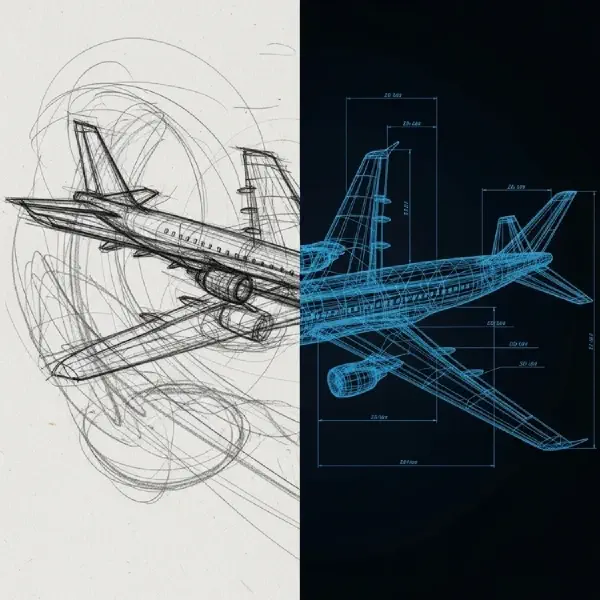
The Design Engineering Journey: From Need to Realization

Key Insights
#

  • Engineering design integrates science, art, and ethics to create solutions that meet human needs while ensuring sustainability and safety
  • The design process follows a systematic journey from identifying needs through requirements gathering, concept generation, and detailed realization
  • Biomimicry and concurrent engineering accelerate innovation by learning from nature and integrating multidisciplinary teams
  • Quality Function Deployment and decision matrices ensure customer needs are translated into measurable engineering specifications
  • Digital tools like CAD, CAE, and virtual prototyping enable precise design validation before physical production

References
#

  1. ABET. (n.d.). Code of ethics for engineers. http://www.abet.org
  2. Eggert, R. J. (2005). Engineering design. Pearson Prentice Hall.
  3. Horenstein, M. N. (2016). Design concepts for engineers (5th ed.). Pearson.
  4. NSPE. (n.d.). Code of ethics for professional engineers. https://www.nspe.org/resources/ethics/code-ethics
  5. Pidaparti, R. M. (2023). Design engineering journey (2nd ed.). Springer Nature Switzerland AG. https://doi.org/10.1007/978-3-031-25969-2
  6. Pinson, L., & Jinnett, J. (2006). Anatomy of a business plan: A step-by-step guide to building a business and securing your company’s future. Kaplan Publishing.
  7. Ullman, D. G. (2015). The mechanical design process. McGraw-Hill.
  8. Ulrich, K. T., Eppinger, S. D., & Yang, M. C. (2020). Product design and development (7th ed.). McGraw-Hill.
  9. United Nations. (1987). Our common future. Oxford University Press.
  10. Yahya, H. (2007). Design in nature. Harun Yahya International.