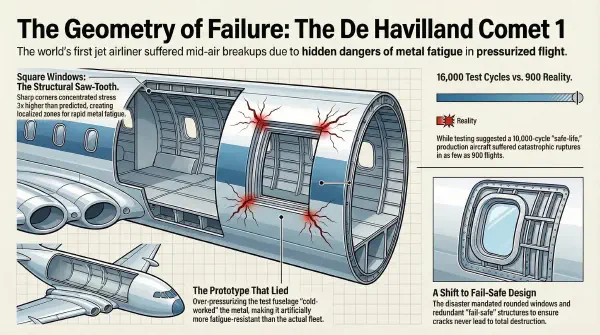
Cracked Sky – Part 4: Photo Gallery of the Comet Disaster
·7 words·1 min
Systems and Innovation
De Havilland Comet 1
Metal Fatigue
Pressurization Cycles
Stress Concentration
Square Windows
ADF Windows
Calcutta Crash (G-ALYV)
Elba Crash (G-ALYP)
Naples Crash (G-ALYY)
Water Tank Testing (Farnborough)
G-ALYU Test Failure
Prototype G-ALVG
Cold-Working
Proof Testing (2P)
Safe-Life Design Philosophy
Fail-Safe Design
Damage Tolerance
BCAR D3-7
Institutional Denial
Weather Attribution Fallacy
Stress Raisers
Aluminum Alloy DTD 546
Catastrophic Failure
Fracture Face Analysis
Redundant Load Paths
Rip-Stop Design
Aviation Safety Regulation
Systems Thinking
Disaster Analysis
Technological History
Design and Innovation
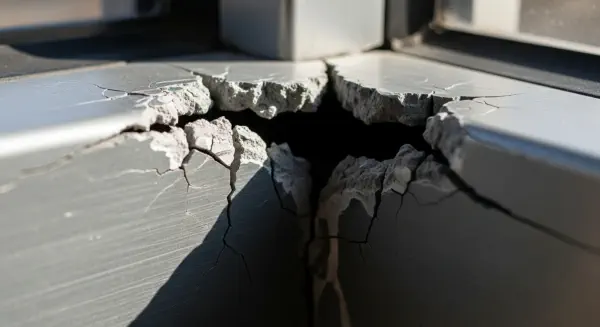
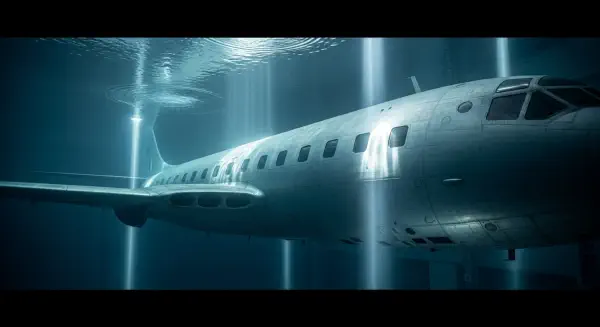
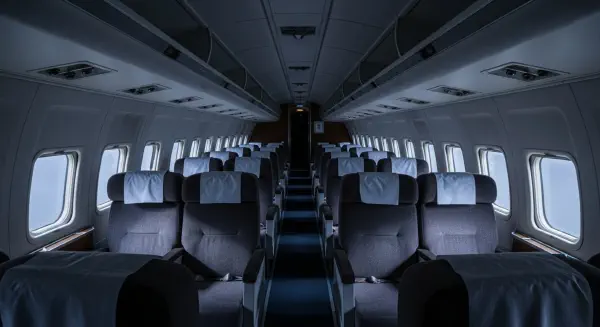
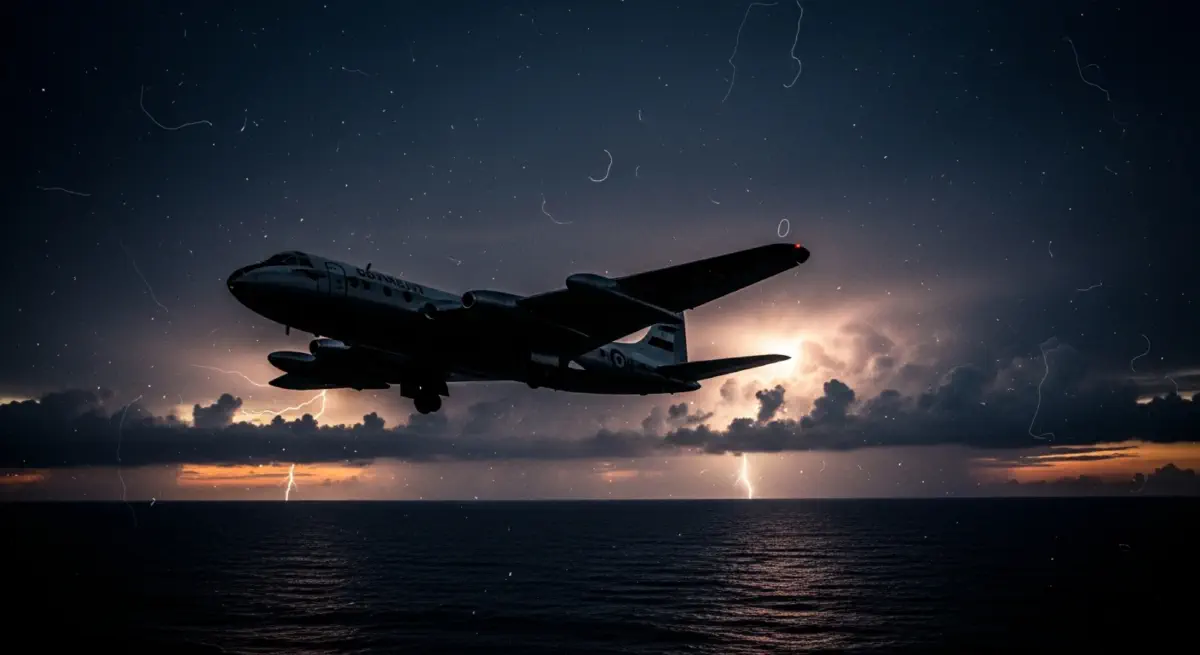
A photo gallery of the Comet disaster.