When Physics Reenters the Conversation#
For most of the 20th century, economic systems behaved as if material limits were negotiable. Energy was cheap, resources appeared abundant, and environmental damage accumulated slowly enough to be ignored. That condition no longer holds.
Climate constraints, material scarcity, waste saturation, and energy volatility have reintroduced physical limits into what was treated as a purely economic debate. At this point, the question is no longer whether durability-oriented design is desirable. It is whether continued avoidance is even feasible.
What Bauhaus proposed a century ago is now being imposed by reality.
The Thesis: Constraint Has Made Sufficiency Inevitable#
The defining assumption of growth-driven consumerism—that demand can always be stimulated faster than resources are depleted—has broken down. The system now faces simultaneous pressures:
- Rising material and energy costs
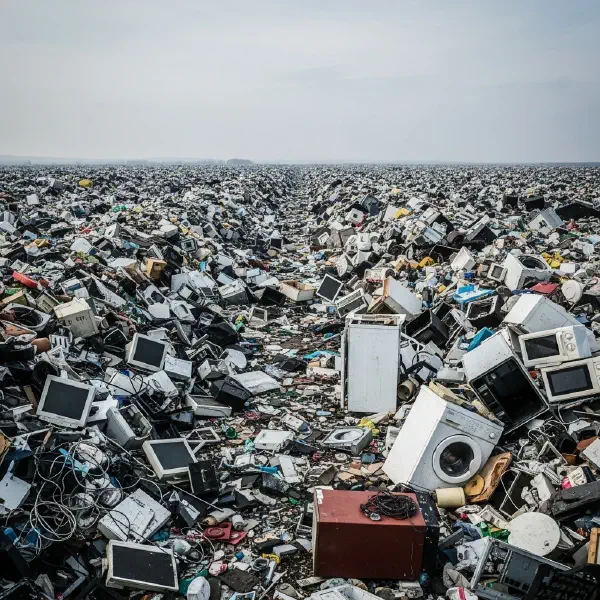
- Escalating waste-management burdens
- Regulatory tightening driven by environmental risk
- Infrastructure strain from product complexity
Under these conditions, design optimized for churn becomes unstable. The same logic that once rewarded disposability now amplifies fragility.
Bauhaus thinking re-enters not as ideology, but as systems triage.
From “Form Follows Function” to “Form Follows Lifecycle”#
The original Bauhaus insight—that form should emerge from purpose—was incomplete only because the lifecycle was not yet visible. Today, lifecycle data is unavoidable.
Design decisions now determine:
- Emissions profiles over decades
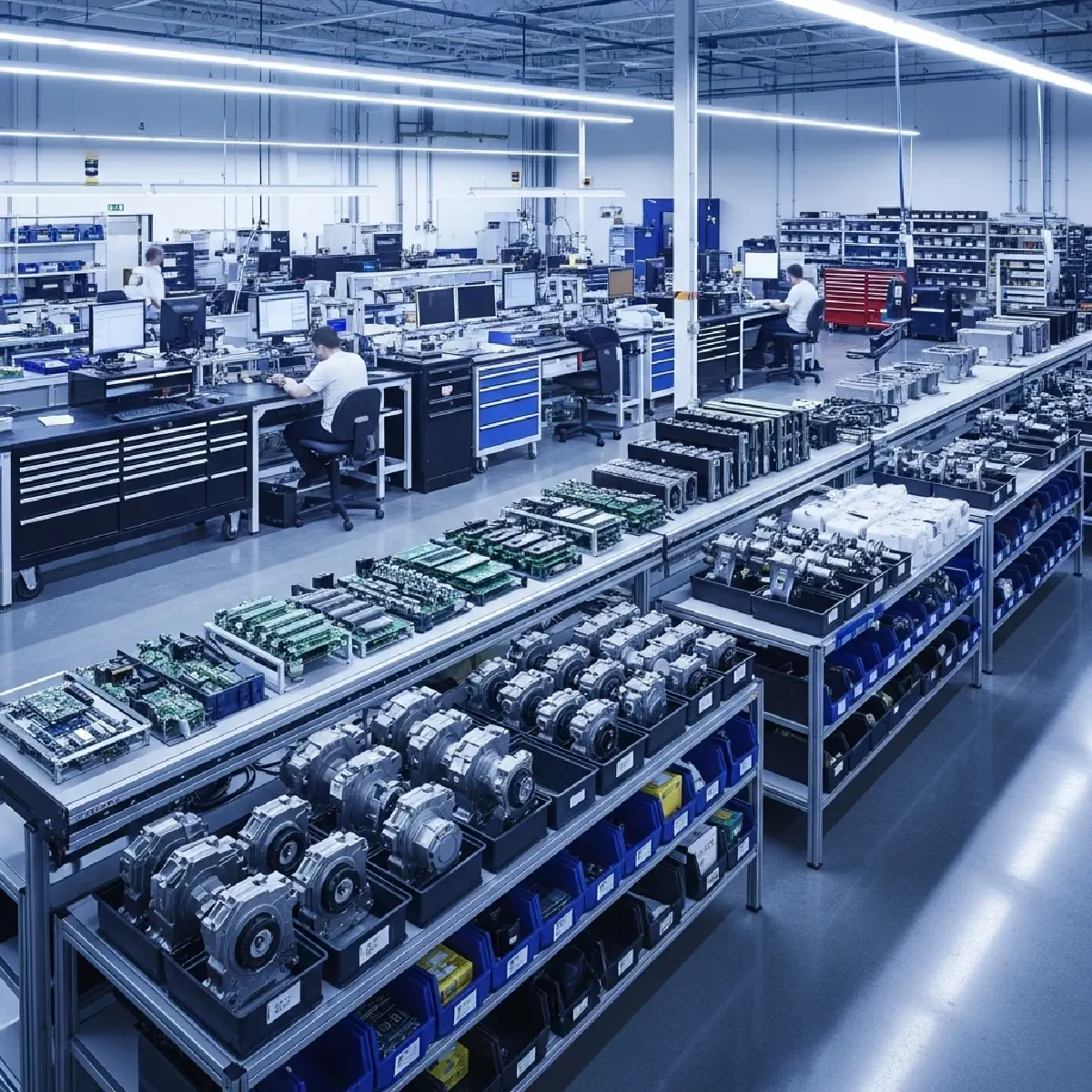
- Maintenance and repair feasibility
- Material recovery potential
- Infrastructure load
A product that performs well at point-of-sale but poorly over 20 years is no longer acceptable under tightening constraints. Lifecycle closure becomes a design requirement, not an ethical add-on.
This is where Bauhaus logic scales forward naturally.
Durability as Risk Management#
In a constrained system, durability is not nostalgia. It is risk reduction.
Long-lived, repairable products:
- Stabilize supply chains
- Reduce exposure to material price shocks
- Lower waste-handling costs
- Improve system resilience
What was once labeled “anti-growth” increasingly looks like anti-collapse.
The same industries that resisted durability now face it as a hedge against volatility.
Why This Is Not a Return to Minimalism#
It is important to be precise. This is not a call for aesthetic austerity or stylistic regression. Bauhaus relevance today lies in its discipline, not its look.
Modern tools—simulation, digital manufacturing, systems modeling—allow far more sophisticated outcomes than early modernists could imagine. What is required is not simpler appearance, but simpler logic:
- Fewer unnecessary variants
- Stable platforms
- Explicit service-life targets
- Design for disassembly and upgrade
This is Bauhaus thinking updated, not repeated.
The Economic Shift Already Underway#
Even within current capitalism, pressure is forcing partial realignment:
- Right-to-repair legislation
- Extended producer responsibility
- Lifecycle carbon accounting
- Subscription and service-based ownership models
These are not moral victories. They are adaptations to constraint.
They point toward an economy that values retained utility over accelerated disposal—precisely the assumption Bauhaus made prematurely.
What Failed Was Timing, Not Logic#
Bauhaus assumed:
- That industry could tolerate sufficiency
- That society would reward restraint
- That growth was optional
Those assumptions were wrong in 1925. They are becoming unavoidable in 2026.
The movement was not defeated by better ideas. It was sidelined by an economic system that had not yet hit its physical boundaries.
Final Synthesis#
Bauhaus was never just about chairs, buildings, or visual clarity. It was an argument about how much is enough, encoded in design practice.
That argument was incompatible with a century of expansion. It is increasingly compatible with a century of constraint.
Bauhaus thinking is no longer optional because the alternative now fails under real-world limits. Not ethically. Not aesthetically. Systemically.