On November 1, 1965, three cooling towers at the Ferrybridge Power Station in England collapsed in a spectacular display of aerodynamic instability. The towers, each 380 feet tall and 280 feet in diameter at the base, were constructed of reinforced concrete with a thin shell design. The collapse began with Tower 1, which developed cracks in its shell. As the cracks propagated, the tower lost its structural integrity and collapsed. The falling debris damaged Towers 2 and 3, causing them to fail as well. The incident killed no one but caused significant economic damage and highlighted the dangers of aerodynamic flutter in large structures.
The Aerodynamics of Destruction#
Cooling towers are designed to dissipate heat from power plant condensers. The Ferrybridge towers were hyperbolic in shape, with a thin concrete shell supported by a network of radial and circumferential ribs. The design was based on the assumption that wind loads would be uniform and predictable. However, the towers were susceptible to aerodynamic instability, particularly when subjected to vortex shedding and flutter.
The Vortex Shedding Phenomenon#
Vortex shedding occurs when wind flows around a cylindrical structure, creating alternating vortices that exert oscillating forces on the structure. For the Ferrybridge towers, the natural frequency of vibration was close to the frequency of vortex shedding, leading to resonance. The towers were designed with a fundamental frequency of 0.2 Hz, but wind speeds of 40-50 mph could excite frequencies up to 0.25 Hz. This resonance caused the towers to oscillate, with amplitudes increasing over time.
The Flutter That Broke the Shell#
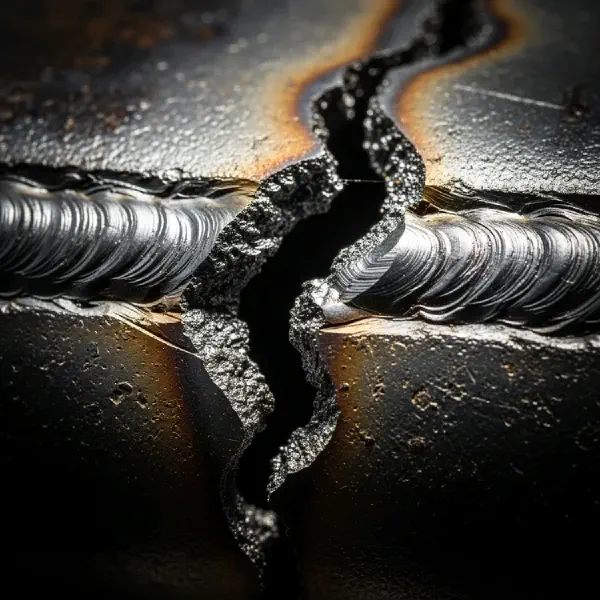
Flutter is a self-excited oscillation that occurs when aerodynamic forces couple with structural motion. In the case of the Ferrybridge towers, flutter was initiated by the separation of the boundary layer on the windward side of the tower. This created negative pressure regions that amplified the oscillations. The thin concrete shell was not designed to withstand these dynamic loads. Cracks began to form at the base of Tower 1, where the shell was thickest, and propagated upward.
The Progressive Failure Mechanism#
The collapse of Tower 1 was progressive. Initial cracks in the shell reduced the stiffness of the structure, allowing larger oscillations. As the oscillations increased, the cracks widened, further reducing stiffness. This created a feedback loop that culminated in total failure. The falling debris from Tower 1 impacted Towers 2 and 3, causing them to collapse as well. The incident occurred during a period of high winds, with gusts up to 70 mph recorded.
The Engineering Response#
Following the Ferrybridge collapse, cooling tower design standards were revised to include dynamic wind analysis. Modern cooling towers incorporate dampers, tuned mass dampers, and aerodynamic modifications to prevent flutter. The incident also led to the development of wind tunnel testing for large structures. The Ferrybridge disaster demonstrated that wind can be as destructive as gravity, and that dynamic loads must be considered in structural design.
The collapse of the Ferrybridge cooling towers was a wake-up call for the engineering community. It showed that even massive concrete structures can be vulnerable to aerodynamic forces. The incident led to significant improvements in wind engineering and structural dynamics. Today, cooling towers are designed with safety factors that account for dynamic wind loads, and regular inspections ensure that any signs of deterioration are addressed promptly.