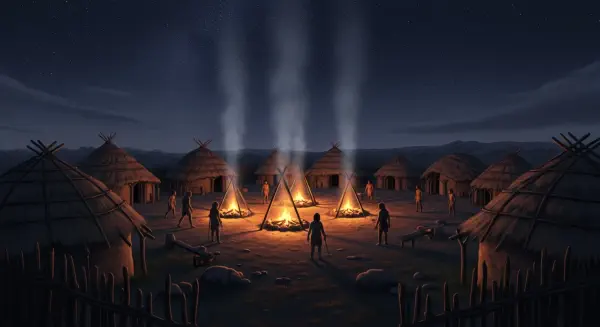
Civilization is a Thermodynamic Process: Human societies are best understood as dissipative structures that maintain internal order by consuming energy gradients and exporting entropy (disorder). Our history is a series of transitions to steeper gradients—fire, agriculture, fossils—each enabling greater complexity but generating larger-scale waste.
The Fossil Age Was a Thermodynamic Discontinuity: The harnessing of fossil fuels represented a leap out of the solar income budget, unlocking energy densities that powered explosive growth. This created the modern world but financed it through an Entropy Debt—the accumulation of material waste, greenhouse gases, and social fragility that now threatens systemic stability.
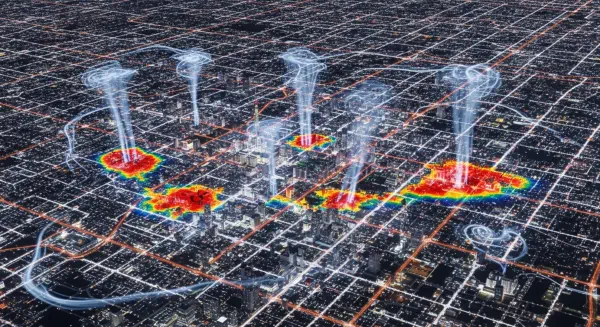
Waste is the Central Design Flaw: Our linear “take-make-dispose” industrial model is a one-way street for matter from low-entropy (ordered) to high-entropy (disordered) states. Climate change is the most dramatic symptom, but material dissipation and social precarity are part of the same thermodynamic crisis.
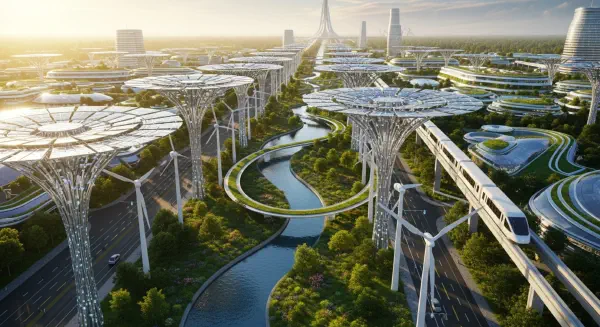
The Sustainable Future is a Circular, Solar-Powered Metabolism: The solution requires a dual shift: powering society with renewable energy gradients (solar, wind, geothermal) instead of finite stores, and designing all material flows to be circular, mimicking ecosystems where waste is constantly recycled as input.
Resilience Must Replace Relentless Growth as the Organizing Principle: A civilization aligned with thermodynamics values durability, repairability, and closed loops over sheer throughput. It requires new economic metrics, policies that price entropy, and a cultural shift toward thermodynamic literacy—understanding the physical basis of prosperity.