The year someone finally counted#
In January 2016, a document appeared at the World Economic Forum in Davos that contained a sentence which, once read by the right people, became very difficult to forget. The Ellen MacArthur Foundation's The New Plastics Economy estimated that, by 2050, the ocean would contain more plastic by weight than fish. The report was accompanied by a set of production statistics that provided the numerical foundation for the claim: plastic production had grown from approximately 2 million tonnes in 1950 to 322 million tonnes in 2015. The trajectory, if continued without intervention, pointed toward approximately 700 million tonnes per year by 2040 and over 1 billion tonnes by 2050.
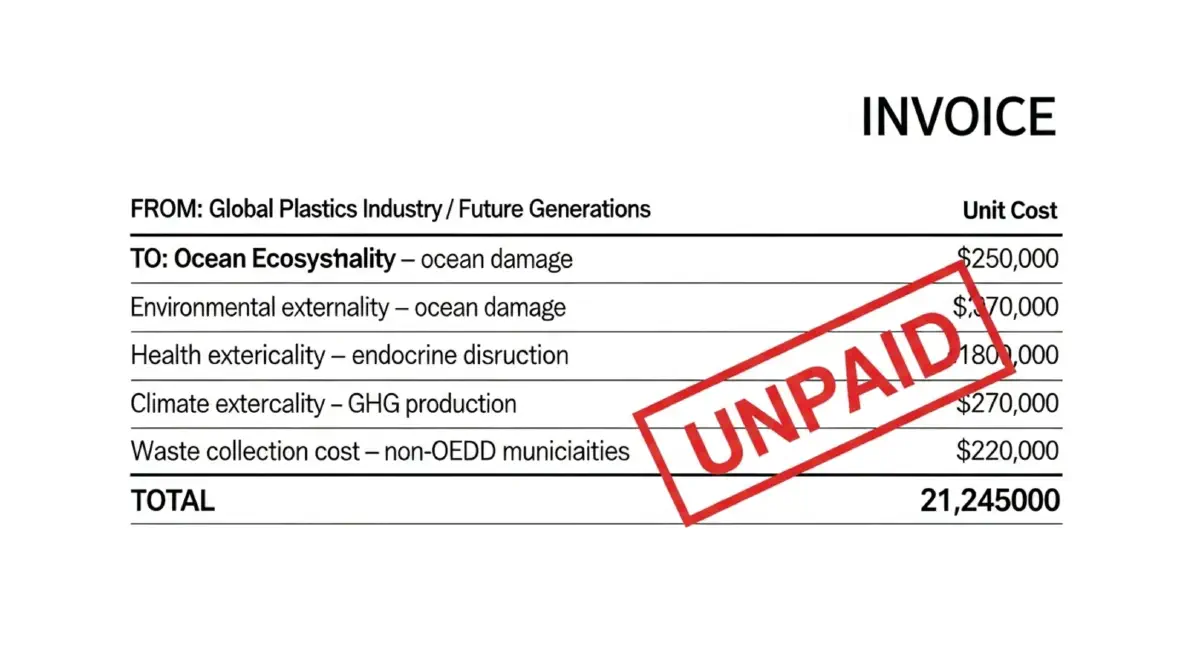
The report estimated the external cost of plastic entering the ocean — the ecological and fishery damage, the tourism impact on affected coastlines, the cost of marine debris cleanup — at approximately $13 billion per year. A companion assessment of the GHG emissions from plastic production, processing, and incineration estimated the climate impact at approximately 400 million tonnes of CO₂e per year — equivalent to approximately 1% of total global emissions, and a cost of approximately $93 billion per year at the US EPA's social cost of carbon.
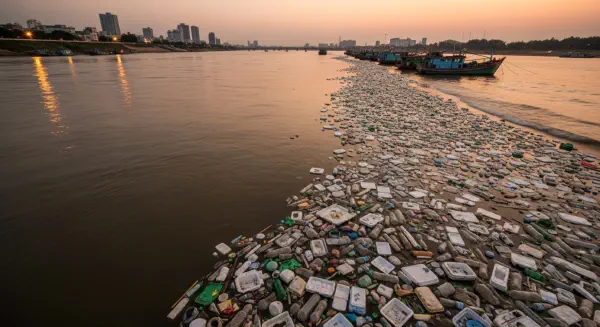
Neither the ocean damage cost nor the climate cost had been charged to any plastic producer at any point in the preceding 65 years of industrial plastic production. The invoice had not been sent. The product that generated these costs had been sold to customers at a price that incorporated material input costs, manufacturing overhead, and profit margins, but did not incorporate a single dollar of liability for the ocean debris it generated, the endocrine-disrupting compounds it leached, the microplastics it shed, or the climate warming it contributed to.
The external cost as a ratio#
The Plastic Cost Coverage Ratio makes this gap precise. PCCR = Costs internalised by plastic producers through end-of-life obligations ÷ Total estimated environmental and health externality cost per tonne of plastic produced. The numerator — what producers actually pay — can be estimated from the revenue collected through Extended Producer Responsibility schemes, packaging levies, and take-back obligations in the jurisdictions where these exist. The denominator — the full external cost — requires aggregating multiple damage categories across the plastic lifecycle.
The OECD's 2022 Global Plastics Outlook, the most comprehensive study of plastic economics yet published by an international organisation, estimated the total external cost of plastic pollution at approximately $3.7 trillion globally over the lifetime of plastic produced in 2019 alone, or approximately $300–400 per tonne in present value terms. This estimate incorporated ocean damage, land contamination, hazardous waste processing costs borne by municipal systems, the GHG costs of production and disposal, and a portion of the health cost of microplastic and chemical exposure (which the OECD acknowledged as likely understated given incomplete epidemiological evidence).
The revenue collected by EPR schemes globally — predominantly in the EU, where packaging EPR has been mandatory since the 1990s under the Packaging and Packaging Waste Directive — runs at approximately $5–15 per tonne of plastic placed on the market in jurisdictions with EPR, and approximately zero per tonne in jurisdictions without. Weighted by the global distribution of plastic production and EPR coverage, the global average internalised cost per tonne is approximately $5–20. Against an external cost of approximately $300–400+ per tonne, the PCCR is approximately 0.01–0.05: between one and five percent of the true cost is borne by producers.
The production history#
The 2017 analysis by Geyer, Jambeck, and Law in Science Advances represents the most rigorous attempt to account for all plastic ever manufactured. Their central finding: by 2015, humanity had produced approximately 8.3 billion metric tonnes of plastic since commercial production began in the early 1950s. Of that total, approximately 6.3 billion tonnes had become waste. Of the waste:
- Approximately 9% had been recycled
- Approximately 12% had been incinerated
- Approximately 79% had accumulated in landfills, informal dumps, or the natural environment
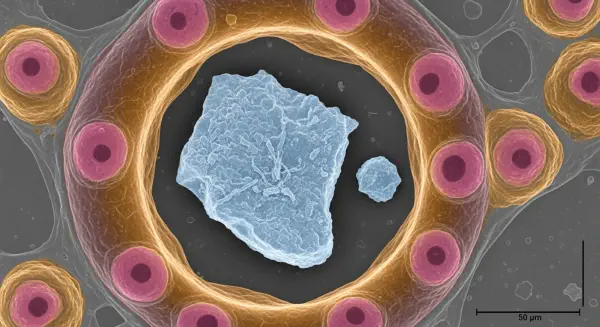
The 79% that is neither recycled nor incinerated does not remain inert. Plastic in the natural environment undergoes photodegradation — UV and mechanical fragmentation into progressively smaller particles. The polymer chains break but do not fully mineralise; the plastic fractions become microplastic (particles below 5 mm) and nanoplastic (particles below 1 µm). The ocean surface, beach sediments, deep-sea sediments, freshwater systems, soils, and atmospheric aerosols now contain microplastics at concentrations that would have been undetectable in the early years of the plastics age and are now measurable in essentially all environmental matrices studied.
The production figures for the period after 2015 continue upward. Global plastic production reached approximately 400 million tonnes in 2022. Approximately 40% of plastic produced annually is single-use packaging — products designed to be discarded within minutes to months of first use — which contributes disproportionately to the waste stream relative to longer-lived plastic applications.
The chemistry hidden in the polymer#
The external cost calculation conventionally focuses on physical plastic particles — the floating debris, the ingested fragments, the blocked waste streams. A parallel stream of external cost concerns the chemistry of plasticisers, flame retardants, UV stabilisers, and other additives that constitute approximately 25–45% by weight of many commercial plastic formulations.
Phthalate esters — the plasticisers used to soften rigid PVC into flexible plastic products such as food packaging, medical tubing, children's toys, and flooring — are endocrine disruptors that mimic and interfere with reproductive hormone signalling. Di-(2-ethylhexyl) phthalate (DEHP), the most widely used phthalate for decades, is classified as a reproductive toxicant in the EU. A 2018 study in Pediatrics by Trasande and colleagues estimated the healthcare cost attributable to phthalate exposure in the United States alone at approximately $39 billion per year, based on the epidemiological relationship between urinary phthalate metabolite levels and adverse developmental outcomes. This cost is not in the PCCR numerator of any plastic producer.
Bisphenol A (BPA), used in polycarbonate plastics and epoxy can linings, is an oestrogen analogue that has been banned from baby bottles in the EU, Canada, and the US following evidence of developmental effects at low-dose exposure. Its replacement chemicals — BPS, BPF, and other bisphenol analogues — were adopted without requiring regulatory approval for the new applications; subsequent toxicological studies have found broadly comparable endocrine activity for the principal substitutes, suggesting that the replacement strategy addressed the regulatory identifier while preserving the toxicological outcome. The external health cost of BPA and its replacements has not been formally incorporated in any plastics EPR calculation.
The gap is a policy architecture problem, not an accounting problem#
The reason the PCCR is between 0.01 and 0.05 is not because the external costs cannot be calculated. The OECD, the WWF, the Ellen MacArthur Foundation, and academic researchers have calculated them with varying methodologies and converging results. The reason the PCCR is so low is that the external costs are not legally required to be internalised in the jurisdictions where the majority of plastic is produced and consumed.
EPR exists in the EU for plastic packaging under the 1994 directive, and requires member states to achieve specified packaging recovery targets. It does not require producers to pay the full external cost of the packaging they produce — it requires them to contribute to a collective producer responsibility organisation that funds recycling infrastructure. The difference between "contributing to a recovery system" and "paying the externality cost per tonne of waste generated" is approximately $285–395 per tonne, at current estimates.
The systemic solution — a polymer levy set at the estimated external cost per tonne, applied at production or first import, the proceeds directed to waste infrastructure, ocean cleanup and health impact costs — would, if implemented at the OECD's externality estimate, generate approximately $120 billion per year from the 400 million tonnes of annual production. No such levy exists at national scale anywhere in the world. The next post examines where the plastic goes when it leaves the production system — and specifically, how it gets from a manufacturing facility in one country to the ocean via a river in another.