The Governance Gap#
On March 25, 2021, the National Academies of Sciences, Engineering, and Medicine released a report titled Reflecting Sunlight: Recommendations for Solar Geoengineering Research and Research Governance.#
The report's authors had spent more than a year reviewing the state of the science, consulting with domestic and international experts, and deliberating over the appropriate framing for a sensitive subject. Their conclusion was measured: solar geoengineering should not be deployed. Research into solar geoengineering should be conducted, but within a responsible governance framework. The United States government should invest approximately $100–200 million over five years in a coordinated solar geoengineering research programme. This investment should be accompanied by a parallel effort to develop governance frameworks for outdoor research experiments, including stakeholder engagement requirements and transparency measures.
The report did not recommend deployment. It did not advocate for SAI as a replacement for emissions reduction. It did not claim that the risks were manageable without research. It recommended a research programme — a fraction of annual federal science spending — guided by governance principles that the report itself outlined in careful detail.
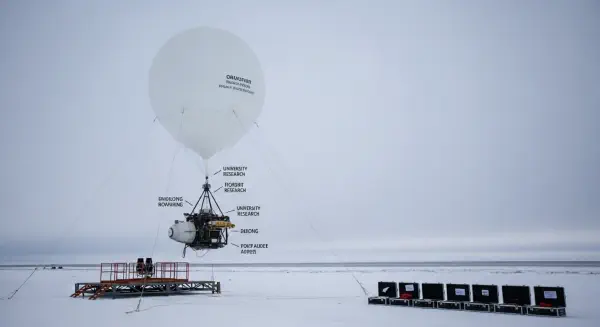
Since the release of the report, no federal legislation authorising the recommended research programme has been enacted. No federal agency has received a dedicated budget line for solar geoengineering research with governance. No international governance framework for outdoor SAI experiments has been negotiated. The SCoPEx programme remains without a confirmed outdoor research site. The governance frameworks that the National Academies identified as the prerequisite for responsible research have not been assembled.
The physical capability to deploy stratospheric aerosol injection at planetary scale has existed since the 1950s, in the form of high-altitude aircraft. The knowledge that it would work has been established by Pinatubo and corroborated by three decades of atmospheric modelling. The technology required to do it is commercially available, requires no novel engineering, and costs approximately as much annually as a mid-sized metropolitan transit budget. The governance framework that would allow it to be done under any legitimate international authority: nonexistent.
The Intervention Leverage Index as a Governance Threshold#
The Intervention Leverage Index was defined in the first post of this series as the ratio of cooling forcing achieved per unit of aerosol deployed to the annual probability of adverse precipitation disruption per unit of aerosol deployed. The index captures the core efficiency tension of SAI: which is larger — the benefit per unit deployed, or the disruption probability per unit deployed?
But the ILI has a second use beyond measuring physical trade-offs. It can function as a governance threshold indicator: the ratio at which a proposed deployment scenario shifts from being a net planetary benefit to a net planetary harm will be different under different governance regimes. A deployment under a robust international governance framework — with compensation mechanisms for monsoon-disruption victims, agreed injection strategies designed to minimise regional adverse effects, transparent monitoring and attribution protocols, and credible termination management plans — will have a higher effective ILI than the same deployment under unilateral or weak governance, because the governance framework reduces the disruption probability in the denominator by constraining deployment parameters and creating accountability for outcomes.
This observation has a direct implication: the absence of governance does not make deployment less likely; it makes deployment more dangerous. The ILI of a deployment under no governance — a desperate middle-power state deploying SAI without international consultation — is substantially lower than the ILI of the same physical intervention under an agreed global framework, because the governance failure itself increases the denominator. Building governance frameworks is not an alternative to the physical intervention; it is the mechanism by which the physical intervention becomes calculable as a net benefit.
The International Legal Vacuum#
The current international legal status of SAI is ambiguous in ways that cannot be resolved by reading existing treaties with conventional methods of interpretation.
The closest international instrument is the Environmental Modification Convention (ENMOD) of 1977, which prohibits the hostile use of environmental modification techniques having severe, widespread, or long-lasting effects. ENMOD was drafted in the context of concerns about military weather modification during the Vietnam War, particularly Operation Popeye — a US Air Force programme from 1967 to 1972 that cloud-seeded over the Ho Chi Minh Trail to extend the monsoon season and increase mud on supply routes. ENMOD's prohibitions are explicitly limited to "hostile" use — military applications or environmental modification used as a weapon against another state. A non-hostile, internationally cooperative SAI programme does not fall within ENMOD's prohibitions. A unilateral SAI deployment by one state that deprives another state of monsoon rainfall — even if deployed for ostensibly beneficial climate purposes — raises ENMOD questions under some interpretations, but the legal argument is contested and has never been adjudicated.
The United Nations Framework Convention on Climate Change (UNFCCC) and the Paris Agreement contain no provisions specifically addressing solar geoengineering. The Paris Agreement's mitigation and adaptation frameworks are focused on emissions reduction and resilience building; the governance of temperature-forcing interventions that operate outside the carbon cycle is not within the scope of either framework.
The Convention on Biological Diversity contains a 2010 decision and a 2012 decision calling for a moratorium on geoengineering activities that may affect biodiversity, except for small-scale scientific experiments. These decisions have no enforcement mechanism and no defining criteria for what constitutes "small-scale." The SCoPEx balloon test arguably fell within the exception as defined; the Kiruna cancellation demonstrated that the definition is not operationally determinative of actual governance outcomes.
UNEP has discussion forums on geoengineering governance; the IPCC assesses the science; neither has an operational mandate to regulate or prohibit.
The Unilateral Deployment Risk#
The governance vacuum is not a stable equilibrium. It is a condition that persists until a crisis precipitates action — and the form that action takes depends on who acts first.
The cost structure of SAI, as established in the first post of this series, places it within the practical capability of a small number of state and non-state actors. The most credible near-term risk scenario is not a superpower deploying SAI through a formal decision process — that scenario is likely to be visible to international monitoring and would generate sufficient diplomatic pressure to create some form of governance response. The more immediate risk is a mid-sized country facing acute climate-driven crisis — a multi-year drought destroying agricultural capacity, a series of severe heat events generating mass mortality, a flood event of a magnitude that overwhelms national adaptive capacity — that makes a unilateral decision to deploy SAI as an emergency measure without the capacity or inclination to seek international consensus.
This scenario is not far-fetched. Multiple countries that are simultaneously large emitters or near-emitters and acutely vulnerable to climate impacts have the technical and financial capacity to mount a meaningful SAI programme. The geopolitical dynamics of such a deployment would be unprecedented: a state modifying the atmosphere over all other states without consent, claiming necessity as justification, with no international institution having the authority to demand cessation or assess compensation.
Ricke et al. (2013) identified this as the structural outcome of the current governance vacuum: actors with sufficiently large potential benefits from cooling have incentives to deploy unilaterally, regardless of others' welfare, because no legal mechanism prevents it. The resulting equilibrium may be multiple competing unilateral deployments — a geopolitical dynamics of atmospheric modification analogous in its collective action structure to the prisoner's dilemma, with each actor's best response being to deploy regardless of what others do, producing a globally suboptimal outcome.
The Intervention Leverage Index calculated for competitive unilateral deployment is negative — the interaction effects of multiple independent injection programmes without coordination would produce regional precipitation disruptions that are unmodelled and potentially catastrophic, with no attribution possible and no compensation mechanism available.
The Research Governance Model#
The National Academies' 2021 report proposed a staged research governance model that provides the most operationally developed framework currently in the literature.
The model distinguishes between different scales of outdoor research and recommends different governance requirements at each scale. Small-scale laboratory and modelling research requires no special governance beyond standard scientific publication norms. Small-scale outdoor experiments — such as the SCoPEx balloon test — should be governed by a transparency and notification framework that requires public registration, stakeholder engagement appropriate to local context, and reporting of results. Larger-scale outdoor experiments that could produce detectable atmospheric perturbations should require international notification, independent monitoring, and some form of formal consultation with potentially affected parties. Deployment would require a level of international governance that does not currently exist.
The staged model recognises that the governance requirements appropriate to each activity level are proportional to the potential impact — but it establishes the principle that even benign research requires governance, because the governance framework needs to be built before it is needed for the higher-stakes decisions.
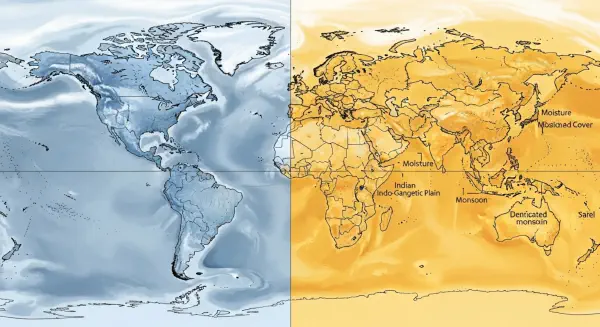
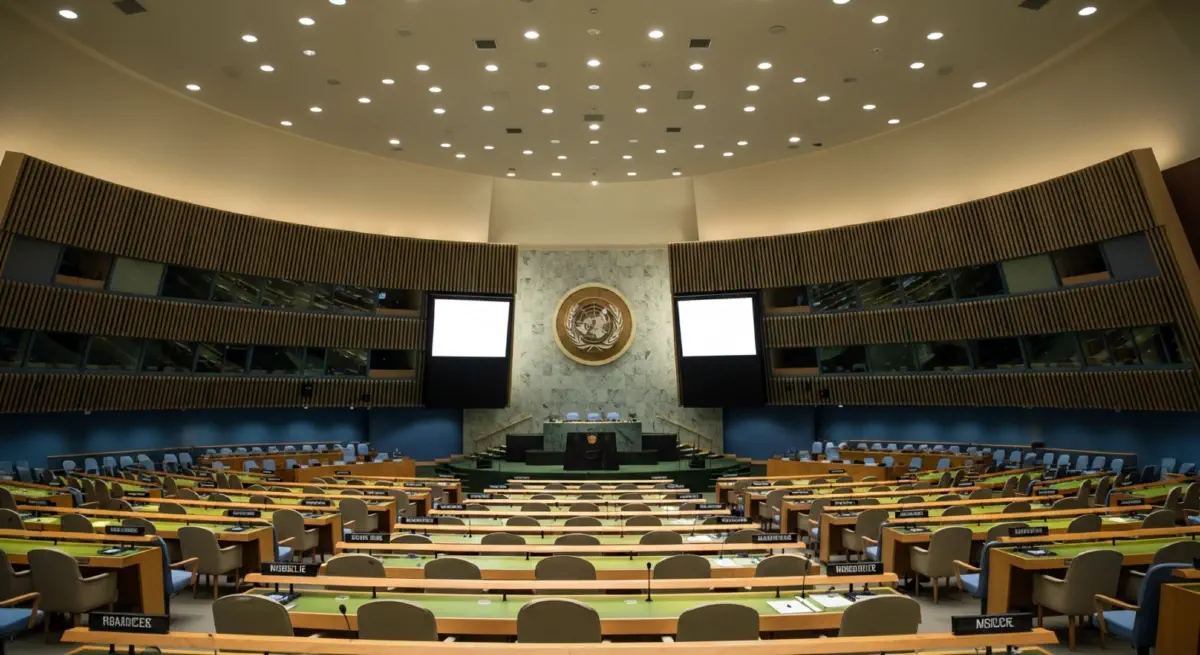
The UN Environment Assembly has discussed geoengineering governance in multiple sessions without reaching agreement on a framework. The primary points of disagreement reflect the monsoon distributional conflict examined in the previous post: developing countries in climate-vulnerable regions are reluctant to endorse any governance framework that legalises SAI research and potentially constrains their ability to oppose deployment, while industrialised countries are reluctant to accept governance frameworks that would grant effective vetoes to non-deploying parties.
The ILI as a Decision Criterion for International Coordination#
The Intervention Leverage Index was developed throughout this series as a tool for measuring the physical trade-offs of stratospheric aerosol injection. Its governance use is as a quantitative threshold for international coordination requirements.
The logic is as follows: at ILI values well above 1 — where cooling benefit per unit deployed substantially exceeds disruption probability per unit deployed — there is a strong case for research that better characterises the parameters. At ILI values near 1, neutral decision analysis cannot determine net benefit without knowledge of the distribution of winners and losers. At ILI values below 1 — where disruption probability per unit deployed exceeds cooling benefit — no rational decision framework supports deployment, regardless of other considerations.
The current ILI for stratospheric aerosol injection cannot be precisely calculated because the denominator (disruption probability per unit deployed, disaggregated by injection scenario) is not sufficiently constrained by existing modelling. The research programme that was recommended and not funded is, in effect, the programme that would allow the ILI to be calculated with sufficient confidence to determine whether the intervention falls above or below the threshold for international coordination.
The failure to build governance is therefore not just an institutional failure — it is a measurement failure. Without the research and governance infrastructure required to calculate and evaluate the ILI, the index exists as a conceptual framework but not an operational decision criterion. The ledger cannot be closed without entries that have not been made.
The Ethics of the Calculable Emergency#
This series has introduced the Intervention Leverage Index as a tool for measuring the trade-off at the core of stratospheric aerosol injection: the ratio of cooling benefit to disruption risk per unit deployed. The ratio is physically interpretable. The numerator is constrained. The denominator remains uncertain.
The uncertainty is not a permanent condition. Field research, better atmospheric modelling, and the development of governance frameworks that could manage the distributional conflict over monsoon disruption — all of these are possible with the modest investment that the National Academies recommended and that has not been made. The ILI can be calculated. Its parameters can be bounded. Governance thresholds can be defined. Institutions capable of enforcing those thresholds can be designed.
What is missing is not knowledge of what to do. It is the political will to build the institution before the emergency creates a constituency for skipping the institution entirely. The emergency lever examined in Post 1 is real, accessible, cheap, and physically effective. The moral hazard machine examined in Post 2 threatens to delay the mitigation that would make the lever unnecessary. The monsoon distributional conflict examined in Post 3 ensures that no deployment can be neutral in its welfare effects. And the governance gap examined here is the condition that makes each of these problems harder: the absence of an institution with the authority to calculate the ILI, evaluate it against a legitimate threshold, and make a binding decision that accounts for the full distribution of consequences.
The atmosphere is the common property of all eight billion inhabitants of this planet. No property rights framework governs it. No constitutional order assigns stewardship. No insurance market prices the probability of monsoon failure due to aerosol injection by a distant consortium of states that will not bear the agricultural consequences.
The geoengineering ledger has entries on the asset side and entries on the liability side. The balance cannot be assessed without the institution capable of reading both columns. The governance gap is not the absence of a regulation. It is the absence of the institution that could decide whether this particular emergency lever should ever be pulled — and, if it is pulled, who compensates the people standing beneath it.