The Emergency Lever#
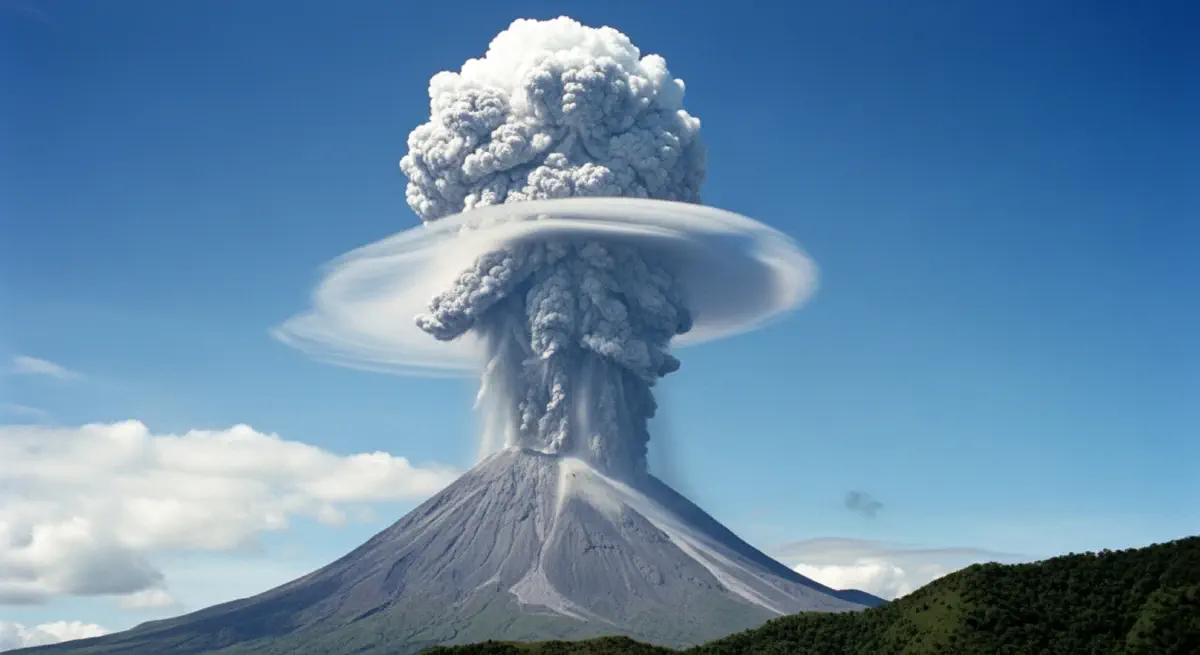
On June 15, 1991 — a date that would permanently alter the scientific conversation about deliberate climate modification — Mount Pinatubo erupted on the island of Luzon in the Philippines with a violence that registered on seismographs 10,000 kilometres away.#
The eruption column reached 35 kilometres into the atmosphere. Over the following days, approximately 20 million tonnes of sulphur dioxide dispersed through the stratosphere, where it reacted with water vapour to form a fine layer of sulphate aerosol particles approximately 5–30 kilometres above the surface of the Earth. These particles reflected incoming solar radiation back into space before it could reach the lower atmosphere and warm the surface. By 1992, global mean surface temperatures had fallen by approximately 0.5°C relative to their pre-eruption trajectory. The cooling persisted for approximately 18 months before the aerosol layer gradually settled out of the stratosphere and temperatures recovered. Pinatubo killed approximately 800 people in the eruption itself. Its stratospheric injection — an involuntary, uncontrolled, unmonitored release of sulphate aerosols at precisely the altitude that makes them most effective as a reflective layer — cooled the entire planet by half a degree for a year and a half without any human institution having the authority to authorise it, compensate its beneficiaries, or identify its victims.
The Dutch atmospheric chemist Paul Crutzen published a paper in the journal Climatic Change in 2006 that forced the geochemical logic of what Pinatubo had demonstrated into direct confrontation with climate policy. Crutzen, who had received a Nobel Prize in Chemistry in 1995 for his work on stratospheric ozone depletion, was not a fringe actor making an extreme proposal. He was, with careful reluctance, acknowledging that the physical mechanism was real, that it worked, that it was cheap, and that the failure of global emission reductions to materialise meant it might eventually become necessary to think seriously about deploying it deliberately.
The Intervention Leverage Index: Measuring the Ratio of the Solution to Its Consequences#
The Intervention Leverage Index (ILI) is defined precisely to capture the central engineering and governance tension of stratospheric aerosol injection: it is the ratio of the cooling benefit delivered per unit of aerosol deployed to the estimated annual probability of adverse precipitation or monsoon disruption per unit deployed.
Formally: ILI = [Radiative forcing reduction (W/m²) per Tg of sulphur deployed] ÷ [Annual probability of significant adverse hydroclimate disruption per Tg of sulphur deployed]
The numerator is, by geophysical standards, unusually well-constrained. Pinatubo effectively provided a calibration dataset. The 1815 Mount Tambora eruption, the 1883 Krakatau eruption, and the 1963 Agung eruption provide additional data points allowing calculation of sulphate burden per unit of stratospheric SO₂ loading and radiative forcing per unit of stratospheric sulphate burden. Modern stratospheric aerosol modelling, calibrated against these observations, estimates that approximately 1 Tg of sulphur (as SO₂) injected into the stratosphere at appropriate altitude produces approximately 1–1.5 W/m² of radiative forcing reduction. For context, the total anthropogenic greenhouse gas forcing since industrialisation is approximately 2.9–3.3 W/m². To offset the entire accumulated anthropogenic forcing would require approximately 2–3 Tg of sulphur per year in sustained annual injections, assuming a mean stratospheric aerosol lifetime of approximately 1–2 years.
The denominator is far less constrained. Regional precipitation responses to stratospheric aerosol loading are modelled, not observed at the scales relevant to deployment scenarios. They depend on injection latitude, altitude, particle size distribution, and seasonal timing in ways that are not yet fully characterised.
The Physics of Stratospheric Effectiveness#
The efficiency of sulphate aerosols as a reflective agent depends on their behaviour in the stratosphere — specifically, on the mechanisms that distinguish stratospheric residence from tropospheric residence.
In the troposphere — the lowest 8–15 kilometres of the atmosphere — water vapour condenses around aerosol particles, forming clouds and precipitation, which remove aerosols from the atmosphere on timescales of days to weeks. This is why industrial SO₂ emissions — released primarily in the troposphere — produce localised acid rain and regional haze rather than global cooling: they wash out too quickly to achieve a planetary distribution.
In the stratosphere, which begins above the tropopause at 10–15 kilometres altitude, there is no precipitation mechanism. Aerosols introduced into the stratosphere remain there for approximately 12–24 months, gradually sedimenting out only under gravitational settling, which operates on aerosol residence timescales of one to two years. During their stratospheric residence, aerosol particles are transported globally by the Brewer-Dobson circulation, achieving a quasi-uniform global distribution that converts a localised injection into a planetary radiative effect.
The sulphate aerosol particles formed in the stratosphere from SO₂ oxidation are approximately 0.1–1.0 micrometres in effective radius — a size that maximises scattering of visible-wavelength solar radiation while transmitting most outgoing long-wave infrared radiation. This size-dependent selective scattering is why stratospheric aerosols cool the surface (by reducing incoming solar radiation) without trapping additional outgoing heat. The optical properties are precisely those required for a cooling agent, and they occur naturally from the SO₂ oxidation chemistry that volcanic injections inevitably produce.
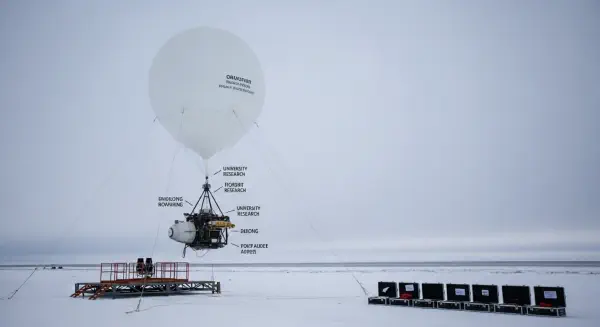
Harvard atmospheric scientist David Keith, who has led the most prominent active research programme on SAI (the Stratospheric Controlled Perturbation Experiment, known as SCoPEx), has proposed that calcium carbonate particles might offer advantages over sulphate aerosols in some deployment scenarios — specifically, they would not catalyse the ozone-depleting reactions that sulphate aerosols tend to promote, though they would introduce their own uncertain photochemistry. The ozone chemistry of sulphate aerosol injection is a serious concern: Pinatubo was associated with measurable stratospheric ozone depletion at mid-latitudes, and deliberate sustained injection at the levels required for significant climate forcing could produce measurably greater effects. The ILI framework accommodates this uncertainty — ozone depletion is a genuine component of the denominator's disruption probability — but quantifying it robustly requires atmospheric chemistry modelling that current observational constraints do not fully validate.
The Economy of the Intervention#
The cost structure of stratospheric aerosol injection is the detail that makes it geopolitically dangerous rather than merely scientifically complex.
A 2018 study by Wake Smith and Gernot Wagner, published in Environmental Research Letters, estimated the costs of the first 15 years of a hypothetical SAI deployment programme at approximately $2.25 billion per year at programme maturity — with cumulative 15-year costs of approximately $3.5 billion for the entire programme. The cost estimate assumes delivery via modified high-altitude aircraft (comparable in capabilities to the Boeing KC-135 Stratotanker, which has been operational since the 1950s) flying to altitudes of approximately 20 kilometres and releasing sulphur-containing payloads. The fleet size required to deliver 1–5 Tg of sulphur per year at altitude would be approximately 100–200 aircraft operating in dedicated rotation schedules from equatorial or mid-latitude bases.
For comparison: global annual investment in renewable energy reached approximately $500 billion in 2022. The annual cost of a full SAI deployment programme achieving 1–2°C of cooling would represent less than 0.5% of annual renewable energy investment. It would be less than the annual revenue of most major oil companies' individual refining divisions.
This cost structure transforms SAI from a macro-geopolitical project — requiring the collective commitment of multiple major states and substantial multi-year capital allocation — into a project accessible to a small number of actors. A wealthy nation-state with a functional air force has the technical capability. Several non-governmental actors with access to aircraft and chemical supply chains could mount a credible programme. The governance challenge is not preventing a superpower from deploying; it is determining who is authorised to tell a desperate mid-sized country facing climate-driven agricultural failure that it cannot deploy.
Jones et al. (2017) modelled the effect of a hypothetical "rogue" SAI deployment by a single mid-latitude northern hemisphere actor on global tropical cyclone frequencies, finding significant disruptions to tropical cyclone tracks and intensities that would not be distributed uniformly across the global population. The ILI for a unilateral deployment, calculated with the regional disruption probability appropriate to its specific injection parameters, would look very different from the ILI for a cooperatively governed global programme — but no mechanism currently exists to enforce the choice.
The Pinatubo Calibration and Its Limits#
The Pinatubo calibration provides high confidence in the ILI numerator. The eruption produced a forcing equivalent to approximately 1.5–2.0 W/m² at peak loading, correlated well with observed temperature decline, and the temperature signal was global in geographic extent with systematic regional variations. The calibration is sufficient to design a deployment programme with reasonable confidence that the target forcing would be achieved within a predictable range.
Its limits are equally important.
Pinatubo was a single injection event, not a sustained programme. Stratospheric aerosol loading from a single injection decays exponentially after the injection ceases. A sustained SAI programme requires annual injections to maintain the forcing — and sustained injections may produce different aerosol particle size distributions than single-event injections, because the sulphate chemistry in an already-loaded stratosphere differs from the chemistry in a clean stratosphere. If sustained injections produce larger particles than single-event injections, the mass-specific scattering efficiency declines, meaning more sulphur mass is required to achieve the same forcing effect. This non-linearity in the sulphate-forcing relationship is poorly characterised and represents a genuine uncertainty in the ILI numerator at high deployment levels.
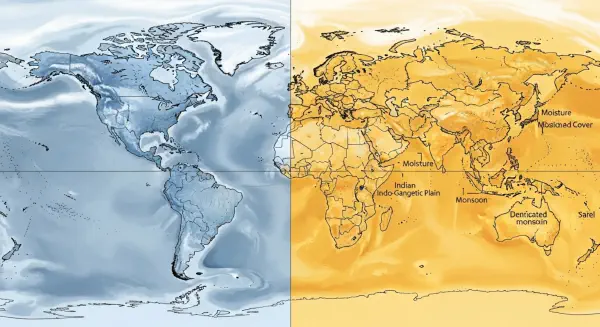
Pinatubo was also an equatorial injection, which produced a different hemispheric forcing distribution than mid- or high-latitude injections would produce. SAI proposals range from equatorial to Arctic injection scenarios; equatorial injections tend to produce more symmetric hemispheric cooling, while Northern Hemisphere high-latitude injections tend to preferentially cool the Northern Hemisphere, which is where most anthropogenic emissions and temperature anomaly originates but also where suppression of the Indo-Pacific monsoon circulation has its strongest observed signal.
The calibration constrains the physics. The governance question is whether governance frameworks can be built before the physics gives way to the operation.
The Research Trajectory#
The Pinatubo data established that the forcing mechanism works. The period from Crutzen's 2006 paper to the present has seen the development of increasingly sophisticated computational modelling, a growing literature on regional distributional effects, initial laboratory and in-situ characterisation of aerosol chemistry at stratospheric conditions, and — critically — the emergence of the SCoPEx programme and its subsequent cancellation, which will be examined in the next post.
What has not developed in the same period is governance. The ILI exists as a conceptual framework for measuring what works relative to what it disrupts. The institutions that would need to evaluate it and make binding decisions about deployment remain unformed. The IPCC Sixth Assessment Report (2021) addressed solar radiation management for the first time in systematic terms, finding that SAI could limit warming to below 1.5°C with sufficient deployment but noting "large uncertainties" in regional effects and flagging governance as the central unresolved challenge.
What the emergency lever reveals, when examined closely, is not primarily an engineering problem. The physics of the intervention is well-documented from planetary-scale natural experiments that did not require anyone's permission. The problem is that the intervention's costs are geographically separable from its benefits — and the institution that would assign the distribution has not been built.
That institution's absence is where the next post begins.