The Intervention Leverage Index frames geoengineering's core dilemma as a governance problem, not a physics problem: ILI = Potential cooling forcing (W/m²) per unit of aerosol-sulphur equivalent deployed ÷ Estimated annual probability of adverse precipitation disruption per unit of aerosol deployed. The physical numerator is well-constrained from Pinatubo and subsequent volcanic observations: approximately 1 TgS (teragram of sulphur) in the stratosphere corresponds to approximately 1–1.5 W/m² of radiative forcing reduction. The denominator — the disruption probability per unit deployed — is highly uncertain and varies by injection latitude, altitude, and seasonality. The ratio is physically interpretable but politically insoluble: it quantifies the efficiency of the cooling mechanism while explicitly acknowledging the regional damage probability that no sovereign government can be authorised to impose on another.
Stratospheric aerosol injection is technically within reach of a small number of actors at minimal cost: A 2021 analysis by Wake Smith and colleagues estimated that an SAI programme sufficient to reduce global mean temperature by approximately 1°C could be delivered using modified high-altitude aircraft at annual costs of approximately $2.25 billion — less than the annual budget of a mid-sized municipal government. The technological accessibility of SAI is qualitatively different from any prior geoengineering concept: it does not require large-scale infrastructure, international cooperation, or novel engineering. Any nation-state, large corporation, or sufficiently capitalised non-governmental actor could, in principle, deploy aerosols at relevant scale using existing modified aircraft. The governance gap is not between present capability and future technology — it is between present capability and present governance.
Termination shock is the irreversibility risk that distinguishes SAI from all other climate interventions: If a stratospheric aerosol injection programme were maintained for decades and then abruptly terminated — due to political decision, conflict, economic disruption, or technological failure — the warming suppressed by the aerosol programme would re-emerge at approximately the full rate it had been suppressed, but compressed into the years following termination rather than spread across the decades of the full carbon concentration trajectory. The rate of warming following termination could be approximately 5–10 times the rate of current observed warming — faster than most ecosystems can adapt to. Initiating an SAI programme creates a commitment to maintain it indefinitely, or accept a rapid warming rebound on termination. This commitment cannot be made by any single government across the multi-generational timeframe that climate change requires.
Carbon dioxide removal (CDR) geoengineering has no termination shock and carries lower governance risk but operates at different speed and cost: Direct air capture (DAC), enhanced weathering, ocean alkalinity enhancement, and afforestation/reforestation address the underlying cause of warming (CO₂ concentration) rather than masking the warming symptom. DAC costs have fallen from approximately $1,000/tonne CO₂ in early commercial deployments to an anticipated $150–300/tonne in near-term commercial scale. To remove CO₂ at the pace required to reach net-zero trajectories — approximately 6–10 GtCO₂/yr by 2050 under most IPCC scenarios — at $300/tonne would require approximately $1.8–3.0 trillion per year in CDR expenditure. This compares to approximately $2.25 billion for an SAI programme achieving similar near-term temperature effects. The asymmetry in cost and speed explains why SAI receives governance attention that its benign technical status would not seem to warrant — it is the cheap version of the temperature solution that the expensive version addresses more sustainably.
The Arctic methane risk case generates the strongest emergency lever argument for SAI research: Arctic permafrost stores approximately 1,700 Gt of carbon — approximately twice the current atmospheric carbon stock. Permafrost thaw in the Arctic has been observed to be advancing faster than most IPCC models projected; some submerged permafrost in the East Siberian Arctic shelf is releasing methane in quantities that suggest destabilisation is already occurring locally. In a scenario where Arctic amplification drives rapid permafrost thaw that generates a methane feedback significantly accelerating warming on a decadal timescale, the SAI option — as a rapid, low-cost temperature reduction tool — becomes a genuine emergency response option rather than a competing strategy with CDR. Research on SAI does not commit to deployment; it generates the knowledge required to make an informed decision if the emergency materialises.
Robock, A., Oman, L., & Stenchikov, G.L. (2008). Regional climate responses to geoengineering with tropical and Arctic SO₂ injections. Journal of Geophysical Research: Atmospheres, 113(D16).
Irvine, P.J., Lawrence, A., Lin, N., & Gernon, T.M. (2019). An overview of the Earth system science of solar geoengineering. WIREs Climate Change, 10(1), e573.
Smith, W., & Wagner, G. (2018). Stratospheric aerosol injection tactics and costs in the first 15 years of deployment. Environmental Research Letters, 13(12), 124001.
National Academies of Sciences, Engineering, and Medicine. (2021). Reflecting sunlight: Recommendations for solar geoengineering research and research governance. National Academies Press.
Moriyama, R., Sugiyama, M., Kurosawa, A., Masuda, K., Tsuzuki, K., & Ishimoto, Y. (2017). The cost of stratospheric climate engineering revisited. Mitigation and Adaptation Strategies for Global Change, 22(8), 1207–1228.
Jones, A., Haywood, J., Dunstone, N., Emanuel, K., Hawcroft, M., Hodges, K., & Jones, A. (2017). Impacts of hemispheric solar geoengineering on tropical cyclone frequency. Nature Communications, 8, 1382.
Simpson, I.R., Tilmes, S., Richter, J.H., Kravitz, B., MacMartin, D.G., Mills, M.J., ... & Vitt, F. (2019). The regional hydroclimate response to stratospheric sulfate geoengineering and the role of stratospheric heating. Journal of Geophysical Research: Atmospheres, 124(23), 12587–12616.
Parker, A., & Irvine, P.J. (2018). The risk of termination shock from solar geoengineering. Earth's Future, 6(3), 456–467.
Schäfer, S., Lawrence, M., Stelzer, H., Born, W., & Low, S. (2015). The European transdisciplinary assessment of climate engineering (EuTRACE): Removing greenhouse gases from the atmosphere and reflecting sunlight away from Earth. Freie Universität Berlin.
Szerszynski, B., Kearnes, M., Macnaghten, P., Owen, R., & Stilgoe, J. (2013). Why solar radiation management geoengineering and democracy won't mix. Environment and Planning A, 45(12), 2809–2816.
Caney, S. (2008). Human rights, climate change, and discounting. Environmental Politics, 17(4), 536–555.
Ricke, K.L., Moreno-Cruz, J.B., & Caldeira, K. (2013). Strategic incentives for climate geoengineering coalitions to exclude broad participation. Environmental Research Letters, 8(1), 014021.
Buck, H.J. (2019). After geoengineering: Climate tragedy, repair, and restoration. Verso Books.
Gupta, A., & Möller, I. (2019). De facto governance: How authoritative assessments construct the politics and science of solar geoengineering. Global Environmental Politics, 19(3), 6–19.
Mechler, R., Calliari, E., Bouwer, L.M., McDermott, T., Mysiak, J., Surminski, S., ... & James, R. (2019). Science for loss and damage: Findings and propositions. In Loss and Damage from Climate Change (pp. 3–37). Springer.
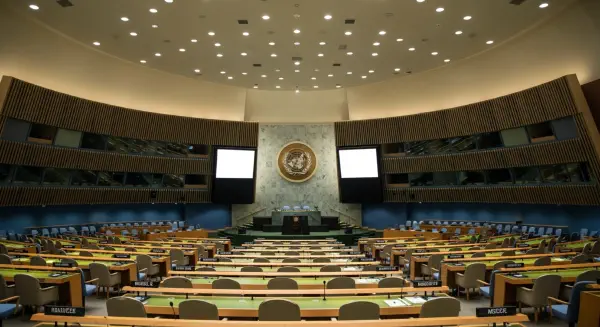
Surveys the complete absence of international governance for climate geoengineering: no treaty, no authorising institution, no compensation framework — despite the US National Academies recommending a research programme in 2021.
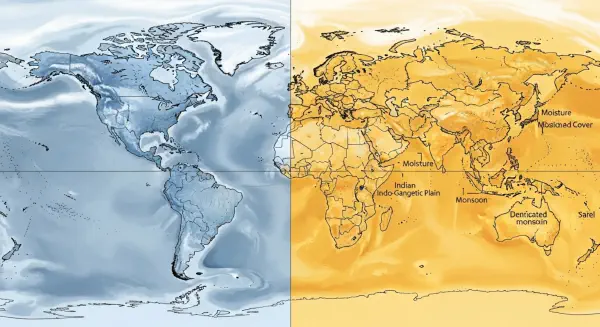
Documents modelling evidence that northern-hemisphere SAI reduces African and Asian monsoon rainfall by 5–10%, affecting the food security of 2.4 billion people in countries that are not among those most likely to initiate deployment.
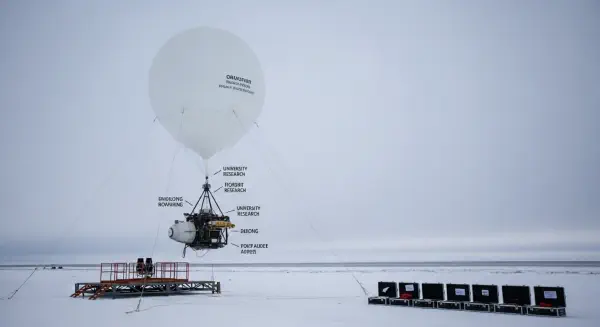
Examines the SCoPEx cancellation and the Saami Council objection as a case study in the governance vacuum, demonstrating that no existing institution has the authority to authorise, regulate, or compensate for the effects of deliberate climate intervention.
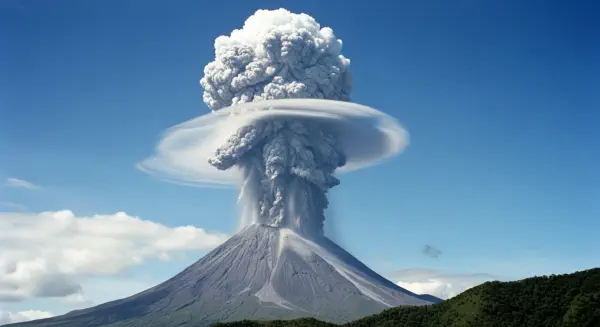
Uses the 1991 Pinatubo eruption as a natural analogue to introduce stratospheric aerosol injection, establishing the Intervention Leverage Index and the asymmetry between its cooling capacity and its governance requirements.