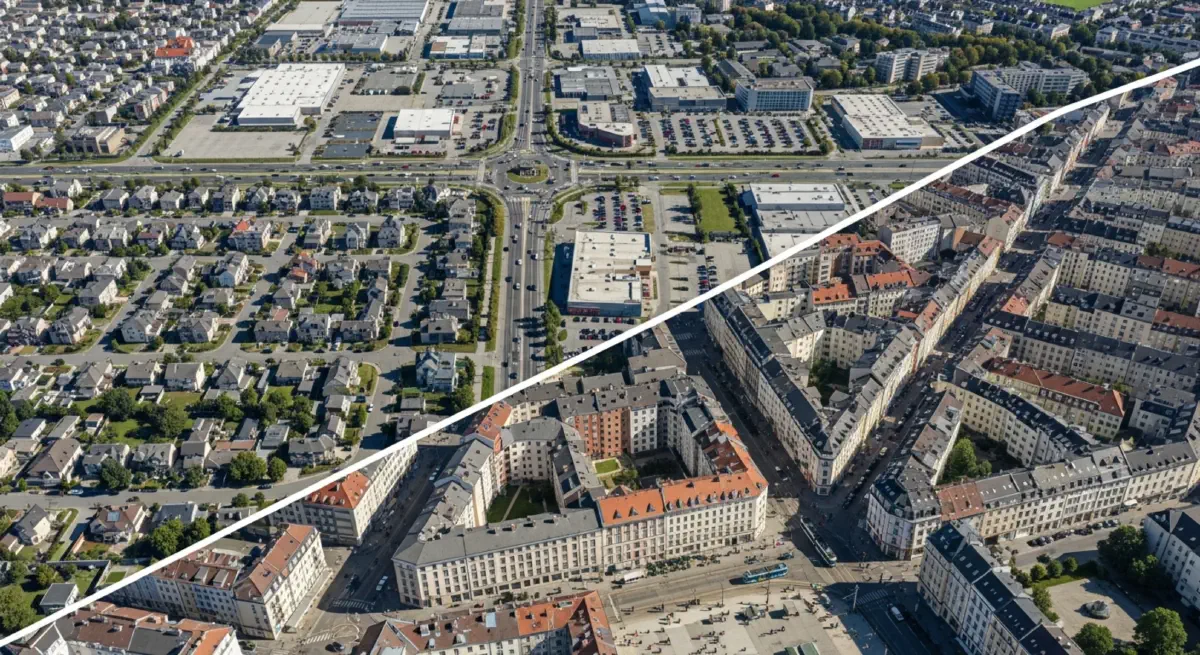
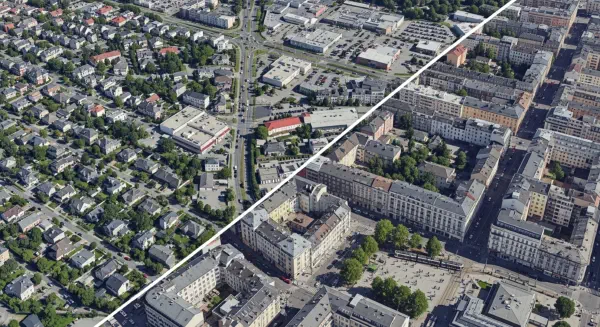
The Urban Carbon Leverage Factor quantifies a structural carbon cost that individual technology choices cannot eliminate: UCLF = Per-capita transport + building heating/cooling emissions in the lowest-density urban quintile ÷ Per-capita transport + building heating/cooling emissions in the highest-density urban quintile, controlling for income and climate zone. US data from Sacramento, Chicago, and Boston metropolitan areas show UCLF values of 3–5: residents of the lowest-density quintile generate three to five times the transport and energy emissions of residents in the highest-density quintile, at comparable incomes. Replacing a petrol car with an electric vehicle in the lowest-density quintile reduces the numerator by approximately 60–80% of the transport component — but the transport component is itself twice the level of the high-density baseline, leaving the post-electrification low-density resident still emitting more than the non-electrified high-density resident.
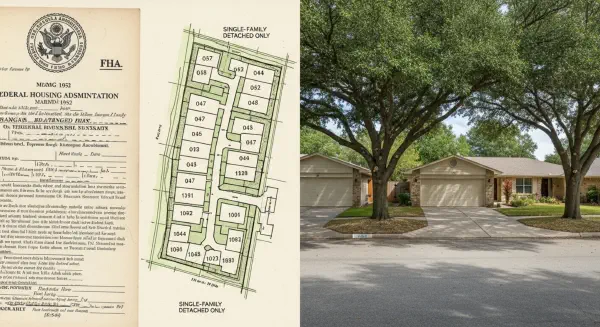
US post-war suburban expansion was not a market outcome — it was a policy construction: The 1944 Servicemen's Readjustment Act (GI Bill) provided federally guaranteed mortgages exclusively applicable to new single-family suburban construction. The Federal Highway Act of 1956 allocated $25 billion (approximately $280 billion in 2024 dollars) to construct the Interstate Highway System, the infrastructure backbone of automobile-dependent suburbanisation. The 1948 Standard State Zoning Enabling Act model had already been adopted by most US states, legally prohibiting the mixed-use, walkable development patterns that US cities had built organically prior to 1940. The suburban carbon obligation was created by deliberate policy instruments — which means it can be addressed by deliberate policy instruments.
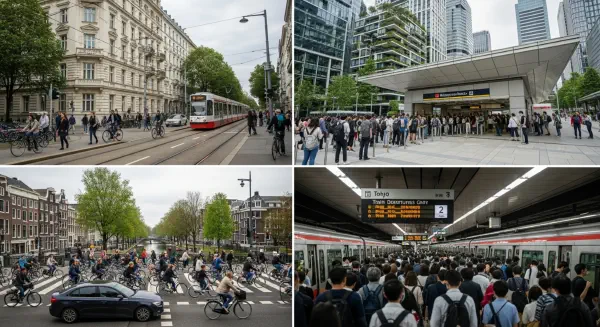
Transit-oriented development is one of the few climate interventions with positive returns on public investment: International comparisons and before-after studies of transit corridor development consistently find that transit-accessible, walkable mixed-use development generates higher property tax revenue per acre than automobile-dependent development, reduces municipal service delivery costs (utilities, emergency services, road maintenance) per household, and produces fiscal surpluses that subsidise adjacent automobile-dependent areas in most US metropolitan budgets. The carbon dividend of transit investment is therefore available without net fiscal cost, provided the accounting includes the full municipal fiscal geometry rather than the capital cost of transit infrastructure in isolation.
The 15-minute city concept has a quantifiable climate mechanism: The "15-minute city" framework (Carlos Moreno, 2020) proposes organising urban development so that daily needs — work, education, healthcare, food, recreation — are accessible within 15 minutes on foot or by bicycle from any resident. The climate mechanism is not primarily psychological or aspirational. At 15-minute walking scale, the fixed spatial range of daily activity equals approximately 1.2–1.5 km radius, which is the scale at which mixed-use development at densities above approximately 3,500 housing units/km² generates sufficient local demand to support transit, walkable retail, and the density externalities that reduce per-capita energy for space conditioning.
Zoning reform is climate policy: In most US and Australian cities, 70–85% of residential land is legally restricted to low-density, single-family detached housing. This restriction prohibits the built-form densities at which the UCLF dividend becomes available. YIMBY (Yes In My Backyard) housing campaigns, which advocate relaxing single-family zoning restrictions, have achieved legislative successes in California (SB 9, 2021), Oregon, and Minnesota. The climate framing of these campaigns — that single-family zoning is a carbon maintenance mechanism, not just an affordability barrier — represents one of the most significant intersections of housing economics and climate policy currently active in the US legislative landscape.