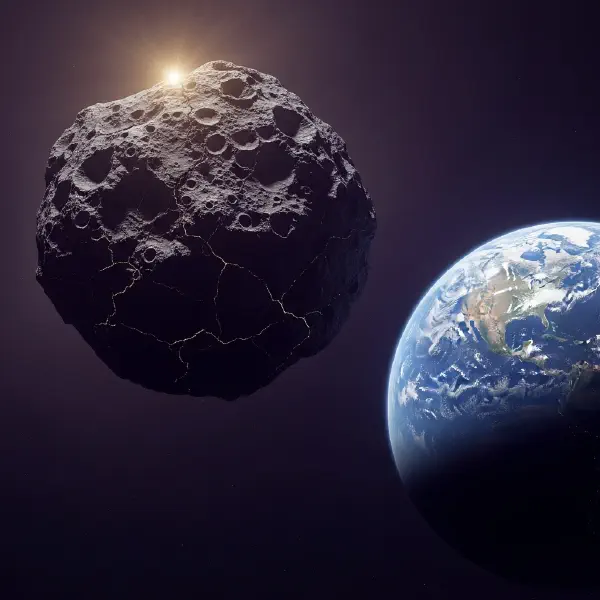
The Tectonic Clock – Part 5: Beyond the Cradle: The Unavoidable Calculus of Cosmic Risk
·1081 words·6 mins
Concluding the series with the cosmic threats and the need for interstellar expansion.
Alexander, D. (1998). Natural disasters. UCL Press.
McGuire, B. (1999). Apocalypse: A natural history of global disasters. Cassell.
McGuire, B. (2002). Global catastrophes: A very short introduction. Oxford University Press.
McGuire, B. (2005). Surviving Armageddon: Solutions for a threatened planet. Oxford University Press.
Redfern, M. (2002). The Earth: A very short introduction. Oxford University Press.
Smith, K. (2004). Environmental hazards. Taylor & Francis.
Tarbuck, E. J., Lutgens, F. K., & Tassa, D. (2005). Earth science (11th ed.). Prentice Hall.
Verschuur, G. L. (1997). Impact! The threat of comets and asteroids. Oxford University Press.
Walker, G. (2003). Snowball Earth: The story of a maverick scientist and his theory of the global catastrophe that spawned life as we know it. Bloomsbury.
Woo, G. (2000). The mathematics of geological catastrophes. Imperial College Press.