The Herfindahl Threshold#
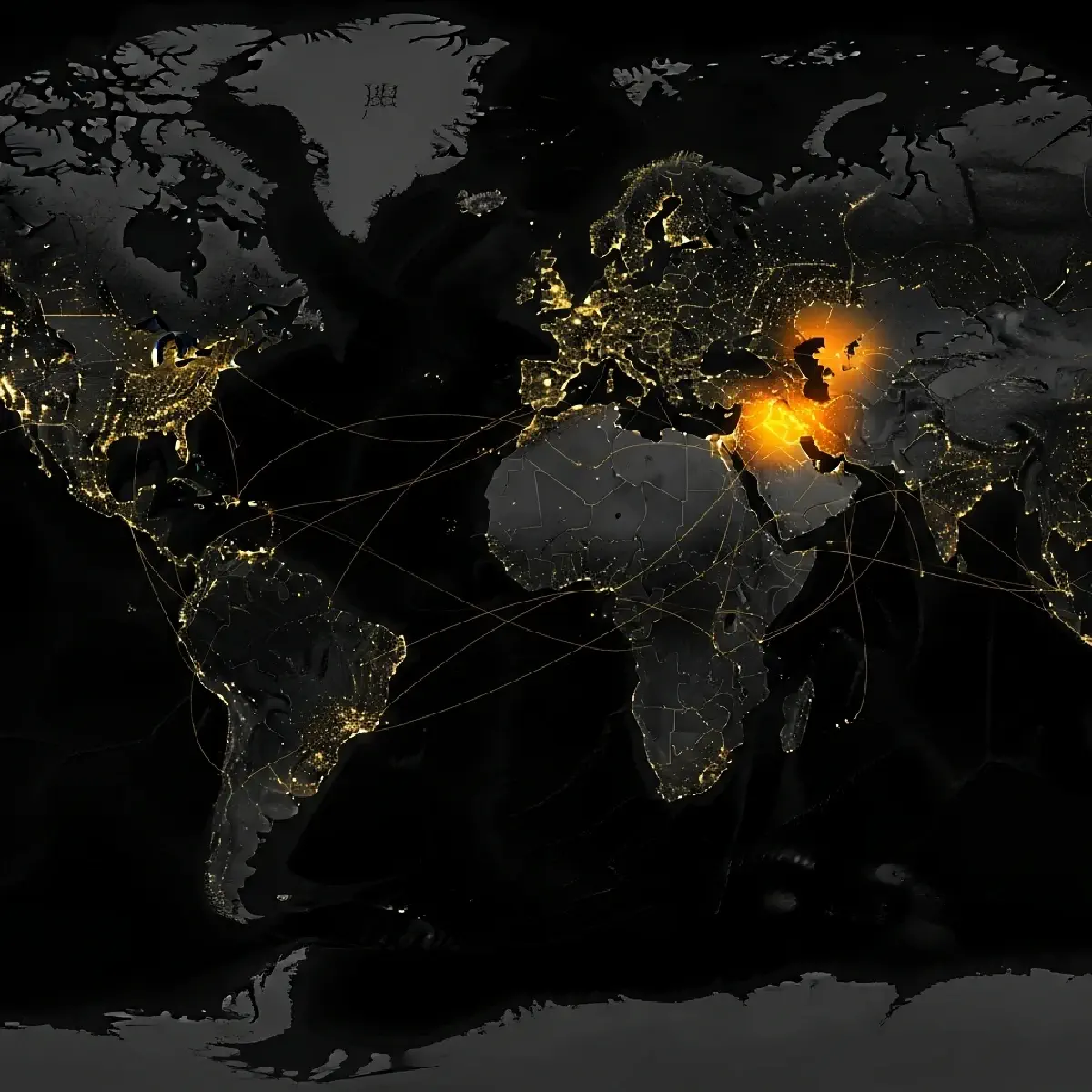
The geography of the periodic table is the new geography of power. In the 20th century, geopolitics was governed by the distribution of hydrocarbons; in the 21st, it is governed by the concentration of critical elements. The “Decarbonized World” is not a world free of supply-chain risk, but one where the risk has shifted from oil-rich nations to mineral-rich ones. This concentration is measured by the Herfindahl-Hirschman Index (HHI), where a value of
The Thesis of Strategic Criticality#
The central claim of this final post is that decarbonization is not merely a technical challenge but a geopolitical mandate that requires a radical restructuring of global trade and material policy. A “critical” material is defined by two factors: its essential role in the economy or national security and the vulnerability of its supply chain to disruption. For lithium, the risk is not geological scarcity, but “regulatory risk” and “monopoly of supply risk”. To manage this, we must transition from a model of “Resource Imperialism” to one of “Material Collaboration,” where transparency and ethical sourcing are as important as specific tensile strength. The following analysis details the mechanics of the Herfindahl-Hirschman Index, the rise of restricted substances, and the “Resource Curse” that haunts the energy sector.
The Mechanics of Supply Concentration and Geopolitical Damping#
The risk of monopoly action in the lithium market is a function of price inelasticity—the inability of the market to respond quickly to changes in demand. When the demand for copper or lithium surges, production cannot respond for at least
The Rise of Restricted Substances and Regulatory Burden#
As our dependence on the bottom of the periodic table grows, so too does the body of legislation that regulates it. Frameworks like REACH (Registration, Evaluation, Authorisation and Restriction of Chemicals) now manage risks for over
The Resource Curse and Corporate Social Responsibility#
The “New Gold” rush for lithium and cobalt often occurs in nations with unstable governance, leading to a phenomenon known as the “Resource Curse”. Countries with an abundance of natural resources often experience slower economic growth and worse development outcomes than those without. Cobalt mining in the Democratic Republic of the Congo, for instance, is plagued by child labor and human rights abuses. The US Dodd-Frank Act and the UN Global Compact now require companies to conduct “due diligence” to ensure their minerals are not fueling conflict or exploitation. Corporate Social Responsibility (CSR) has shifted from philanthropy to a strategic organizational framework: the “license to operate” in a decarbonized world depends on a transparent supply chain that respects both “Natural Capital” and “Human Capital”.
The Synthesis of the Global Energy Pivot#
The “Herfindahl threshold” marks the end of the age of easy extraction. The “So what?” of this geopolitical analysis is that the energy transition is a pivot toward systemic complexity. We cannot achieve a 25% reduction in carbon emissions (the T variable in the IPAT equation) without a massive increase in the consumption of critical materials. Yet, if we allow the “New Gold” rush to duplicate the environmental and social failures of the “Black Gold” era, we will have merely traded one crisis for another. The mandate for the 21st century is clear: we must manage the “Scarcity Paradox” through a combination of circular design, ethical trade, and technological diversity. The future is not just decarbonized; it is responsibly sourced and perpetually recirculated.
References#
- Ashby, M. F. (2011). Materials selection in mechanical design (4th ed.). Butterworth-Heinemann.
- Ashby, M. F. (2012). Materials and the environment: Eco-informed material choice (2nd ed.). Butterworth-Heinemann.
- Ashby, M. F. (2021). Materials and the environment: Eco-informed material choice (3rd ed.). Elsevier.
- Ashby, M. F., & Johnson, K. (2010). Materials and design: The art and science of materials selection in product design (2nd ed.). Butterworth-Heinemann.
- Singh, S., et al. (Eds.). (2024). Energy materials: A circular economy approach. CRC Press.
- US Geological Survey. (2018). Mineral commodity summaries.
- UNEP/SETAC. (2009). Guidelines for social life cycle assessment of products.
- MacKay, D. J. C. (2008). Sustainable energy—without the hot air. UIT Cambridge.
- McDonough, W., & Braungart, M. (2002). Cradle to cradle: Remaking the way we make things. North Point Press.
- International Energy Agency (IEA). (2018). The future of petrochemicals.