The Hydrological Ransom#
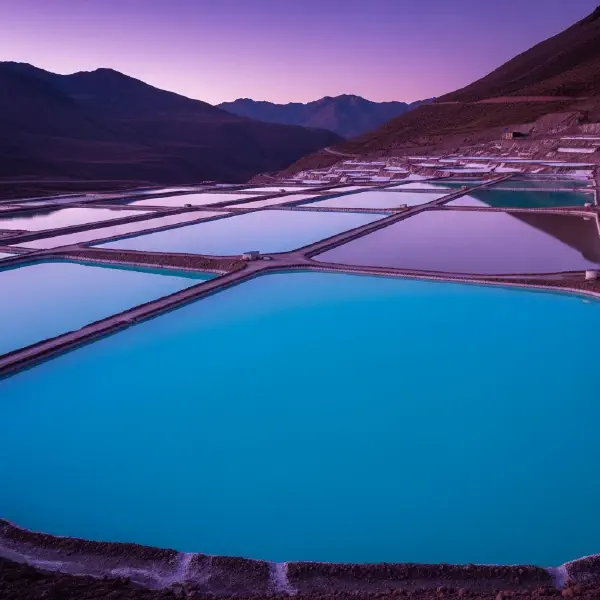
The extraction of lithium from the “Lithium Triangle” in South America represents one of the most significant interventions in the Earth’s hydrological cycle. In the high-altitude deserts of the Andes, the production of a single metric ton (1.1 US tons) of lithium carbonate requires the evaporation of
The Thesis of the Circular Loop#
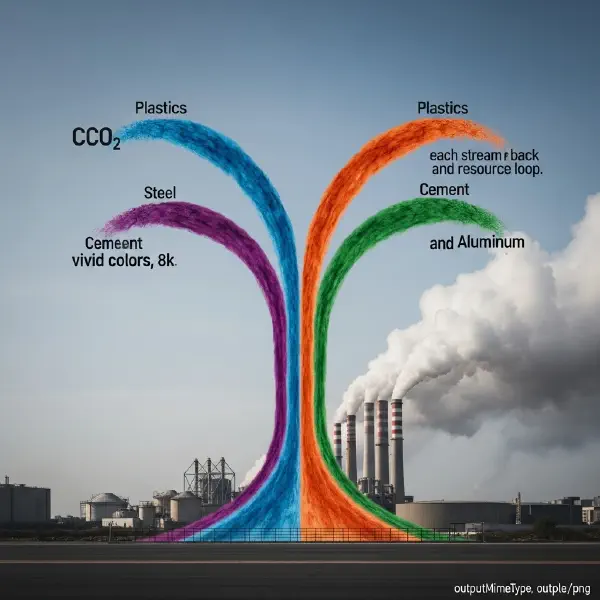
The central claim of this post is that the thermodynamics of material recovery offer a more ethical and efficient path to abundance than continued primary extraction. While primary production of aluminum or lithium carries an energy burden of
The Thermodynamics of Separation and Mass Conservation#
Every material carries an “embodied energy” (Hm), defined as the total fossil-fuel energy committed to create 1.0 kg (2.2 lbs) of usable stock. For lithium, this includes the energy to pump brine, the solar energy used in evaporation, and the chemical energy required for purification. When we discard a battery, we are not just wasting material; we are writing off the cumulative energy and carbon footprint accrued during its “birth”. Thermodynamics dictates that “unmixing” metals from a complex alloy or a spent battery requires energy, but this energy is far less than that required to separate elements from their natural ores. In a circular model, the “waste” of one product life becomes the “feedstock” for the next. By maintaining materials in an “Active Stock” balloon, we minimize the “leakage” into landfills and significantly reduce the need for primary production.
Lifecycle Assessment and the Carbon Ledger#
Life-cycle assessment (LCA) is the standard method for quantifying the environmental impact of a product from “cradle to grave”. A rigorous LCA for lithium batteries identifies four distinct phases: material production, manufacture, use, and disposal. While many consumer products are energy-intensive during their use phase (like a family car, where
Closing the Industrial Circle through Service Models#
The most significant barrier to a circular materials economy is the dispersion of materials once a product is sold. One hundred percent recovery is often economically unviable because the cost of collection increases as the materials become more widely distributed. A potential solution lies in the transition from product ownership to “service provision”. In this model, manufacturers like Ricoh or Renault retain ownership of the materials and sell only the “function” to the consumer. When a battery reaches the end of its technical life, it is returned to the maker—a “take-back” mandate that incentivizes the producer to design for ease of disassembly and reconditioning. This “Cradle-to-Cradle” loop ensures that the
The Synthesis of Technological Resilience#
The transition from brines to batteries is a move from exploitation to husbandry. The “So what?” of this thermodynamic analysis is that we cannot mine our way to sustainability. The growth rate of lithium demand (23% per year) creates a doubling time so short that primary mines will never be able to keep pace. Resilience lies in diversity and circularity. By achieving 90% recovery rates, we transform the energy sector from a consumer of natural capital into a steward of manufactured capital. This is the only path that reconciles the aspirations of 3 billion new middle-class consumers with the finite limits of the ecosphere. The “Post-Industrial Mouse” that survives the next global disruption will be the one that has mastered the alchemy of ash—turning the waste of today into the wealth of tomorrow.
References#
- Ashby, M. F. (2011). Materials selection in mechanical design (4th ed.). Butterworth-Heinemann.
- Ashby, M. F. (2012). Materials and the environment: Eco-informed material choice (2nd ed.). Butterworth-Heinemann.
- Ashby, M. F. (2021). Materials and the environment: Eco-informed material choice (3rd ed.). Elsevier.
- Ashby, M. F., & Johnson, K. (2010). Materials and design: The art and science of materials selection in product design (2nd ed.). Butterworth-Heinemann.
- Singh, S., et al. (Eds.). (2024). Energy materials: A circular economy approach. CRC Press.
- US Geological Survey. (2018). Mineral commodity summaries.
- UNEP/SETAC. (2009). Guidelines for social life cycle assessment of products.
- MacKay, D. J. C. (2008). Sustainable energy—without the hot air. UIT Cambridge.
- McDonough, W., & Braungart, M. (2002). Cradle to cradle: Remaking the way we make things. North Point Press.
- International Energy Agency (IEA). (2018). The future of petrochemicals.