The Paleotechnic Pivot#
The history of human progress is a record of material dependence where the era of dominance is named after the enabling substance: stone, bronze, and iron. We are currently entering what may be termed “Materials 4.0,” a phase defined by an absolute addiction to functional materials that enable connectivity, autonomy, and decarbonization. At the center of this transition sits lithium, an element so pivotal to the global energy shift that it has been dubbed the “New Gold”. Unlike the hydrocarbons of the previous century, which provided energy through single-use combustion, lithium serves as the primary vessel for energy storage and transmission. In 2020, world production of lithium metal reached approximately
The Thesis of Molecular Wealth#
The central claim of this analysis is that lithium scarcity is not a geological reality but a systemic failure of design and extraction logic. While the Earth’s crust contains
The Electrochemical Imperative of the Monovalent Cation#
Lithium is the preferred candidate for modern high-energy-density batteries due to its unique atomic profile. As the lightest solid element, it possesses the highest redox potential of any metal, allowing for terminal voltages near
The Bifurcation of Primary Extraction Mechanics#
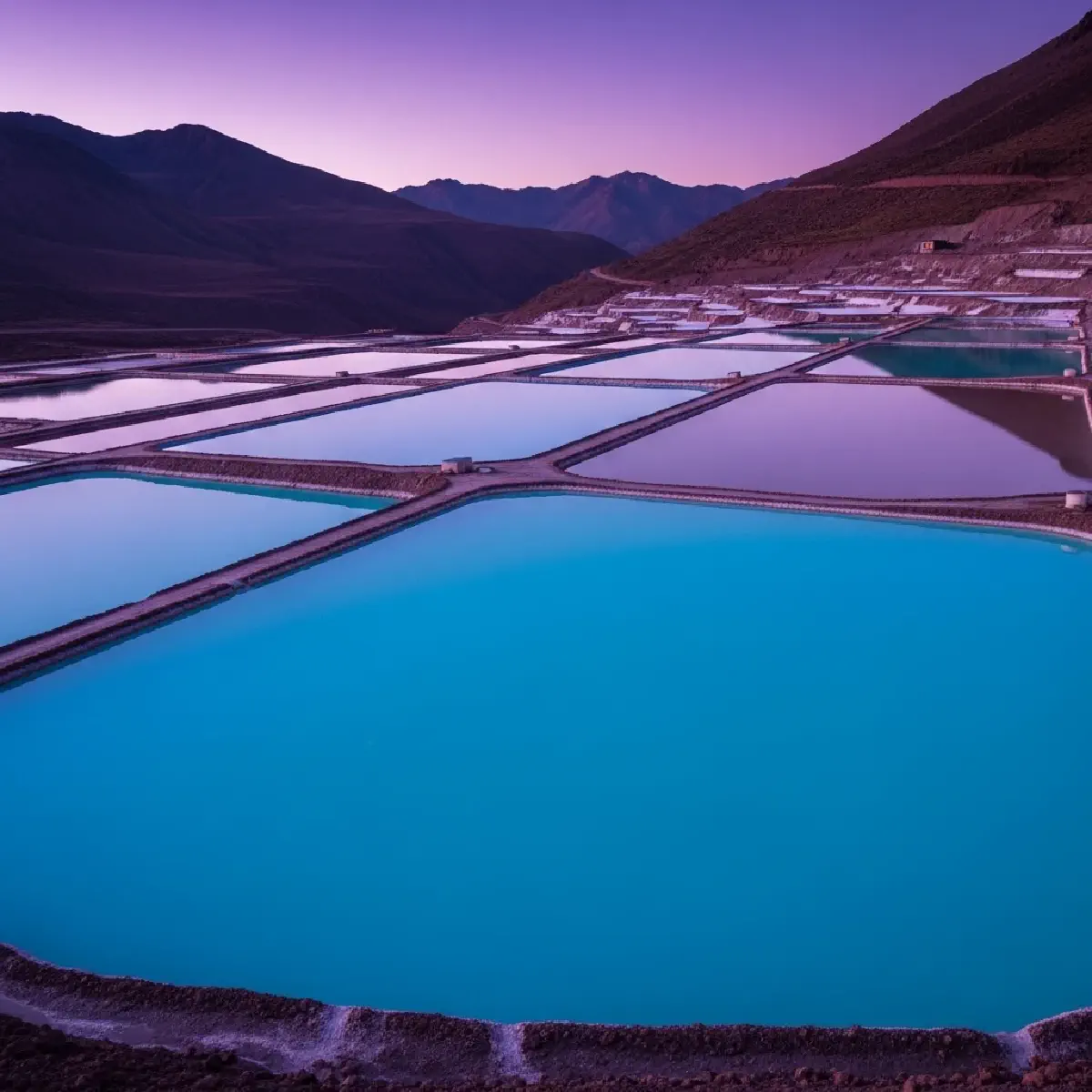
The supply of lithium is currently bifurcated between two primary geological sources: hard-rock minerals and continental brines. Hard-rock minerals like spodumene contain
The Calculus of Exponential Growth and Doubling Times#
The demand for lithium is currently governed by the law of exponential growth, where consumption increases at a rate proportional to its current size. If the current production rate of a material increases by a fixed fraction (r%) every year, the doubling time is approximately 70/r years. For many functional materials in the energy sector, growth rates of
The Synthesis of the Abundance Paradox#
The “lithium ledger” proves that our current trajectory is one of unsustainable dependence on primary production. We are faced with the scarcity paradox: an abundance of raw material in the crust that cannot be converted into functional technology at a rate that matches our climate ambitions. The “So what?” of this post is that efficiency improvements in the extraction phase are insufficient to bridge the gap. The 15% to 30% efficiencies currently seen in material refining cannot keep pace with 23% annual demand growth. We must therefore redefine lithium not as a mineral to be extracted, but as a “Natural Capital” asset to be managed within a circular framework. The future of the energy sector depends on our ability to close the loop between the “mine to mind” and the “mind to mobiles”. This shift is not merely an engineering goal but a prerequisite for avoiding a future where the decarbonized world is held to ransom by the very materials meant to save it.
References#
- Ashby, M. F. (2011). Materials selection in mechanical design (4th ed.). Butterworth-Heinemann.
- Ashby, M. F. (2012). Materials and the environment: Eco-informed material choice (2nd ed.). Butterworth-Heinemann.
- Ashby, M. F. (2021). Materials and the environment: Eco-informed material choice (3rd ed.). Elsevier.
- Ashby, M. F., & Johnson, K. (2010). Materials and design: The art and science of materials selection in product design (2nd ed.). Butterworth-Heinemann.
- Singh, S., et al. (Eds.). (2024). Energy materials: A circular economy approach. CRC Press.
- US Geological Survey. (2018). Mineral commodity summaries.
- UNEP/SETAC. (2009). Guidelines for social life cycle assessment of products.
- MacKay, D. J. C. (2008). Sustainable energy—without the hot air. UIT Cambridge.
- McDonough, W., & Braungart, M. (2002). Cradle to cradle: Remaking the way we make things. North Point Press.
- International Energy Agency (IEA). (2018). The future of petrochemicals.