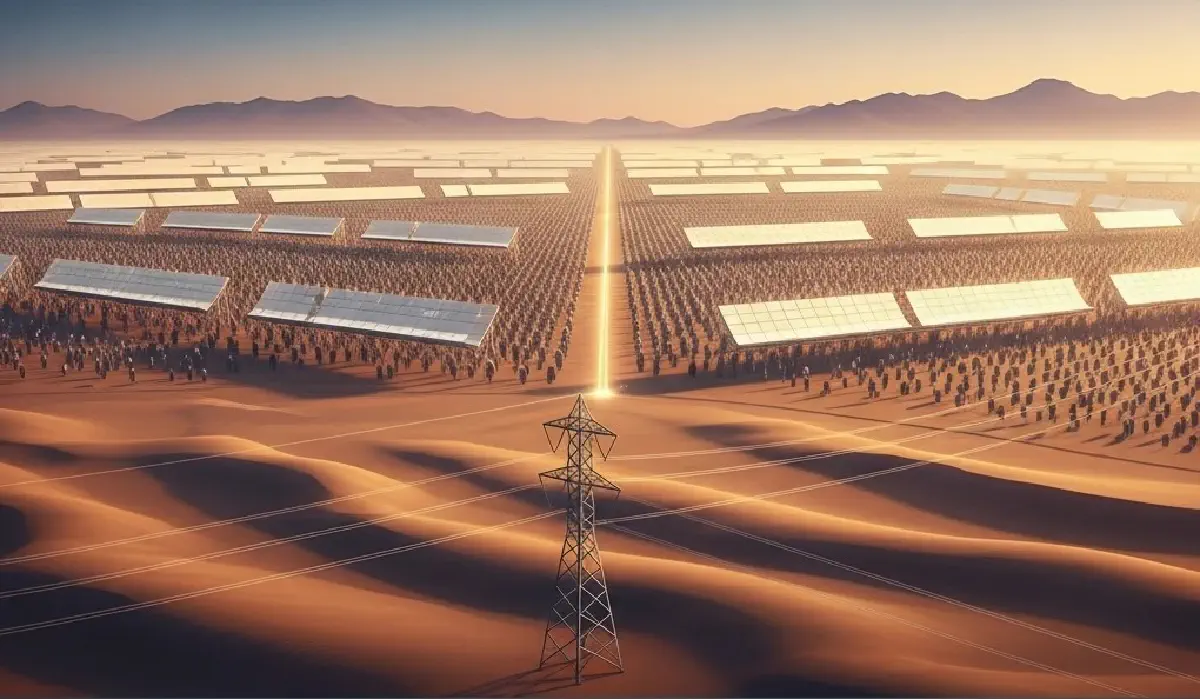
Solar PV: From Niche to Mainstream#
Photovoltaic technology has undergone a remarkable transformation. Costs have fallen by over 90% since 2010, making solar the cheapest source of new electricity generation in most of the world.
In Austria, solar PV represents the largest untapped renewable resource—estimated at 57 TWh/year RTP versus current generation of only 5 TWh/year. That means we are currently exploiting only 8.8% of our solar potential.
The Case for Aggressive PV Deployment#
Current Status in Austria#
- Installed capacity: ~4 GW
- Annual generation: ~5 TWh
- Average specific yield: ~1,100 kWh/kWp
- Typical system cost: €1,200-1,800/kWp (installed)
Required Deployment#
To achieve the 57 TWh RTP, Austria would need:
- Installed capacity: ~52 GW
- Additional deployment: ~48 GW
- Capital cost: ~€70-85 billion (at current prices)
- Land/roof area: ~400 km²
At a deployment rate of 2-3 GW per year (ambitious but achievable), full RTP could be reached in 15-20 years.
The Economics of Solar#
Solar PV economics are remarkably straightforward:
| Parameter | Value |
|---|---|
| System cost | €1,500/kWp |
| Annual yield | 1,100 kWh/kWp |
| System lifetime | 25-30 years |
| Total energy | 27,500-33,000 kWh |
| LCOE | €45-55/MWh |
This is already competitive with new fossil fuel plants and continues to improve.
Learning Curves#
Solar PV has demonstrated a consistent learning rate of approximately 20-25%: costs decline by 20-25% for every doubling of cumulative deployed capacity. This suggests further cost reductions are likely:
- 2020 costs: ~€1,500/kWp
- 2030 projection: ~€800-1,000/kWp
- 2040 projection: ~€500-700/kWp
At €800/kWp, deploying 52 GW would cost approximately €42 billion—a dramatic reduction from current estimates.
The Intermittency Problem#
Solar’s Achilles heel is intermittency. Output varies by:
- Hour: Zero at night, peak at noon
- Day: Clouds reduce output significantly
- Season: Summer generation is 4-6× winter in Austria
A grid with high solar penetration must address both short-term (daily) and long-term (seasonal) variability.
Daily Variability#
Daily cycling can be addressed with:
- Battery storage: Li-ion systems for 2-6 hour discharge
- Demand response: Shifting flexible loads to solar hours
- Pumped hydro: Austria’s existing 3 GW capacity
- Grid interconnections: Trading with time zones
Seasonal Variability#
Summer-winter imbalance is more challenging. In Austria:
- Summer solar yield: ~150-180 kWh/kWp/month
- Winter solar yield: ~30-50 kWh/kWp/month
- Ratio: 3-5:1
This mismatch between solar supply (summer) and heating demand (winter) requires long-term storage solutions.
Hydrogen: The Seasonal Storage Solution#
Hydrogen offers a pathway for seasonal energy storage:
The Storage Cycle#
- Summer: Convert excess solar electricity to hydrogen via electrolysis
- Store: Keep hydrogen in salt caverns, depleted gas fields, or tanks
- Winter: Convert hydrogen back to electricity via fuel cells or turbines
Efficiency Analysis#
| Step | Efficiency |
|---|---|
| Electrolysis | 70-80% |
| Compression (700 bar) | 85-90% |
| Storage (6 months) | 95-99% |
| Fuel cell or turbine | 40-60% |
| Round-trip efficiency | 25-40% |
The low round-trip efficiency (25-40%) means that for every 3-4 kWh of summer electricity stored, only 1 kWh is recovered in winter. This is a significant penalty but may be acceptable for seasonal balancing.
Compressed Gas vs. Liquid Hydrogen#
Two main storage options exist:
Compressed Gas Hydrogen (CGH₂)
- Storage pressure: 350-700 bar
- Energy density: 4.5-5.5 MJ/L
- No boil-off losses
- Mature technology
- Best for: Vehicles, small-medium scale storage
Liquid Hydrogen (LH₂)
- Storage temperature: -252.9°C (20.3 K)
- Energy density: 8.5 MJ/L
- Boil-off: 0.3-3% per day (tank-size dependent)
- Higher capital cost
- Best for: Large-scale storage, marine transport
Large-Scale Storage Options#
For seasonal storage at national scale, underground storage is most economical:
| Storage Type | Capacity | Cost (€/kWh H₂) |
|---|---|---|
| Salt caverns | 100-1000 GWh | €1-5 |
| Depleted gas fields | 1-100 TWh | €0.5-2 |
| Lined rock caverns | 10-100 GWh | €5-15 |
| Steel tanks | 0.1-10 GWh | €20-50 |
Austria has limited salt cavern potential but could utilize gas fields or import hydrogen from regions with better storage geology.
The €83.1 Billion Question#
Full deployment of Austria’s solar RTP would cost approximately:
| Component | Cost (€ billion) |
|---|---|
| PV systems (52 GW) | 62-78 |
| Grid upgrades | 8-12 |
| Storage (battery + H₂) | 10-15 |
| Total | 80-105 |
This is a significant investment—equivalent to 15-20% of Austria’s GDP. But spread over 20-30 years, it represents 0.5-1% of GDP annually—comparable to current fossil fuel imports.
Beyond National Borders#
Austria’s solar resources, while substantial, are modest compared to southern Europe or North Africa. A truly optimal European energy system might feature:
- Large-scale solar: Spain, Italy, North Africa
- Offshore wind: North Sea, Baltic
- Hydropower: Scandinavia, Alps
- Hydrogen production: Sunny, windy regions with cheap land
- Hydrogen transport: Pipelines from production to consumption centers
Austria’s role might be as a consumer and transit country for hydrogen produced elsewhere, rather than a major producer.
In the next installment, we examine non-solar energy sources: nuclear fission, fusion, and “clean” fossil technologies.
Cost data from Fraunhofer ISE, IRENA, and Austrian Energy Agency