The Colonial Engine of Decarbonisation#
For nearly five hundred years, the relationship between the wealthy nations of the Global North and the developing nations of the Global South has been defined by a ruthless economic calculus. Wealth, raw materials, and cheap labor flowed from the periphery to enrich the core. Today, a new chapter in this imperial history is being written under the impeccably moral guise of saving the planet. As the world confronts the existential threat of climate change, the mainstream strategy adopted by the United States and the European Union relies heavily on technological substitution. They seek to swap fossil fuels for renewable energy systems while preserving an unquestioned commitment to infinite economic growth. This approach, frequently termed the decarbonisation consensus, requires a staggering volume of critical minerals and vast tracts of land. Instead of confronting the fundamental unsustainability of their high-consumption lifestyles, wealthy nations are once again treating the Global South as a vast sacrifice zone, plundering its resources and leaving behind toxic waste, depleted aquifers, and staggering public debt.
graph TD
    A["Global North: High Consumption"] -->|Demand for Renewables| B["Extraction of Critical Minerals"]
    B --> C["Environmental Destruction in Global South"]
    C --> D["Water Scarcity & Toxic Waste"]
    D --> E["Social & Economic Disruption"]
    E --> F["Dependence on Global North"]
    F --> A
Lithium, Cobalt, and the Poisoning of the Planet#
The global shift toward a post-carbon world is functioning as a new phase of capitalism and imperialism. Scholars and activists increasingly refer to this dynamic as green extractivism. In this paradigm, the extraction of raw materials is justified as an inevitable sacrifice required to secure a low-carbon future for humanity. However, this green transition does not dismantle the historical power imbalances that have always characterised international trade. It merely paints them with a veneer of ecological responsibility. Wealthy nations continue to rely on resource-intensive industrial technologies, ensuring that their seamless functioning is contingent upon the annual net inflow of resources and embodied labor from distant areas of the Global South. This dynamic sustains what researchers call the imperial mode of living, an arrangement where the everyday routines of affluent societies are maintained by externalising the socio-environmental costs to poorer nations. Consequently, the burden of ecological salvation falls disproportionately on countries that contributed the least to global carbon emissions, forcing them to sacrifice their environments to absolve the ecological sins of the West.
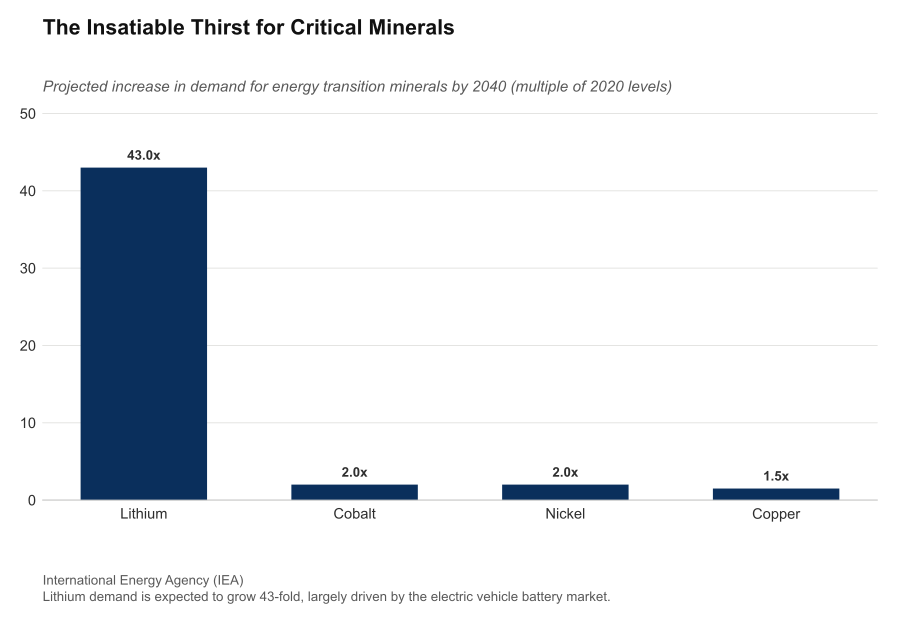
The sheer scale of the material required for this energy transition is unprecedented. The International Energy Agency predicts that by 2040, lithium demand will increase forty-three times compared to 2020 levels, while copper demand will grow twenty-eight times over the same period. The clean energy transition could increase the extraction of graphite, lithium, and cobalt by nearly 500 percent by 2050, necessitating more than three billion tonnes of minerals and metals for wind, solar, and geothermal power. This insatiable demand directly translates into amplified environmental pressures. Globally, active mines occupy approximately 100,000 square kilometers of land area, with an additional 1 million square kilometers covered by mining waste. Since the year 2000, industrial mining has cleared 8,500 square kilometers of tropical and subtropical rainforests. The geographical concentration of these minerals introduces severe systemic vulnerabilities and intensifies localized environmental burdens. For instance, the Democratic Republic of the Congo supplies over 70 percent of the world's cobalt, while the South American Lithium Triangle of Argentina, Bolivia, and Chile holds 58 percent of the world's lithium resources. These regions are now the primary targets of an aggressive geopolitical scramble.
Lithium, Cobalt, and the Poisoning of the Planet#
In South America, the rush for white gold illustrates the devastating contradictions of green mining. Lithium extraction in the high Andean salt flats is fundamentally a process of water mining. The dominant extraction method involves pumping mineral-rich brine to the surface and allowing it to evaporate in massive open pools. To produce a single ton of lithium carbonate in Chile, operations require the evaporation of half a million liters of brine water, resulting in an irreversible loss of moisture from the aquifer. In some areas, more than 226 million liters of water and brine are extracted daily, competing directly with the water needs of indigenous agricultural communities. The environmental impacts are stark, with groundwater levels falling drastically and the acute water stress threatening the survival of local wildlife, including flamingos and vicunas, while disrupting the traditional livelihoods of the Lickanantay and Colla peoples. The corporate energy transition in this region advances without genuine social license, overriding local autonomy to satisfy the global demand for electric vehicle batteries. While new methods like Direct Lithium Extraction claim to reduce water consumption by up to 96 percent, they remain technologically challenging and have not yet replaced the deeply destructive evaporation pools dominating the landscape.
If the extraction of lithium depletes the earth of its water, the mining of cobalt poisons its people. In the Democratic Republic of the Congo, the expansion of the cobalt industry has resulted in catastrophic environmental and human rights abuses. Extensive deforestation has cleared millions of trees in the Congo Basin to make way for industrial mines, diminishing a critical global carbon sink. Furthermore, toxic dumping from cobalt operations severely contaminates local water bodies, rendering them highly hazardous. Studies indicate that the mean cobalt content in water samples is 9530 micrograms per liter, and copper content reaches 26113 micrograms per liter, significantly exceeding safe limits and destroying local fish populations. The human toll is even more alarming. Major multinational corporations like Glencore operate vast subsidiaries such as the Kamoto Copper Company and Mutanda Mining in the region. Operations at the Kamoto Copper Company have been linked to massive pollution of the Luilu River, where acidic wastewater has turned the surrounding banks into scorched earth. In 2021, reports indicated that huge quantities of sulfuric acid spilled into the waterways following an explosion, causing respiratory distress among the downstream population. Meanwhile, Mutanda Mining operates within the Basse-Kando game reserve, where the noise and industrial activity have driven away populations of hippopotamus and other wildlife.
The Labor Conditions in Cobalt Mining#
The labor conditions underpinning this extraction are equally horrifying. Approximately 150,000 informal miners, known locally as creuseurs, work in hazardous conditions, often using only rudimentary hand tools to extract cobalt. Many of these workers are children who dig in unstable tunnels, risking death from frequent cave-ins or lifelong injury from toxic exposure. Chronic exposure to cobalt dust leads to severe respiratory issues, while the accumulation of heavy metals in the body has been linked to elevated rates of birth defects among the children of miners. A comprehensive study on forced labor in the region revealed that 78 percent of employed cobalt workers experience forced labor, amounting to an estimated 67,000 to 80,000 individuals trapped in exploitative conditions. These workers face deceptive recruitment, restrictions on movement, and severe penalties for refusing hazardous tasks. Despite earning an average of 8 USD per day, which is relatively high for the region, the median daily earnings of those experiencing forced labor are 41 percent lower than their peers. This profound human suffering highlights that the environmental cost of the clean energy transition is inseparable from human rights violations and social injustice.
The destructive footprint of green technologies extends to other critical minerals, notably copper and nickel. Copper is indispensable for electric vehicles and clean energy infrastructure due to its high thermal and electrical conductivity. However, copper mining possesses the highest biodiversity impact of any clean energy metal, with a measurement intensity score almost twice as high as the second most impactful metal. The industry is highly reliant on water, with more than half of current global production concentrated in areas facing high water stress. In Chile, 80 percent of copper production is located in extremely water-scarce areas. The environmental burden is compounded by declining ore grades, which have dropped 25 percent over the past decade, meaning significantly more waste rock must be processed to yield the same amount of metal. Nickel mining presents similar ecological threats. In Indonesia, industrial waste containing heavy metals from nickel mining has severely polluted water bodies across 128 villages in the North Konawe Regency, compromising water quality and threatening public health.
Rare Earth Extraction in Myanmar#
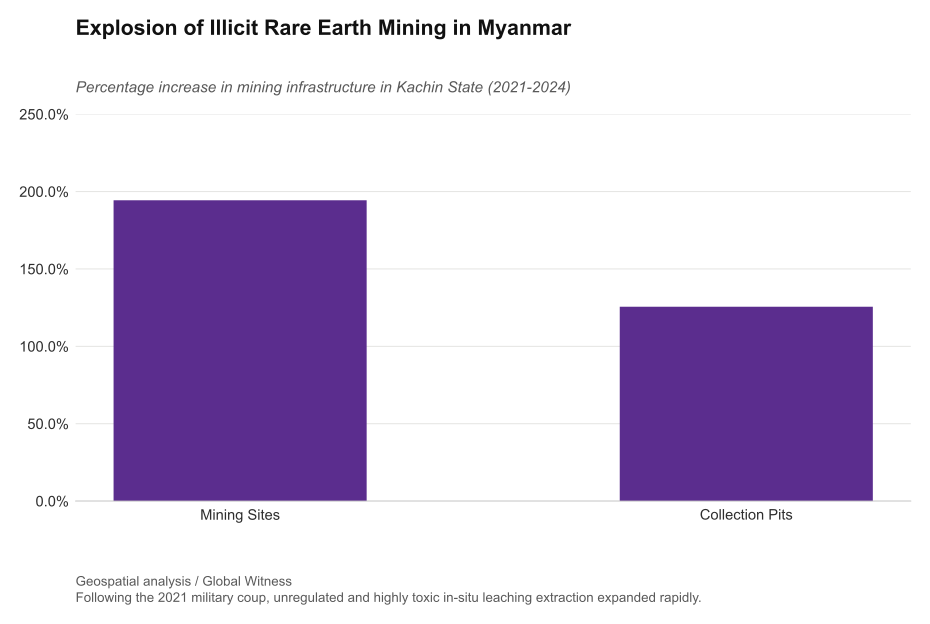
The colonial dynamics of the green transition are perhaps most vividly illustrated by the surging illicit extraction of rare earth elements in Myanmar. Rare earths like Dysprosium and Terbium are critical for manufacturing the high-performance permanent magnets used in electric vehicles and wind turbines. Between 2017 and 2024, Myanmar supplied approximately 74 percent of China's rare earth imports by volume, effectively dominating the global supply chain for these strategic minerals. Following the 2021 military coup in Myanmar, rare earth mining expanded at an explosive rate. Geospatial analysis of Kachin State reveals a 194.4 percent increase in mining sites and a 125.6 percent increase in collection pits between 2021 and 2024. This unregulated extraction, heavily concentrated in the Chipwi and Momauk townships, relies on a highly toxic in-situ leaching method. Workers inject chemical agents such as ammonium sulfate and oxalic acid directly into the soil, causing severe chemical contamination of groundwater and local streams.
The environmental devastation in Myanmar is inextricably linked to political instability and armed conflict. The mining operations are controlled by a complex web of ethnic armed organizations, including the Kachin Independence Army and the New Democratic Army-Kachin, alongside illicit Chinese mining enterprises. These armed groups leverage their territorial control to extract immense profits while shifting the environmental and social costs onto local communities. Residents report that the N'Mai River has become heavily contaminated, causing livestock deaths and destroying agricultural livelihoods. Farmers are no longer able to export their crops to China due to soil contamination, forcing many into economic destitution and compelling them to sell their ancestral lands. The militarisation of extraction ensures that resistance is met with violence, arbitrary arrests, and the suppression of civil society. This dynamic perfectly encapsulates the dark underbelly of the green revolution, where the materials necessary for global decarbonisation are secured through the violent exploitation of war-torn regions.
Green Grabbing#
Beyond mineral extraction, the physical appropriation of land for renewable energy mega-projects constitutes another major mechanism of green colonialism. This phenomenon, known as green grabbing, involves the confiscation of land and resources under environmental justifications, routinely marginalising local populations. In Morocco, the celebrated Ouarzazate Solar Plant and the Noor Midelt project highlight this troubling trend. The Ouarzazate facility was built on 3,000 hectares of land previously utilized by Amazigh agro-pastoralist communities, constructed using a 9 billion USD debt burden backed by sovereign guarantees. Concentrated Solar Power technologies utilize vast arrays of mirrors to heat fluid, a process that requires substantial water for cooling and cleaning. When utilizing wet-cooling systems, Concentrated Solar Power consumes 2 to 4 liters of water per kilowatt-hour, placing severe stress on semi-arid regions and diverting critical resources away from drinking supplies and agriculture. Similarly, the Noor Midelt complex spans 4,141 hectares, confiscating communal lands managed by ethnic agrarian tribes through national expropriation laws.
In the occupied territory of Western Sahara, renewable energy infrastructure is actively deployed to entrench political occupation. Major wind farms and solar installations, including facilities developed by foreign capital, generate power that primarily serves external markets while stripping the Saharawi people of their resources and sovereignty. The corporate transition narrative systematically portrays these regions as vast, empty deserts awaiting productive utilization, deliberately erasing the pastoralist communities who rely on these lands for their survival. This rhetoric mirrors classic colonial justifications for land theft, repackaged for the climate change era. Land conflicts driven by renewable energy expansion are a global phenomenon. Geospatial data indicates that 6,320 solar farms globally overlap with forest areas, contributing to habitat fragmentation and biodiversity loss.
Unequal Exchange and Financial Architecture#
The mechanisms facilitating this massive transfer of resources are deeply embedded in the structures of global finance. To mobilize the massive capital required for green infrastructure in the Global South, international financial institutions rely on a strategy known as de-risking. This approach aims to attract private investors from the Global North by shifting the commercial and political risks of renewable energy projects onto the host governments of developing nations. A stark example of this financial architecture is the Just Energy Transition Partnerships, celebrated by the G7 as innovative models of climate finance. Partnerships established with nations like South Africa and Senegal primarily offer assistance in the form of hard currency loans rather than grants. In South Africa, grants comprise a mere 3 to 4 percent of the 8.5 billion USD deal, while in Senegal they account for only 6 percent of the 2.7 billion USD package. This structure significantly exacerbates the debt burdens of recipient countries, especially when local currencies depreciate against the dollar.
The practical application of de-risking is visible in projects like the Taiba N'Diaye windfarm in Senegal. Foreign energy companies secure stable, long-term revenues through Power Purchase Agreements guaranteed by the state utility. If the utility defaults, sovereign guarantees ensure the investors are paid, effectively socializing the financial risks among Senegalese citizens while privatizing the profits for European equity funds. A similar dynamic is unfolding in Namibia, where the government aims to become a global hub for green hydrogen. The Hyphen green hydrogen project, a joint venture involving European investors, requires an estimated 9.4 billion USD in investment, an amount equivalent to the entire national GDP in 2020. The project intends to utilize 4,000 square kilometers of a protected national park to produce hydrogen exclusively for export to Europe. By relying on blended finance platforms and concessional loans from European institutions, Namibia risks severe debt distress while foreign corporations dictate the terms of its energy development.
Unequal Exchange and Financial Architecture#
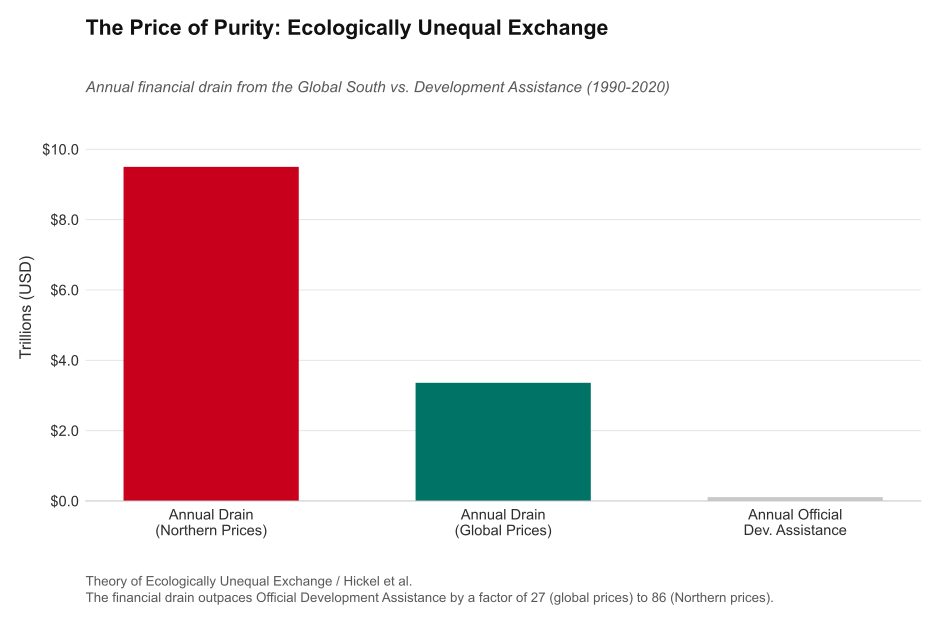
This financial architecture reinforces a long-standing macroeconomic drain, precisely quantified by the theory of ecologically unequal exchange. The international trade system relies on an asymmetric net transfer of materials, energy, land, and cheap labor from poorer regions to wealthier ones. Between 1990 and 2020, the Global South provided the Global North with an annual net transfer of approximately 7 gigatons of raw material equivalents, 107 exajoules of embodied energy, 240 million person-year equivalents of labor, and 430 million hectares of embodied land. Because these resources and labor are compensated at significantly lower market prices in the South than they would be in the North, this exchange constitutes a massive and continuous transfer of wealth.
When evaluated in Northern prices, representing the compensation wealthy countries receive for their own exports, the annual drain averaged 9.5 trillion USD per year. Over the three decades from 1990 to 2020, this amounted to a staggering 343 trillion USD benefit for the Global North, equating to 26 percent of the Northern Gross Domestic Product. Even when evaluated at global average prices, the drain represented a total benefit of 101 trillion USD for the Global North, amounting to an average of 23 percent of the Southern Gross Domestic Product. To put these astronomical figures into perspective, the financial drain measured in global prices outpaces the annual average Official Development Assistance by a factor of 27, and by a factor of 86 when measured in Northern prices. The clean energy transition, by dramatically increasing the demand for Southern resources, threatens to deepen this unequal exchange, cementing the structural poverty of the periphery to fuel the green growth of the core.
How did China manage to avoid this fate?#
Amidst this landscape of exploitation, one developing nation has conspicuously managed to subvert the traditional colonial dynamic. Recognizing the strategic imperative of the green transition, China deliberately positioned itself as the indispensable manufacturing and processing hub for global clean energy technologies. While China remains the largest absolute emitter of carbon dioxide and relies heavily on coal, it leads the world in deploying renewable energy capacity and utterly dominates the supply chains for critical minerals. China controls the vast majority of the world's refined cobalt output and produced roughly 77 percent of the global supply of natural graphite in 2023. Through extensive foreign direct investment and state-backed infrastructure projects, Chinese enterprises have secured control over major mining operations globally, from the cobalt mines of the Congo to the nickel reserves of Indonesia. By capturing the high-value stages of refining and manufacturing, Beijing transformed its resource needs into unprecedented geoeconomic power, avoiding the extraction trap that ensnares much of the Global South.
The Toxic End-of-Life Phase#
The environmental burden on the Global South does not end with the extraction of raw materials. It extends to the end of the product lifecycle, where the developing world serves as a dumping ground for the West's technological detritus. The proliferation of electronics and green technologies has led to a massive surge in e-waste, much of which is exported to countries lacking the infrastructure for safe disposal. Global e-waste reached 53.6 million metric tons between 2019 and 2021, and this volume is predicted to increase by 38 percent to reach 74 million metric tons by 2030. In informal recycling hubs across Asia and Africa, workers disassemble complex electronics without protective gear, often resorting to crude incineration to extract valuable metals like copper and gold. This incineration releases highly toxic fumes containing heavy metals such as lead, cadmium, and mercury into the atmosphere, causing severe respiratory illnesses and contaminating local soil and water tables. The failure to establish a genuinely circular economy ensures that the Global South pays the environmental price twice. First during the extraction of the raw materials, and second during the toxic disposal of the finished products.
Conclusion#
Ultimately, the current trajectory of the green energy rush is neither just nor truly sustainable. By treating the Global South as an empty reservoir of resources and a dumping ground for environmental costs, the Global North is seamlessly replicating the devastating logic of historical imperialism. The technological substitution promoted by the decarbonisation consensus fails to address the root causes of ecological overshoot.
True eco-social transformation requires a profound reckoning with the imperial mode of living. It demands a planned reduction of material and energy consumption in the wealthiest nations, a process widely referred to as degrowth, alongside the cancellation of punitive sovereign debts that force developing countries into extractive economic models. Furthermore, it necessitates respecting the sovereignty of indigenous communities, dismantling the unequal financial architectures of international trade, and recognizing that technological substitution cannot override planetary boundaries. Genuine sustainability requires the decommodification of basic needs and a shift towards pluriversal alternatives that prioritize the reproduction of life over corporate profitability. Until the Global North confronts its own overconsumption and relinquishes its reliance on ecologically unequal exchange, the green revolution will remain a colonial enterprise, forcing the most vulnerable populations on earth to pay the ultimate price for the West's ecological salvation.
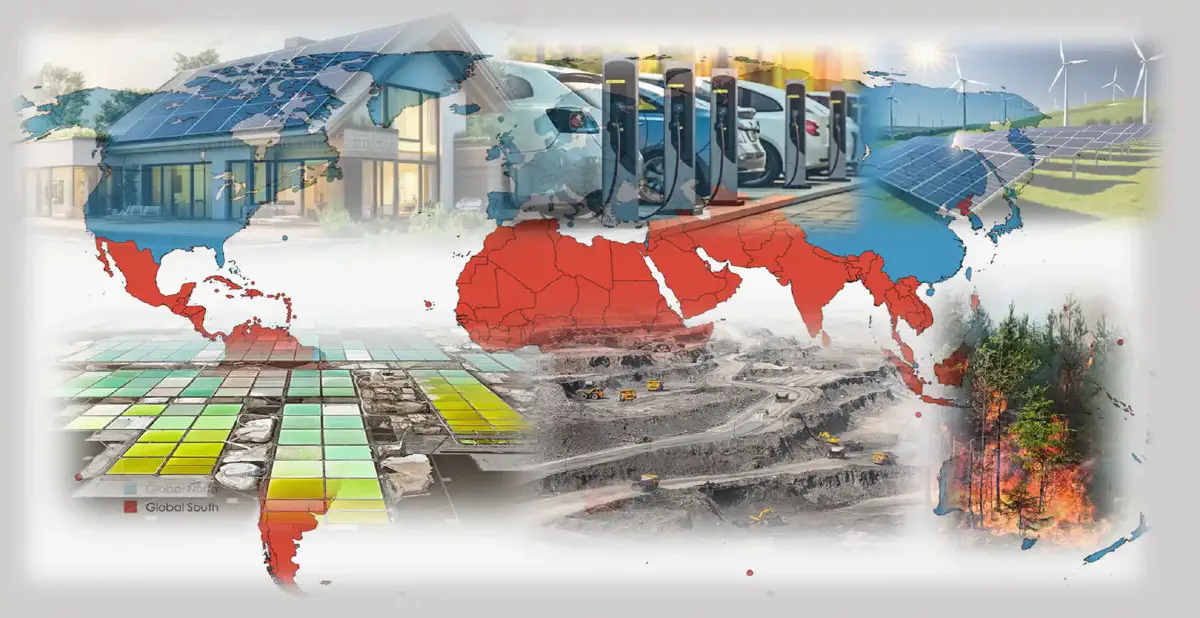
Visualisation of the Green Colonialism#
A visual infographic about green colonialism.
References#
Amnesty International. (2016). "This is what we die for": Human rights abuses in the Democratic Republic of the Congo power the global trade in cobalt. Amnesty International.
Banza, C. L. N., et al. (2009). High human exposure to cobalt and other metals in Katanga, a mining area of the Democratic Republic of Congo. Environmental Research, 109, 745-750.
Callan, S. J., & Thomas, J. M. (2013). Environmental economics and management: Theory, policy, and applications. Cengage Learning.
Dornfeld, D. A. (Ed.). (2013). Green manufacturing: Fundamentals and applications. Springer Science+Business Media.
Gabay, A. (2025). Lithium mining leaves severe impacts in Chile, but new methods exist: Report. Mongabay.
Gupta, A., et al. (Eds.). (2024). Integrated waste management. Springer Nature.
Haag, S., Tunn, J., Kalt, T., Muller, F., & Simon, J. (n.d.). Who profits from the green energy rush? Derisking and power relations in Africa's renewable energy finance. Transnational Institute.
Hickel, J., Dorninger, C., Wieland, H., & Suwandi, I. (2022). Imperialist appropriation in the world economy: Drain from the global South through unequal exchange, 1990 to 2015. Global Environmental Change, 73, 102467.
ICF Macro, Inc. & Marakuja Kivu Research. (2023). Forced labor in cobalt mining in the Democratic Republic of the Congo: Final report. United States Department of Labor.
Institute for Strategy and Policy Myanmar. (2025). Unearthing the cost: Rare earth mining in Myanmar's war torn regions.
International Energy Agency. (2021). The role of critical minerals in clean energy transitions. World Energy Outlook Special Report.
Lang, M., Bringel, B., & Manahan, M. A. (Eds.). (n.d.). Lucrative transitions, green colonialism and pathways to transformative eco social justice. Stanford DTP Services.
MacNair, D. (2022). Multicriteria decision making: Systems modeling, risk assessment, and decision analysis. De Gruyter.
Peck, P., Richter, J. L., & Delaney, K. (Eds.). (2020). Circular economy: Sustainable materials management. The International Institute for Industrial Environmental Economics at Lund University.
Priemus, H., Flyvbjerg, B., & Van Wee, B. (2008). Decision making on mega projects: Cost benefit analysis, planning and innovation. Edward Elgar Publishing.
Rights and Accountability in Development. (2021). The road to ruin? Electric vehicles and workers' rights abuses at DR Congo's industrial cobalt mines.
Sovacool, B. K. (2021). When subterranean slavery supports sustainability transitions? Power, patriarchy, and child labor in artisanal Congolese cobalt mining. The Extractive Industries and Society, 8(1), 271-293.
Svampa, M. (2019). Neo extractivism in Latin America: Socio environmental conflicts, the territorial turn, and new political narratives. Cambridge University Press.
Udell, J. (2023). Environmental destruction and human rights abuses in the Democratic Republic of the Congo: Examining the epicenter of the cobalt mining industry from an international criminal law perspective. Minnesota Journal of International Law, 32(1), 195-240.
United Nations Development Programme. (2024). Colombia's just energy transition: A people centred cost benefit analysis.