The Law of Conservation of Waste#
The end of a product’s first life—disposal—is the final phase of the material cycle. Historically, industrial society has operated on a “cradle-to-grave” model, where materials are extracted, utilized, and eventually committed to landfill. As land available for such disposal becomes scarce, administrations have introduced landfill taxes, currently near €50 ($54) per metric ton (1.1 tons), to incentivize alternative strategies.
Total waste is not merely a physical volume; it is a loss of the energy and information already invested in refined materials. Every kilogram of material buried in a landfill represents a complete write-off of the embodied energy and carbon footprint accrued during its production. True sustainability requires a transition to a “cradle-to-cradle” loop, where the value of materials is recovered and redeployed.
End-of-life options are hierarchically categorized: reuse, reengineering, recycling, combustion for heat recovery, and finally, landfill. The design of a product determines which of these paths is viable. If a product is designed without consideration for disassembly, it is functionally locked into the most wasteful path.
The Service Mandate#
The most powerful force for change in the material cycle is the transition from product ownership to service provision. When a manufacturer retains ownership of a product and sells its function—“power by the hour” for jet engines or “copied pages per week” for office equipment—the economic incentives for design are inverted.
Closing the Industrial Circle#
In a service-based model, the producer is responsible for maintenance, repair, and disposal. This creates an internal economic driver to design for longevity and ease of reconditioning. The optimal strategy is no longer to sell the most units at the lowest initial cost, but to provide the service at the lowest long-term operational cost.
Materials selection in this model prioritizes durability and modularity. Components are standardized across different models to simplify inventory and allow for the upgrading of older units with new technology. When a product reaches the end of its functional life, it is returned to the manufacturer (take-back), who can then recover high-value components for reuse in new assemblies.
Reuse is the most benign end-of-life scenario because it avoids the energy costs associated with re-melting or re-refining. This is practiced at the community level through charity stores and second-hand markets, but its large-scale industrial implementation requires a fundamental shift in how products are perceived by both makers and consumers.
The Legislation of Responsibility#
Governments are increasingly deploying legislation to force this transition. Product liability laws now hold manufacturers responsible for faults throughout the product’s life, driving them toward “6-sigma” reliability—a failure rate of less than three parts per million. This level of reliability necessitates precise material control and sophisticated monitoring during manufacture.
Additional regulations restrict the use of specific substances. The list of restricted materials includes lead, mercury, and cadmium, as well as various chemicals used in material processing. If a product contains these substances above a defined threshold, it must be replaced by a more benign alternative, forcing innovation in material choice and refinement.
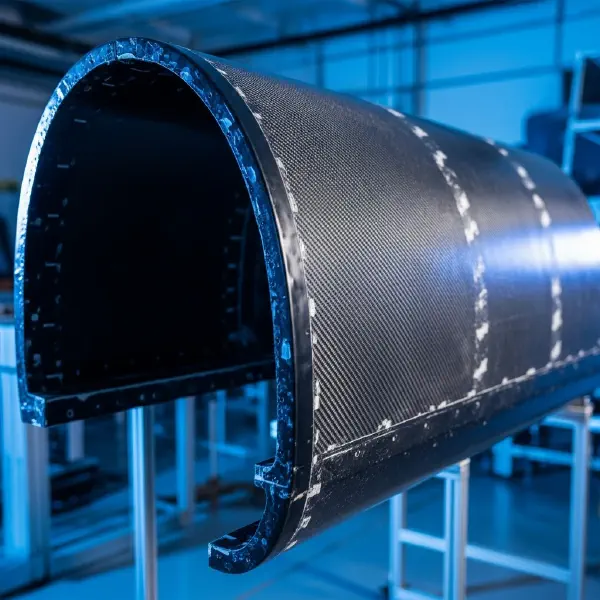
Environmental directives also mandate recycling fractions for complex products like automobiles. To meet these targets, designers must avoid using materials that cannot be separated. For instance, while carbon-fiber composites offer excellent use-phase efficiency, they are difficult to recycle economically because the fibers cannot be easily separated from the polymer matrix. They are often “downcycled”—ground up and used as low-value fillers—rather than truly recycled.
The Shift to Power-by-the-Hour#
The “power by the hour” strategy exemplifies the circular economy in action. By owning the engines, the manufacturer can monitor their performance and replace them at the optimal point in their wear cycle. This minimizes the risk of catastrophic failure and ensures that the materials are recovered for re-engineering before significant damage occurs.
Recycling, while better than landfill, is energy-intensive. The energy to recycle aluminum is only about 5% of the energy required for its initial production, making it highly efficient. However, this efficiency depends on the purity of the scrap. If different aluminum alloys are mixed during collection, the resulting melt has uncontrollable properties and must be diluted with virgin material, diminishing the environmental gain.
Design for recycling (DFR) requires that products be easy to disassemble and that materials be clearly labeled. It also encourages the use of fewer material types within a single product to reduce the complexity of sorting. The most sustainable product is one that can be unmade as easily as it was made, allowing its constituent materials to return to the refinement stage with their metabolic value intact.
The Horizon of Circular Systems#
The challenges of the next century involve the reconciliation of growing global material wants with the finite capacity of the Earth. Population growth and increasing wealth in developing nations will continue to drive demand for housing, infrastructure, and consumer goods. Without a radical shift in material management, this demand will accelerate ecological decay.
The entropy audit provides the framework for this shift. By quantifying embodied energy, optimizing use-phase efficiency, and designing for circular end-of-life recovery, we can reduce the material footprint of modern life. The goal is a system that meeting aspirations with zero—or even negative—growth in the consumption of virgin resources.
Sustainability is not merely an engineering problem; it is a cognitive one. We must change our perception of materials from disposable commodities to precious capitals. The imaginative use of materials and processes provides the tools to build this future—one where excellent design also ensures the longevity of the world.