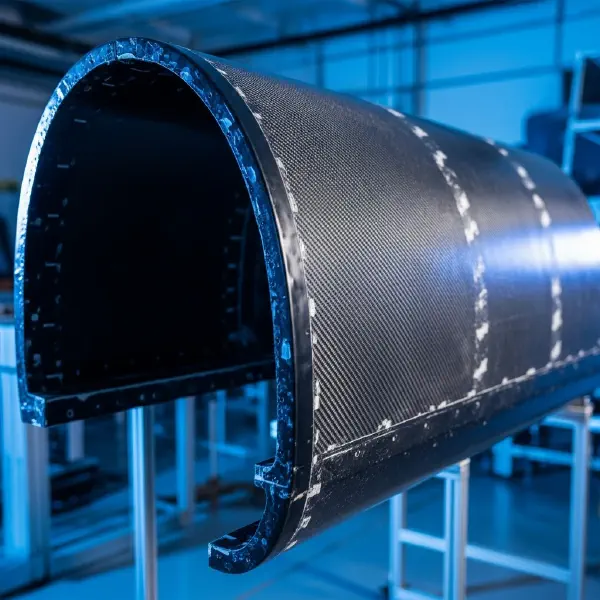
Embodied energy reveals the hidden ecological cost of materials, with aluminum requiring 200-220 MJ/kg compared to concrete’s 1-1.3 MJ/kg.
Use-phase efficiency through lightweight engineering can offset production energy costs, especially in mobile systems where fuel savings dominate life-cycle impact.
Circular economy strategies like service models and design for disassembly enable material recovery and reduce waste, transitioning from cradle-to-grave to cradle-to-cradle.
Material selection must balance mechanical performance with environmental impact, using indices like $E^{1/2}/(H_p\rho)$ to optimize for sustainability.
End-of-life strategies prioritize reuse over recycling, with service-based ownership creating incentives for longevity and recovery.
Ashby, M. F. (2011). Materials selection in mechanical design (4th ed.). Butterworth-Heinemann.
Ashby, M. F. (2009). Materials and the environment: Eco-informed materials choice. Butterworth-Heinemann.
Ashby, M. F., & Johnson, K. (2010). Materials and design: The art and science of materials selection in product design (2nd ed.). Butterworth-Heinemann.
Gibson, L. J., & Ashby, M. F. (1997). Cellular solids: Structure and properties (2nd ed.). Cambridge University Press.
Zenkert, D. (1995). An introduction to sandwich construction. Engineering Advisory Services Ltd.
Norman, D. A. (1988). The design of everyday things. Doubleday.
Bralla, J. G. (1998). Design for manufacturability handbook (2nd ed.). McGraw-Hill.
Kalpakjian, S., & Schmidt, S. R. (2010). Manufacturing engineering and technology (6th ed.). Prentice Hall.
Vincent, J. F. V. (1990). Structural biomaterials (revised ed.). Princeton University Press.
MacKay, D. J. C. (2008). Sustainable energy—without the hot air. UIT Cambridge.