The Paradox of the Sustainable Pickaxe#
A Chilean mining official stated in 2019 that a more sustainable world is only possible with more mining. This statement presents a glaring paradox: to save the planet from carbon, we must accelerate the extraction of its crust. In the high-altitude salt flats of the Atacama Desert, lithium carbonate recently fetched over $70,000 per tonne ($63,500 per short ton). This “green dream” frames intensive extraction as an inevitable sacrifice for the global energy transition. Yet, thousands of miles away in a Norwegian basement, a different vision of “mining” is taking shape.
The Mirage of Inevitability#
The central claim of this series is that the current “green dream” of lithium depends on “entropic omissions”—active operations that render ecological and social costs invisible. While industrial narratives promise a “closed loop,” they often ignore the irreversible degradation of territories. We must move beyond technical fixes to confront the colonial logic sustaining these extractive futures.
The System of Urban Mining#
Explaining the System: From Salt Flats to Slurry#
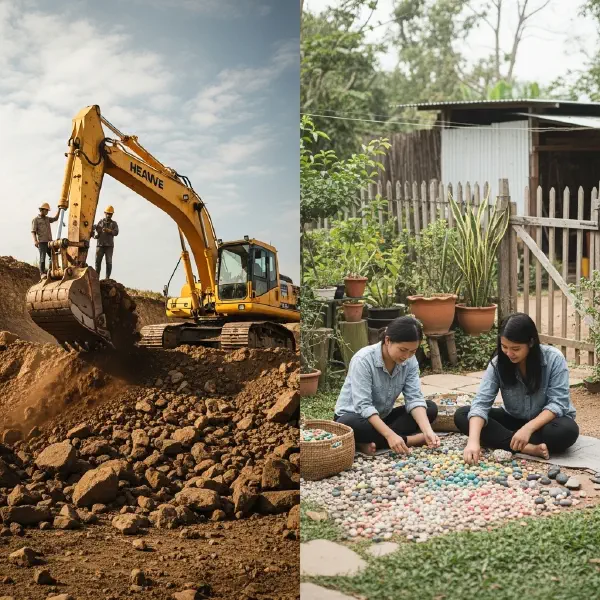
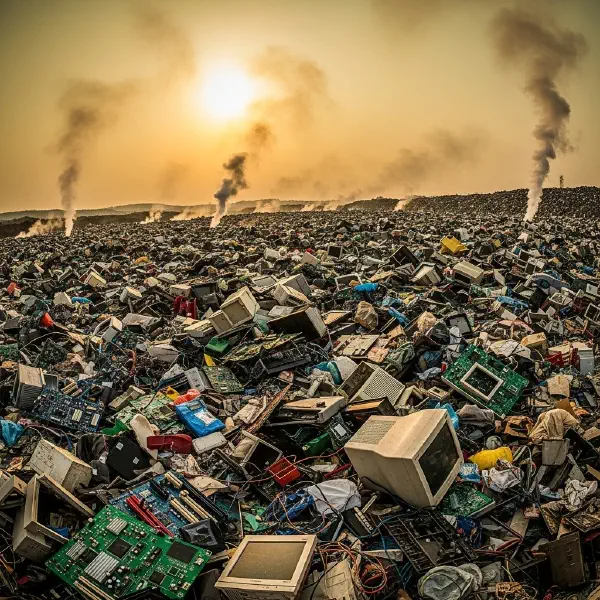
In the Norwegian laboratory, researchers like “L,” an Indonesian metallurgist, practice what they call “urban mining”. Traditional mining extracts “virgin” materials from natural geology, while urban mining extracts value from “human products” or anthropogenic waste. The primary target is “black mass,” a dark, sand-like mixture resulting from shredding old electric vehicle (EV) battery modules. This mixture contains lithium, manganese, cobalt, copper, nickel, aluminum, and graphite. By extracting lithium from this waste rather than rock or brine, scientists hope to “leave nature alone”.
Complicating Factors: The Double Bind of White Mining#
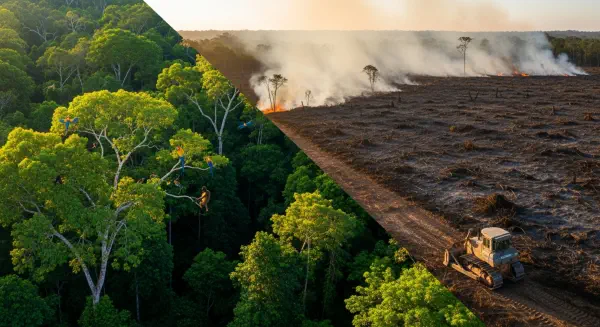
The “green dream” functions as an “infernal alternative”—a logical trap where every solution deepens the original problem. Scholars identify this as a “double bind”: communities must accept mining to enable global sustainability while bearing its local costs. In Chile, lithium extraction requires pumping 1,600 liters (422 gallons) of brine per second from fragile aquifers. This technical reasoning often reduces entropy—the irreversible loss of energy and order—to a mere “technical abstraction”. By focusing on economic profit, the irreversible transformations of landscapes are conveniently left out of the narrative.
Tracing the Consequences: The Extraction of Thinking#
The consequences of this logic extend beyond the physical environment to what is called “generalized proletarianization”. This process strips societies of their ability to imagine futures that are not dependent on extractive intensification. In Northern Chile, state agencies like SERNAGEOMIN are so underfunded they can only explore one salt flat per year. This institutionalized ignorance means we are 53 years away from truly knowing the 53 salt flats Chile officially recognizes. Meanwhile, private industry expands rapidly, operating on data gaps that prioritize profit over ecological complexity.
The Self-Referential Dream#
The “green dream” is essentially a self-referential framework that naturalizes extractive dynamics as the only path forward. As Indigenous leader Davi Kopenawa observes, “white people… only dream about themselves”. This dream obscures the “more-than-chemical” connections that ground recycling in specific, often uneven, geographies. We are told there is no alternative, yet this very assertion shuts down the imagination of regenerative futures. In the next post, we will examine why the “closed loop” is often more of a “leaky sieve.”