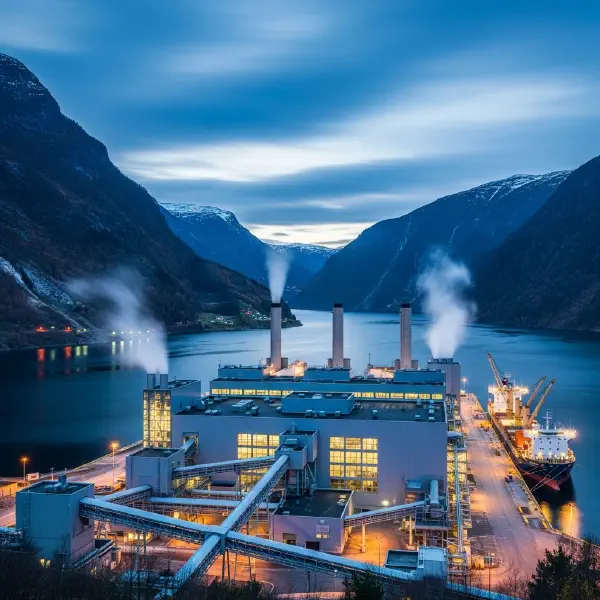
The Green Paradox: To save the planet from carbon, we’re told we must accelerate extraction from its crust—a fundamental contradiction built into the current “green dream”
Entropic Omissions: Industrial narratives render ecological and social costs invisible by focusing only on technical metrics, ignoring irreversible territorial degradation
The Closed Loop Myth: Lithium circularity is a material impossibility within current frameworks due to thermodynamic entropy—every recycling step requires energy and generates new waste
Uneven Geographies: The “green shift” concentrates power and knowledge in affluent regions while externalizing harm to the Global South, perpetuating colonial extraction patterns
From Sleepwalking to Awakening: Moving beyond technical fixes requires an “entropological pact”—a commitment to degrowth, slow science, and regenerative futures that resist systemic inertia
Al Jazeera. (2019, February 14). Norway approves disputed Arctic copper mine despite local protest.
Ali, H., & Adjoumane, M. M. A. (2022). Hydrometallurgy for EV batteries. United Nations.
Anastas, P. T., & Warner, J. C. (2000). Green chemistry: Theory and practice. Oxford University Press.
Arora, S., & Stirling, A. (2023). Colonial modernity and sustainability transitions: A conceptualisation in six dimensions. Environmental Innovation and Societal Transitions, 48, 100733.
Babidge, S. (2019). Sustaining ignorance: The uncertainties of groundwater and its extraction in the Salar de Atacama, northern Chile. Journal of the Royal Anthropological Institute, 25(1), 83–102.
Bonelli, C., & Dorador, C. (2021). Endangered salares: Micro-disasters in northern Chile. Tapuya: Latin American Science, Technology and Society, 4(1), 1968634.
Bonelli, C., & Gamba, M. (2024). Underground roots for ancestral futures: Exploring lithium through an experimental alliance between chemistry and anthropology. Science, Technology, & Human Values, 0(0), 1–27.
Bonelli, C., & Pavez, A. (2025). White mining’s green dream: Entropy and the mirage of sustainability in northern Chile. The Extractive Industries and Society, 23, 101683.
Eraerts, M. (2026). ‘Even if you’re trying to do something good’: More-than-chemical separations of lithium recycling in a Norwegian science laboratory. The Extractive Industries and Society, 25, 101775.
Eriksen, T. H. (2016). Overheating: An anthropology of accelerated change. Pluto Press.
Georgescu-Roegen, N. (1971). The entropy law and the economic process. Harvard University Press.
Hickel, J. (2020). Less is more: How degrowth will save the world. Random House.
Liboiron, M. (2021). Pollution is colonialism. Duke University Press.
Stengers, I. (2018). Another science is possible: A manifesto for slow science. Polity Press.
Stiegler, B. (2018). The neganthropocene. Open Humanities Press.