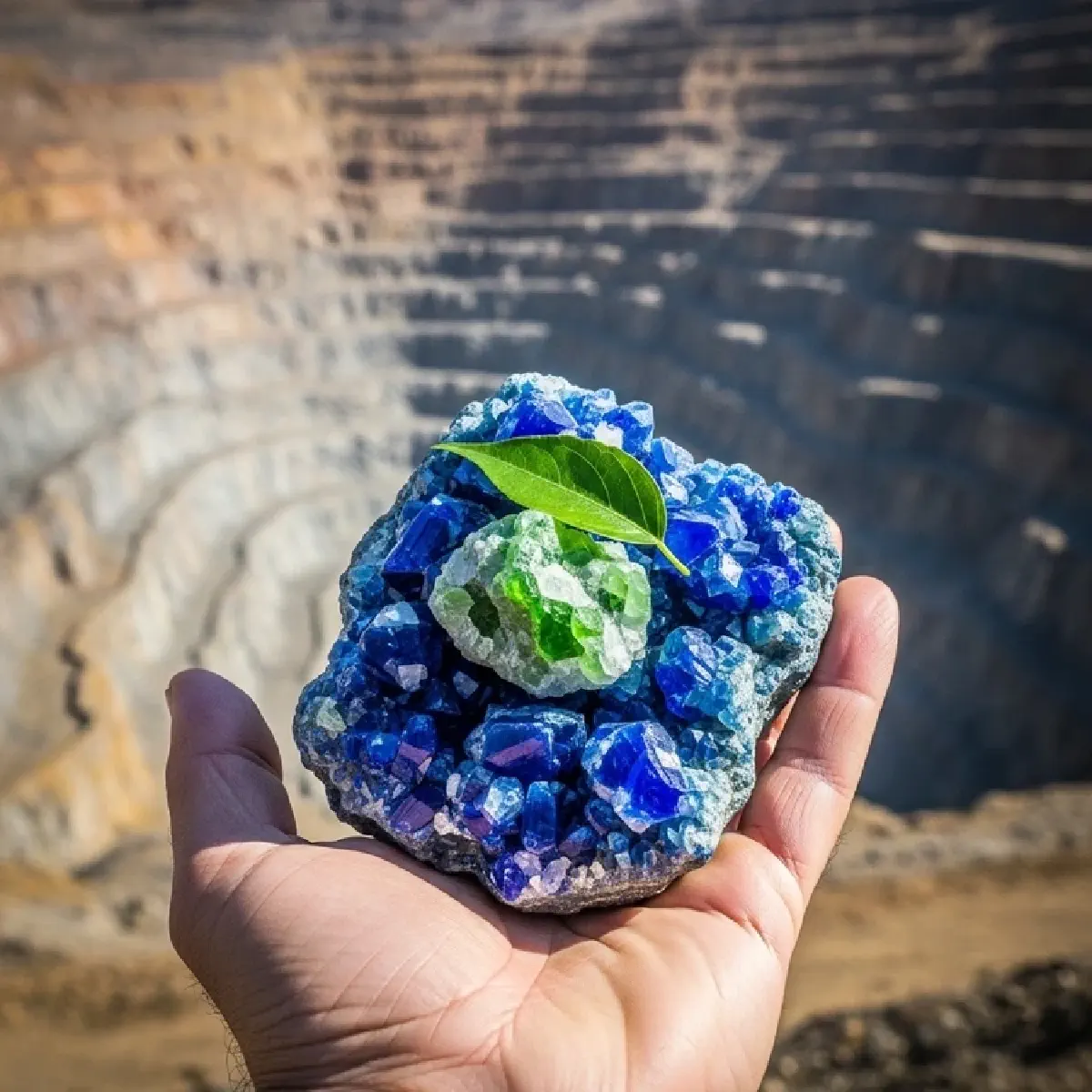
The promise of the green revolution is one of liberation. It envisions a world freed from the geopolitical stranglehold of fossil fuels, powered by sunlight, wind, and ingenious technology. This narrative champions decentralization—rooftop solar panels, community wind farms, and democratized energy.
Yet, to build this liberated future, we must first dig. And where we dig reveals a profound and unsettling paradox. The very minerals essential for solar panels, wind turbines, and electric vehicle batteries—lithium, cobalt, nickel, graphite, rare earth elements—are geographically concentrated in a handful of nations. We are racing to escape the tyranny of concentrated oil fields only to embrace dependence on concentrated mineral deposits. The green future, it seems, is built on a foundation of profound geological irony.
This is the first and most tangible layer of concentration. It is not merely a supply chain bottleneck but a fundamental reshaping of resource geopolitics. The energy transition is trading one form of resource dependency for another, with consequences that will define economic security, diplomatic alliances, and environmental justice for decades.
From Oil Wells to Lithium Brine#
The 20th-century energy system was defined by flows—tankers crossing oceans, pipelines spanning continents—moving liquid hydrocarbons from producer to consumer. The 21st-century system is being built on stocks: finite deposits of solid minerals that must be mined, processed, and manufactured. The International Energy Agency (IEA) estimates that an electric car requires six times the mineral inputs of a conventional car, and a wind farm onshore requires nine times more minerals than a gas-fired plant of the same capacity.
This shift from flow to stock creates a new map of power. Over 70% of the world’s cobalt, a metal critical for battery stability, comes from the Democratic Republic of Congo (DRC). China refines nearly 90% of the world’s rare earth elements and over 50% of its lithium and cobalt. Indonesia produces more than 40% of the world’s nickel. The “Lithium Triangle” of Chile, Argentina, and Bolivia holds over 50% of global lithium resources. This concentration is more acute than that of oil or gas at their historical peaks.
The Geology of Power#
The concentration begins with simple geology. These minerals are not uniformly scattered; they are found in specific ore bodies or brine deposits formed by unique tectonic and climatic histories. Economic extraction is viable only where concentrations are high enough and where political and physical infrastructure allows.
This creates “critical mineral chokepoints.” For instance, 98% of the European Union’s rare earth element supply comes from China. The sudden disruption of this flow, as happened in a 2010 diplomatic dispute with Japan, can halt entire manufacturing sectors. The system’s fragility is not in the abundance of the minerals—many are relatively common in the earth’s crust—but in the extreme concentration of their economically viable extraction and, more critically, their processing.
The Processing Gambit#
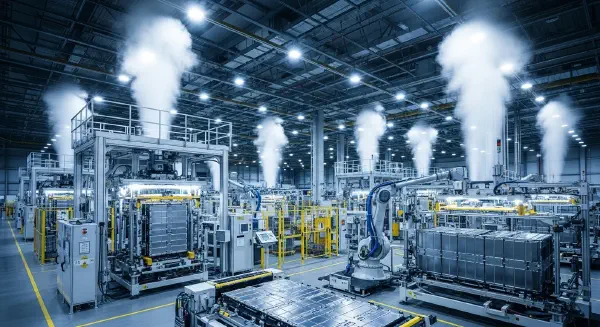
Mining is only the first step. The true leverage lies in mid-stream processing—turning raw ore into battery-grade chemical compounds. This is a complex, chemical-intensive, and often polluting stage where China has established a dominant strategic position over two decades. It controls roughly 65% of the world’s lithium processing capacity, 72% of its cobalt refining, and nearly 90% of rare earth magnet production.
This dominance was not accidental. It resulted from long-term industrial policy that accepted the environmental costs of processing to capture the strategic value. A country can own the mine, but if it lacks the technical capability and industrial ecosystem to refine the ore, it remains a commodity exporter, capturing only a fraction of the final value. This creates a new hierarchy: mineral owners, processors, and technology manufacturers. Many resource-rich nations find themselves stuck on the lowest, least lucrative rung.
The Ripple Effects of Scarcity#
The scramble for these “green minerals” is triggering geopolitical and economic ripples reminiscent of the Great Game. Nations are maneuvering to secure supplies through “mineral diplomacy,” forming new alliances. The U.S.-led Mineral Security Partnership is a direct response to this new reality, aiming to build an alternative, China-excluding supply chain.
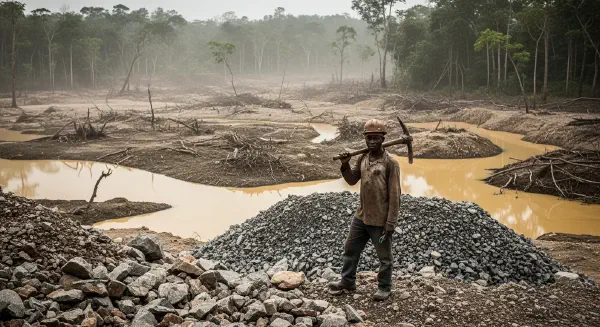
The effects also cascade downward to the local level, particularly in places like the DRC’s artisanal cobalt mines. Here, the demand for a key “clean” energy metal fuels informal, often hazardous labor with profound human rights and environmental consequences. The green car in a Berlin showroom and the child laborer in Kolwezi are linked by this concentrated supply chain, creating a stark ethical dilemma for the entire transition. This geographic concentration of resources, therefore, begets a concentration of geopolitical risk, economic value, and social burden. It is the unstable bedrock upon which the rest of the green edifice is being constructed.
The Precarious Foundation#
The promise of a decentralized energy utopia is colliding with the immutable reality of a concentrated geosphere. We are not building a post-scarcity energy system; we are orchestrating a vast migration of scarcity from one set of elements to another. The dependence on OPEC’s oil is being exchanged for a dependence on a new, less formalized cartel of mineral producers and processors.
This does not invalidate the necessity of the transition. It does, however, demand clear-eyed realism. The first lesson of the concentrated green revolution is that technology does not erase geography; it re-maps it. The batteries that will store our renewable future and the magnets that will spin our wind turbines are, for now, prisoners of geology. This foundational concentration sets the stage for every other form of consolidation that follows—in technology, capital, and ultimately, power.