
The Illusion of Climate-Friendly Monoculture#
In glossy public relations videos, global steel producers like Gardell, which is publicly listed and worth billions, showcase their use of CO2 certificates and present themselves as aggressively climate-friendly. This narrative centers on the idea of large-scale tree plantations offsetting industrial emissions. However, the core claim being propagated—that clearing naturally grown savannah woodlands that have evolved over thousands of years and replacing them with monoculture plantations constitutes climate protection—is fundamentally challenged by the trail of destruction. If the goal is climate neutrality, the massive areas of land required for these protection plantations must be sourced, and the method of utilizing the planted trees is central to evaluating the success of the model.
The Thesis of Misdirection#
The fundamental mechanism behind the “green steel” claim involves massive reforestation projects meant to soak up industrial carbon. Yet, the core deception lies in the end-use of the planted carbon sink: the vast eucalyptus monocultures, promoted as solutions to climate change, are often immediately burned to create a product that perpetuates the very system they claim to reform. This process fundamentally undermines the concept of climate protection by releasing the stored CO2 back into the atmosphere.
Analytical Core: The Furnace and the Forest#
Foundation & Mechanism: The Charcoal Revelation#
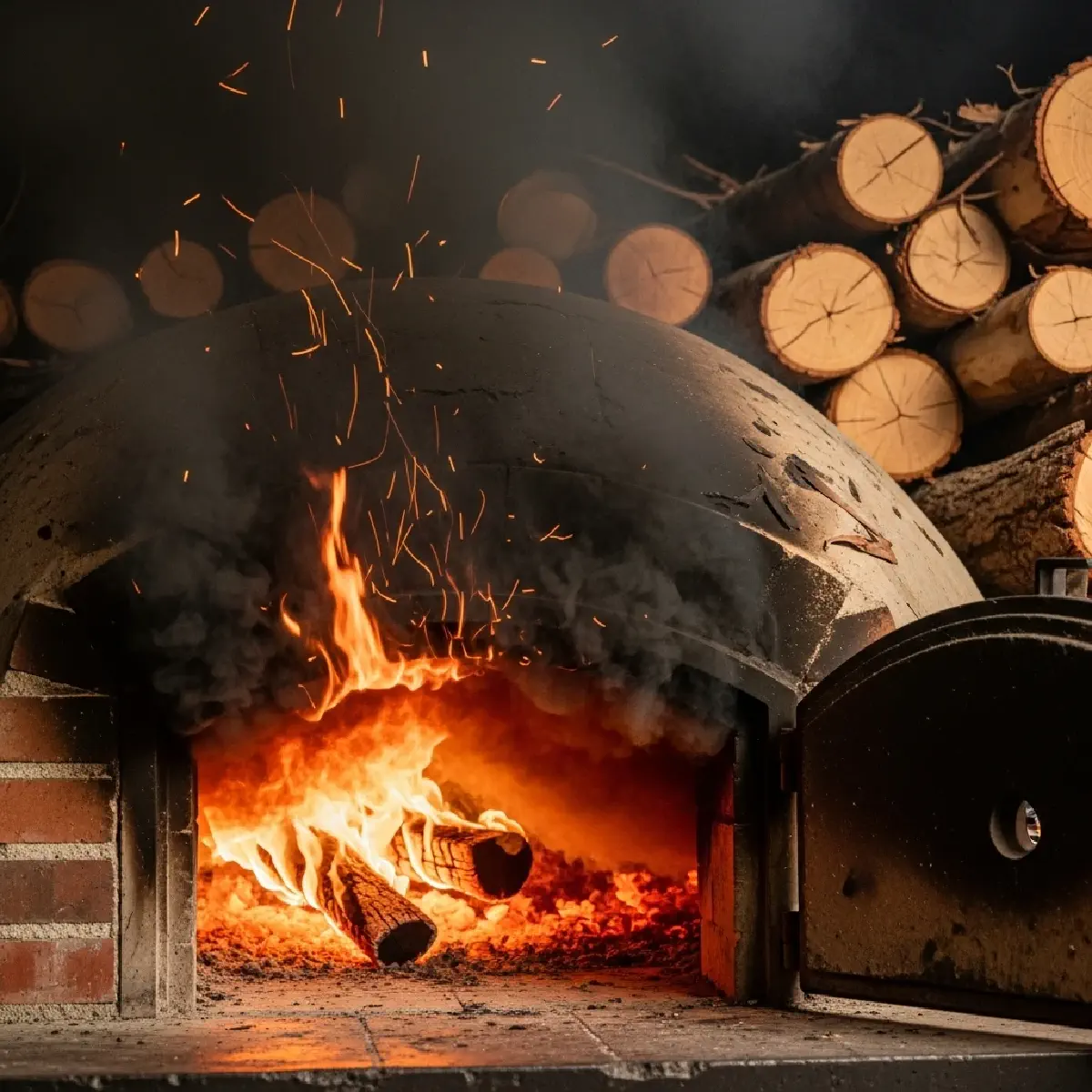
Despite the narrative of climate mitigation, the true purpose of hundreds of thousands of hectares of eucalyptus plantations in northern Minas Gerais is revealed deep inside the company properties. Cleared areas belonging to steel companies, such as Gerau, lead directly to enormous industrial facilities. Here, hundreds of brick huts release smoke, marking them as charcoal ovens. The eucalyptus intended to store atmospheric carbon is not left as a permanent sink; instead, it is cut down almost immediately and converted into charcoal.
This discovery exposes a significant contradiction: 400 charcoal burners, all actively smoking, constitute a “war on nature” where trees meant to function as carbon sinks are deliberately cut down and burned. This combustion process releases the CO2 that the trees were supposed to have sequestered. The resulting charcoal is then loaded onto trucks, raising the critical question of how this cycle can credibly be labelled as climate protection. The entire rationale of reforestation carried out in the name of climate protection is negated when it simultaneously fuels the destruction of natural habitats and supports large-scale charcoal production.
The Crucible of Context: Energy Transition vs. Ecological Cost#
The trucks loaded with charcoal leave the plantations, passing immense mining sites and iron ore operations. Their journey ultimately ends at industrial production facilities where the charcoal meets iron ore. In these furnaces, the ore is transformed into pellets using searing heat generated by burning the eucalyptus charcoal. This product is marketed globally as so-called “lower carbon iron ore pellets,” purportedly produced using “sustainable charcoal,” a key component in the production of ‘green steel’.
The World Bank plays a key role in supporting this framework, having promoted reforestation initiatives and carbon offset mechanisms. One official argued that Brazil is unique in having steel production that is partly sustainable, claiming that about 10% is produced using charcoal instead of fossil fuels like lignite or brown coal. The claim is that this eucalyptus charcoal represents the first sustainable plantation aimed at replacing fossil fuels in the steel industry. However, this argument ignores the ecological cost: the practice involves destroying native Sahadu savannah, replacing it with eucalyptus, and then burning those trees immediately to feed the steel industry.
Cascade of Effects: The Pollution Dome#
The constant operation of these plants, which run around the clock, creates a massive dome of pollution that hangs over the entire valley. The reliance on “sustainable charcoal” allows multinational steel companies, including Arcelor Metal and Aparam, to continue their operations while promoting a climate-friendly image. The path of the charcoal illuminates the fundamental flaw in the offset model: the supposed carbon sink is merely a renewable fuel source for heavy industry, creating a cycle that generates profit while relocating the environmental and social costs. The promise of sustainable development masks a destructive process where land is grabbed, traditional life is destroyed, and the stored carbon is ultimately released.
Accounting for Ecological Debt#
The economic logic of carbon offsets allows heavy industry to maintain emissions while claiming global neutrality. Yet, the physical evidence in Minas Gerais shows that the trees planted to sequester carbon are systematically harvested and burned, directly contributing to the heat, smoke, and pollution that characterize the iron and steel production center. This cycle demonstrates that the global commitment to climate neutrality is currently being fulfilled through a mechanism that involves mass burning, local displacement, and the destruction of complex, existing ecosystems. The result is a profound ecological debt disguised by a marketable green certificate.