Adaptive Futures: Part 1—The Resilience Imperative: Why Carbon Counting Isn’t Enough#
The Sinking City That Built a Forest#
In 2011, Bangkok flooded catastrophically. The Chao Phraya River submerged 65 districts under six feet of water for weeks, causing $46.5 billion in damage. The city’s response was revealing: instead of just building higher walls, they planted one million trees in flood-prone zones. This wasn’t traditional flood control; it was resilience architecture—designing systems that adapt through disruption, not just resist it. While the world fixates on carbon metrics, Bangkok recognized a deeper truth: sustainability isn’t just about reducing emissions; it’s about increasing a system’s capacity to endure unpredictable shocks.
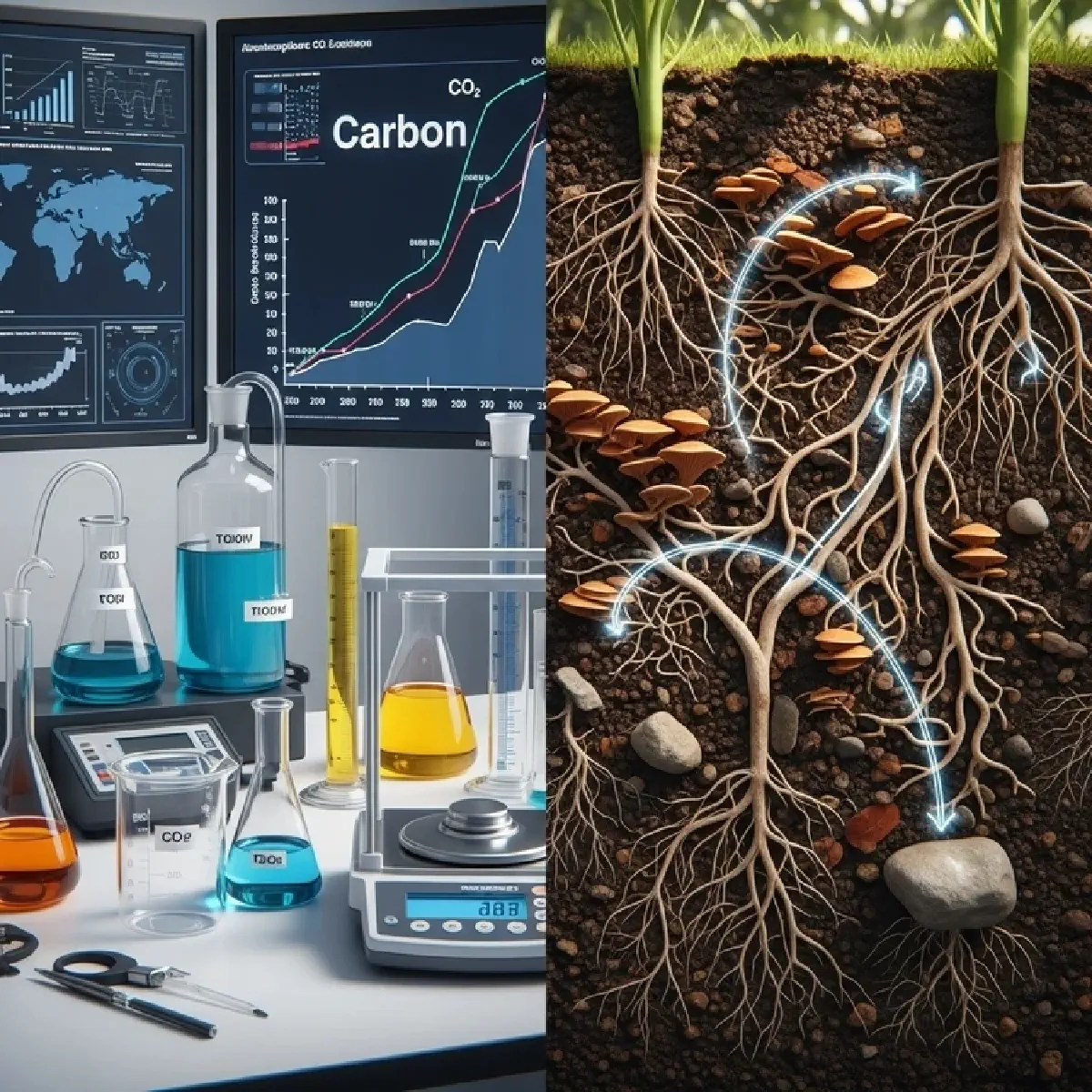
The climate narrative has become dangerously reductionist. We measure success in parts per million of CO₂, percentage reductions, carbon equivalents. These metrics create what systems theorist Donella Meadows called “the problem of the wrong boundary”—measuring what’s easily quantifiable while ignoring the complex systems that determine survival. A building can be net-zero carbon yet collapse in an earthquake. A supply chain can be carbon-neutral yet fail during a pandemic. The myopic focus on carbon accounting has blinded us to a more fundamental challenge: designing systems that persist through 21st-century volatility.
This series argues we must shift from a mitigation paradigm (reducing negative impacts) to a resilience paradigm (increasing adaptive capacity). Carbon reduction remains essential but insufficient. We need architectures—physical, social, economic—that increase our ability to navigate whatever terrain awaits, whether we successfully mitigate climate change or not.
The Limits of Reductionism#
The climate movement’s focus on emissions reduction emerged from scientific necessity. Carbon dioxide became the primary metric because it was measurable, global, and clearly linked to human activity. This focus achieved successes: the Montreal Protocol, Paris Agreement, plummeting renewable costs.
However, this reductionist approach created critical blind spots:
The substitution problem: We substitute one environmental harm for another. Electric vehicles reduce tailpipe emissions but increase mining for lithium. Biofuels reduce fossil fuel use but accelerate deforestation. Each “solution” within the emissions framework creates new problems outside it.
The resilience paradox: Systems optimized for efficiency (including carbon efficiency) often become more fragile. Just-in-time supply chains reduce waste but collapse during disruptions. Monoculture agriculture maximizes yield but creates vulnerability. The emissions framework doesn’t account for trade-offs between efficiency and resilience.
The adaptation gap: Even if we achieved net-zero emissions tomorrow, we’re locked into significant climate change. The IPCC’s Sixth Assessment Report confirms certain impacts—sea level rise, ocean acidification—will continue for centuries. An exclusive focus on mitigation leaves us unprepared for inevitable changes.
The Dutch Paradigm Shift#
The Netherlands offers a compelling alternative. After catastrophic 1953 floods killed 1,836 people, the initial response was traditional: build stronger, higher dikes. The Delta Works project reduced flood risk to once every 10,000 years.
But Dutch engineers recognized a critical flaw: this created a “safe until catastrophic” dynamic. So in the 1990s, they initiated “Room for the River.” This represented a philosophical shift: instead of fighting water everywhere, give it space. The program involved lowering floodplains, creating secondary channels, developing “green rivers,” and relocating dikes inland.
The results were transformative. The Waal River gained 1,000 acres of floodplain, reducing peak water levels by 13 inches. More importantly, the system created multiple safety layers: primary barriers, secondary overflow areas, tertiary evacuation plans. This approach recognizes failure is inevitable—the goal is to manage how systems fail, not prevent failure entirely.
The Dutch approach exemplifies “safe-to-fail” rather than “fail-safe” design. A fail-safe system tries to prevent all failures (impossible in complex systems). A safe-to-fail system assumes some failures will occur and designs them to be non-catastrophic. This philosophical shift—from prevention to managed adaptation—separates resilience architecture from traditional sustainability.
Architecting for Uncertainty#
Traditional engineering seeks optimal solutions for known conditions. Resilience architecture designs for adaptability across unknown futures. This requires different approaches:
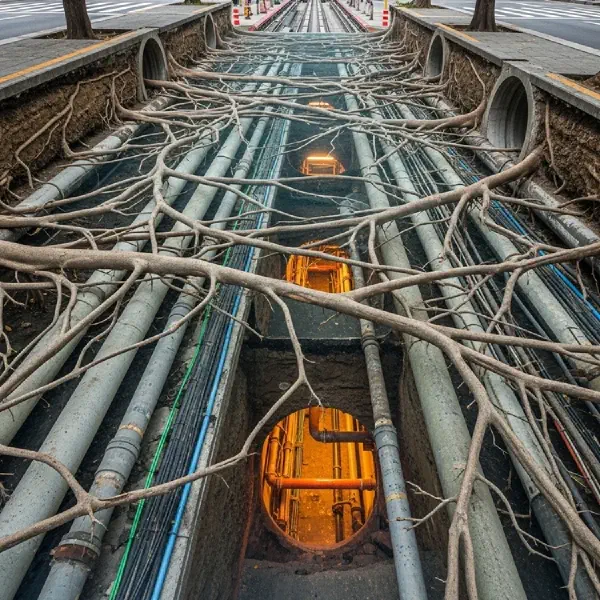
Modularity over integration: Integrated systems are efficient but fragile. Modular systems are less efficient but more resilient. The Internet’s original design exemplified this: packets route around damaged nodes. Modern “smart cities” often make the opposite mistake, creating tightly integrated systems where one failure cascades.
Redundancy over efficiency: Biological systems maintain redundancy (two kidneys, duplicate genes). Human systems optimize redundancy away as waste. Resilience architecture intentionally builds redundancy: multiple transportation routes, diverse energy sources, overlapping supply chains.
Diversity over specialization: Monocultures are productive but vulnerable. Polycultures are less productive but more resilient. This applies beyond agriculture to economic systems, energy systems, and cognitive approaches.
The Three Horizons Framework#
A practical tool is the “Three Horizons” framework:
Horizon 1: Current systems, optimized for today’s conditions but becoming maladapted.
Horizon 2: Transitional systems, innovations within existing paradigms.
Horizon 3: Transformative systems, radically different approaches from new paradigms.
Most sustainability focuses on Horizon 2: improving efficiency within existing systems. Resilience architecture requires attention to Horizon 3: designing fundamentally different systems that thrive under different conditions.
Cape Town’s 2018 water crisis response illustrates three-horizon thinking. Horizon 1: water restrictions. Horizon 2: fixing leaks. Horizon 3: rethinking the entire water relationship through diversified sources, distributed systems, and cultural change. The city didn’t just solve a shortage; it redesigned its hydrological relationship.
From Climate Change to Earth Systems Change#
The greatest limitation of the emissions narrative may be its failure to capture our actual predicament. We’re not facing climate change in isolation but “the polycrisis”—multiple interconnected crises affecting Earth systems simultaneously: biodiversity loss, freshwater scarcity, soil degradation, chemical pollution, ocean acidification.
These crises interact in complex ways. Climate change exacerbates biodiversity loss. Biodiversity loss reduces ecosystem resilience. Soil degradation reduces carbon sequestration. Each problem makes others worse in positive feedback loops.
The emissions framework addresses only one slice. A resilience framework addresses systemic interactions. Regenerative agriculture practices that rebuild soil health also sequester carbon, increase biodiversity, improve water retention, and enhance food security. This is resilience architecture: interventions addressing multiple challenges simultaneously by working with natural systems.
Indigenous Knowledge as Blueprint#
Western sustainability often overlooks humanity’s longest-running resilience experiments: indigenous land management systems. These maintained ecological balance for millennia not through technological control but through deep understanding of complex relationships.
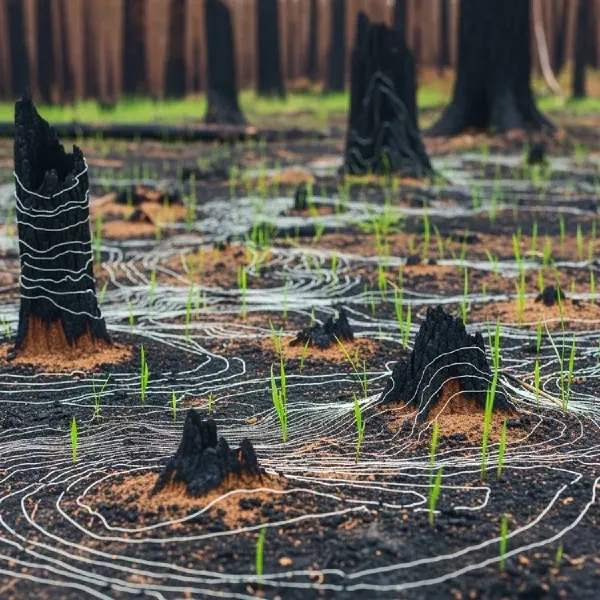
Aboriginal Australian “cultural burning” offers profound lessons. Unlike Western wildfire suppression (allowing fuel accumulation), cultural burning involves frequent, low-intensity fires that reduce wildfire risk, promote biodiversity, and maintain cultural knowledge.
Similarly, Amazonian terra preta (dark earth) created through indigenous practices represents a carbon-sequestering, fertility-enhancing soil management system modern agriculture is only beginning to understand.
These systems exemplify resilience principles: adaptive, diverse, regenerative. Most importantly, they’re embedded in cultural systems maintaining knowledge across generations—a form of social resilience architecture we’ve largely lost.
The Resilience Imperative#
Bangkok’s million trees won’t stop sea level rise. But they will reduce urban heat, improve air quality, manage stormwater, provide habitat, enhance mental health, and sequester carbon. This is resilience architecture: interventions working at multiple scales, addressing multiple challenges, creating multiple benefits.
The emissions narrative has served us well. It created measurable targets, mobilized global action, drove innovation. But it’s reached its limits as a guiding framework. Focusing exclusively on carbon reduction is like focusing exclusively on reducing fever in a patient with multiple systemic illnesses: necessary but insufficient, potentially distracting from underlying causes.
We stand at a threshold. The 20th century was defined by efficiency—doing more with less. The 21st century must be defined by resilience—persisting through more with greater capacity. This requires fundamentally rethinking our architectures: not just how we build but why, not just what systems we create but how they learn, adapt, and transform.
The most resilient systems in history haven’t been the most efficient or controlled. They’ve been the most diverse, modular, adaptive, and embedded in healthy relationships. They understood persistence isn’t about resisting change but navigating it, strength isn’t about rigidity but flexibility.
As we face increasing volatility, our task is not merely to reduce impact but to increase capacity—to design systems that don’t just survive storms ahead but learn to sail in new waters. This is the resilience imperative: not an alternative to sustainability but its necessary evolution, not a rejection of carbon counting but its essential context, our most realistic hope for thriving in a chaotic world.