Resilience over Efficiency: Systems optimized for carbon reduction often become fragile; true sustainability requires designing for adaptive capacity in unpredictable conditions.
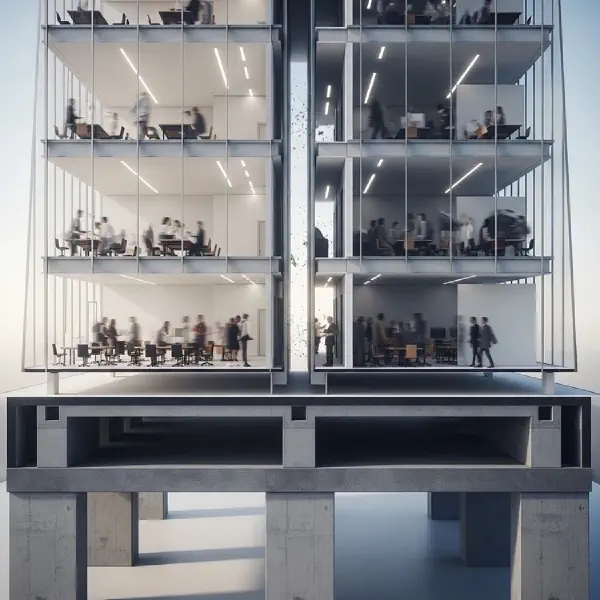
Modular Design: Breaking systems into independent but interconnected modules allows safe failure and rapid reconfiguration when disruptions occur.
Distributed Power: Centralized systems are vulnerable; polycentric governance and distributed technologies create more resilient architectures.
Temporal Diversity: Different system components should evolve at different rates, allowing adaptation without complete system collapse.
Regenerative Economics: Moving beyond extraction to systems that enhance life and create positive feedback loops.
Meadows, D. H. (2008). Thinking in Systems: A Primer. Chelsea Green Publishing. ISBN: 978-1603580557.
Ostrom, E. (1990). Governing the Commons: The Evolution of Institutions for Collective Action. Cambridge University Press. ISBN: 978-0521405997. DOI: 10.1017/CBO9780511807763
Walker, B., & Salt, D. (2006). Resilience Thinking: Sustaining Ecosystems and People in a Changing World. Island Press. ISBN: 978-1597260930.
Raworth, K. (2017). Doughnut Economics: Seven Ways to Think Like a 21st-Century Economist. Chelsea Green Publishing. ISBN: 978-1603587969.
Kahneman, D. (2011). Thinking, Fast and Slow. Farrar, Straus and Giroux. ISBN: 978-0374275631.
Senge, P. M. (1990). The Fifth Discipline: The Art and Practice of the Learning Organization. Doubleday/Currency. ISBN: 978-0385517256.
Brand, S. (1994). How Buildings Learn: What Happens After They’re Built. Viking Press. ISBN: 978-0670835120.